Hackaday Links: April 13, 2011

Oven parts scrounging
oven_desoldering

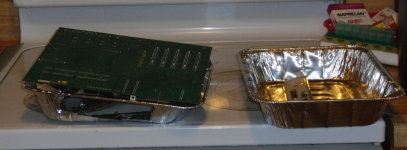
In response to last week’s post about parts scrounging with a heat gun, Hackaday forum member [BiOzZ] decided to try doing the same thing in his oven. It seems to work quite well, but we’re wondering if there should be any concerns over the lead content of the solder. Anyone care to chime in?

Spill-proof parts holder
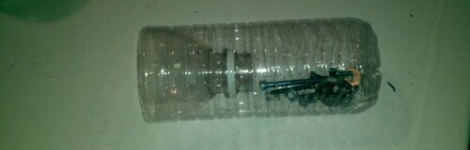
parts_holder

Have you ever been in the midst of disassembling something and knocked over your container full of screws onto the floor? [Infrared] has a simple solution to the problem which also happens to keep a couple of plastic bottles out of the landfill.

Easy button stops abuse of the word awesome

easy_button

Do you often repeat a word ad nauseam? Make author Matt Richardson does, and he hacked a Staples “Easy” button to help him break his addiction to the word “Awesome”.

Cheap Remote-controlled baseboard lighting
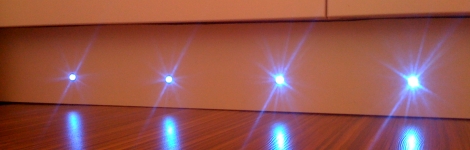
baseboard_lighting

[Sean] scored a pair of LED deck lighting kits for a steal and decided to install them into his newly renovated kitchen. They are currently remote operated, but he plans on adding an X10 interface as well as PIR sensors for automatic triggering in the near future.

Yet another LCD recapping guide
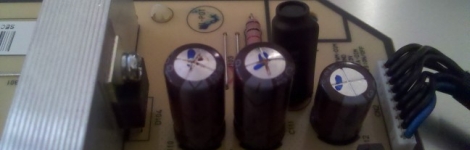
monitor_recap

It starts with a finicky backlight, or perhaps a high-pitched whine from the back of your display – by now, we’re sure that everyone knows the symptoms of an LCD panel that’s just about to die. [Eric’s] Syncmaster recently quit on him, so he pried it open and got busy recapping. It’s running again, and he wanted to share his repair process in case others out there own the same display.

Haptic GPS Sneakers For The Visually Impaired

gps_haptic_shoe

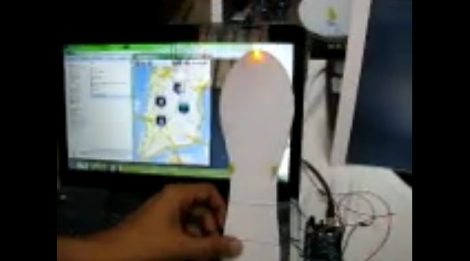
The world can be a pretty difficult place to navigate when you lack the ability to see it. There are many visually impaired people across the globe, with some figures claiming up to 40 million individuals affected. While walking canes and seeing-eye dogs can be a huge help, [Anirudh] of Multimodal Interactions Group, HP Labs India, and some students at the College of Engineering in Pune, India (COEP) have been hard at work constructing a haptic navigation system for the blind.

[Anirudh Sharma and Dushyant Mehta] debuted their haptic feedback shoe design during an MIT Media Lab Workshop hosted at COEP. In its current form, Google Maps and GPS data is sourced from an Android device, which is fed to an Arduino via Bluetooth. The Arduino then activates one of four LEDs mounted on a shoe insert that are used to indicate which direction the individual should travel in order to safely reach their destination. While the current iteration uses LEDs, they will be swapped out for small vibrating motors in the final build.

We’re always fans of assistive technology hacks, and we think this one is great. The concept works well, as we have seen before, so it’s just a matter of getting this project refined and in the hands shoes of those who need it.

Stick around for a quick video about the project filmed at the MIT/COEP event.

Continue reading “Haptic GPS Sneakers For The Visually Impaired”

Using Kinect To Make Human Marionettes

kinect_neurostim

[Choi Ka Fai] has been experimenting with neurostimulation for some time now. His body of work has focused on exploring the possibility of using neurostim devices to replay pre-recorded muscle movements.

Until now, he has been recording his muscle movements as acoustic waveforms for real-time playback in the bodies of his research partners. This usually requires him to sit beside the subject, tethered to a machine. This tends to limit his movement, so he has invested in a new form of movement recording technology – a Kinect sensor.

Using fairly standard skeleton tracking as we have seen in some previous Kinect hacks, he has enabled himself to direct the motion of his subject by merely moving in front of the camera. The benefit of using the Kinect over wired sensors is that he can use any body part to direct his partner’s movements by simply changing how the software interprets his actions. As you can see in the video below, he uses his hands, knees, and even his head to direct the motion of his partner’s arm.

It really is a neat application of the Kinect, and we are totally digging the shaky “human marionette” effect that it produces. Since this was only an initial test of the system, expect to see some more cool stuff coming from [Choi] in the near future.

Stick around to see a quick video of the Kinect-driven neurostim rig in action.

Continue reading “Using Kinect To Make Human Marionettes”

Variable Capacitance/reistance Switch Box Has You Covered

variable_cap_resistor_box

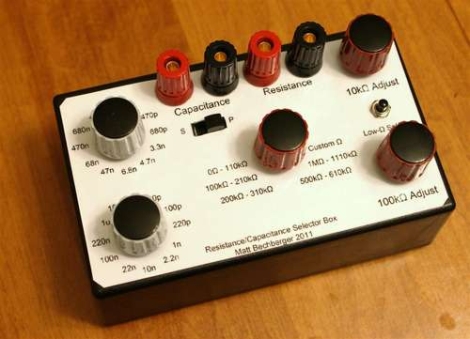
While working on electronics projects, it’s often necessary to test out different capacitance or resistance values as things are moving along. Depending on what you are testing, this can be a tedious process even when using a breadboard. Instructables user [mattthegamer463] recently built a very useful device that would help out in these situations, and would likely be a welcome addition to any Hackaday reader’s workbench.

His variable resistor/capacitor box makes it easy to test out any number of different resistance or capacitance values with a simple turn of a knob. He wired up a pair of pots to provide a wide range of resistance values, being sure to add a low-resistance safety as well as safety override switch for those of you who like to have things blow up in your face live dangerously. A set of 22 capacitors were wired up on a piece of perfboard, each of which can be selected using a pair of knobs. He added a simple switch to allow the capacitors to be toggled between parallel and series orientations as well.

[Matt] did a wonderful job here – this is a great project that can be customized in a multitude of ways to fit almost anyone’s specific needs.

Super Refined Kinect Physics Demo

kinect_demo

Since the Kinect has become so popular among hackers, [Brad Simpson] over at IDEO Labs finally purchased one for their office and immediately got to tinkering. In about 2-3 hours time, he put together a pretty cool physics demo showing off some of the Kinect’s abilities.

Rather than using rough skeleton measurements like most hacks we have seen, he paid careful attention to the software side of things. Starting off using the Kinect’s full resolution (something not everybody does) [Brad] took the data and manipulated it quite a bit before creating the video embedded below. Skeleton data was collected and run through several iterations of a smoothing algorithm to substantially reduce the noise surrounding the resulting outline.

The final product is quite a bit different than the Kinect videos we are used to seeing, and it drastically improves how the user is able to interact with virtual objects added to the environment. As you may have noticed, the blocks that were added to the video never rarely penetrate the outline of the individual in the movie. This isn’t due to some sort of digital trickery – [Brad] was able to prevent the intersection of different objects via his tweaking of the Kinect data feed.

We’re not sure how much computing power this whole setup requires, but the code is available from their Google Code repository, so we hope to see other projects refined by utilizing the techniques shown off here.

[via KinectHacks]

Continue reading “Super Refined Kinect Physics Demo”

build_status_board

LED Build Monitor Helps Keep An Eye On Your Servers

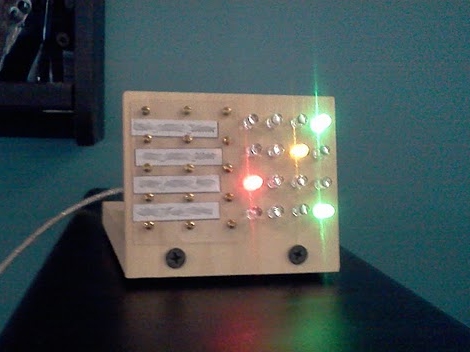
In his line of work, Hackaday reader [Pedantite] often has to monitor the build status of several continuous integration servers throughout the day. One afternoon, he got the idea to install a set of stop lights in the office in order to monitor the status of the servers, but filed it away as a “wouldn’t it be cool if…” project.

After some time had passed, he was bitten by the idea bug again and decided he would build a physical device to display the status of his build processes. This time around, he brainstormed on a smaller scale and the result is the “Indictron” you see above.

He built a simple LED board made up of four rows of four LEDs to display the build processes. Different LEDs are lit depending on the project’s current build status as well as the results of the previous build. The board uses an ATmega88, and interfaces with a compiler watchdog application using a virtual USB package made specifically for AVR micro controllers.

The end result is a simple, yet useful status board that “just works”. He does not seem to have code or schematics posted on his site at the moment, but we’re pretty sure he would share them upon request.

If you’re interested in a bit more of [Pedantite’s] work, check out his “Good Times” parental timer we featured last week.

Dishwasher Notifier For The Absent-minded

dish_o_tron_6000

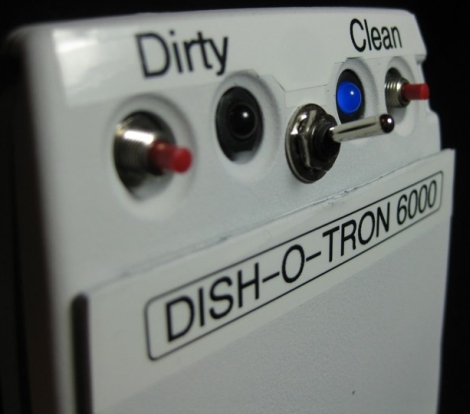
[Quinn] over at BlondiHacks is admittedly pretty absent-minded when it comes to household chores such as emptying the dishwasher. She often can’t remember if the dishes are dirty or ready to be put away, so she decided it was time to devise a mechanism that would help keep her on task. She originally considered a double-sided sign that said “Clean” on one side, “Dirty” on the other, but she chose the fun option and decided to over-engineer the problem instead.

She ultimately focused on two conditions that she needed to monitor: when the dishwasher had been run, and when the dishes have been emptied. To tackle the first condition, she used a thermistor to detect when the door of the dishwasher got hot from the wash cycle. The second wasn’t quite as easy, since she often peeks into the dishwasher to grab a clean dish when needed, unloading the rest later. She eventually settled on using a tilt switch to monitor the angle of the door, assuming that the dishes have been removed if the door was open for over a minute.

[Quinn] reports that her Dish-o-Tron 6000 works well, and she had a good time building it. Sure the whole thing is kind of overkill, but where’s the fun in moderation?