Are Minimills Worth It?

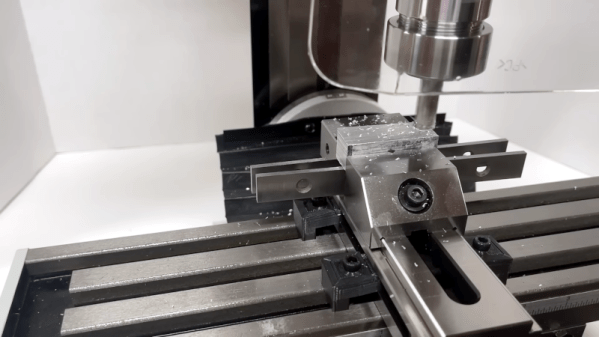
These days, the bar for home-built projects is high. With 3D printers, CNC, and cheap service providers, you can’t get away with building circuits in a shoe box or an old Tupperware container. While most people now have access to additive manufacturing gear, traditional subtractive equipment is still a bit less common. [Someone Should Make That] had thought about buying a “minimill” but he had read that they were not worth it. Like a lot of us, he decided to do it anyway. The pros and cons are in the video you can watch below.

During setup, he covered a few rumors he’d heard about these type of mills, including they are noisy, have poor tolerances, and can’t work steel. Some of these turned out to be true, and some were not.
Continue reading “Are Minimills Worth It?”

The Cryotron Remembered

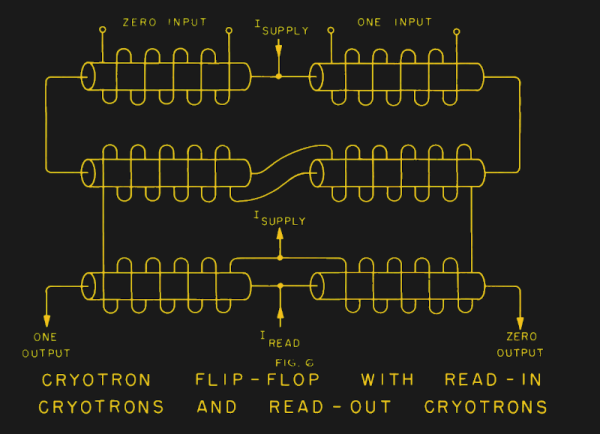
[Sean Haas] is a “dangerous freelance historian,” and his recent talk at the Vintage Computer Festival in Southern California covers the cryotron — a strange detour on the road to computers circa 1956. The NSA wanted a computer to break codes, but in 1956, there wasn’t much to pick from, especially since they wanted a very fast computer.

As you might expect from the name, a cryotron depends on superconductivity. The original device was a tantalum wire wrapped with a niobium wire coil. When the device is soaked in liquid helium, both wires become superconducting. The tantalum wire can carry way more current in that state unless the niobium coil generates a magnetic field, which kills the wire’s superconductivity. On the plus side, you have a relay-like switch that works with no moving parts. On the negative side, you need liquid helium.

Continue reading “The Cryotron Remembered”

Retrotechtacular: Right To Repair 1987

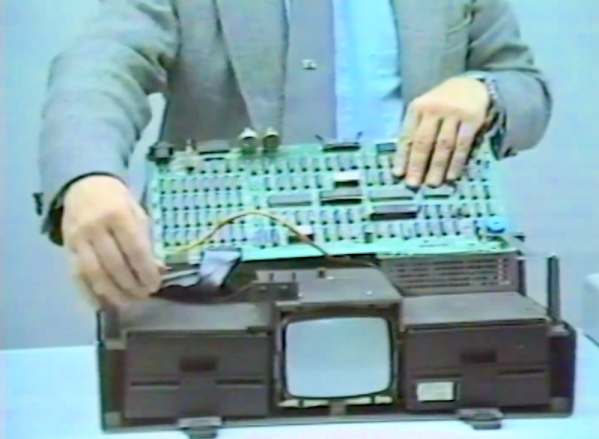
In 1987, your portable Osborne computer had a problem. Who you gonna call? Well, maybe the company that made “The Osborne Survival Kit,” a video from Witt Services acquired by the Computer History Museum. The narrator, [Mark Witt], tells us that they’ve been fixing these computers for more than three years, and they want to help you fix it yourself. Those days seem long gone, don’t they?

Of course, one thing you need to know is how to clean your floppy drives. The procedure is easy; even a 10-year-old can do it. At least, we think [William Witt] is about 10 in the video. He did a fine job, and we wonder what he’s up to these days.

The next step was taking the machine apart, but that required adult supervision. In some cases, it also took a soldering iron. As a byproduct, the video inadvertently is a nice tear-down video, too.

Continue reading “Retrotechtacular: Right To Repair 1987”

Obfuscated C 8080 Emulator Ported

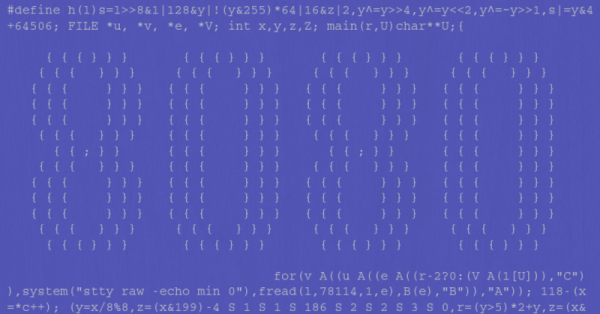
[Oscar] is no stranger to writing hard-to-read C code. While most of us do that by accident, there are those who strive to write the most unreadable code and enter it in the IOCCC — the International Obfuscated C Code Contest. One of his winning entries was a single C function that emulates an 8080. With a few support files, the plucky little emulator will run CP/M.

The emulator won best in show, but that was in 2006. Things have changed a bit and [Oscar] has updated the code so that you can continue to try it if you want to give yourself a headache reading code. The portability isn’t a CPU issue — modern CPUs will happily run code from 2006. The problem is the compiler and operating system. Compilers are much stricter these days, and Linux needs a little extra coaxing to give access to the input stream the way the faux computer needs it.

Continue reading “Obfuscated C 8080 Emulator Ported”

Tiny Signal Generator Revealed

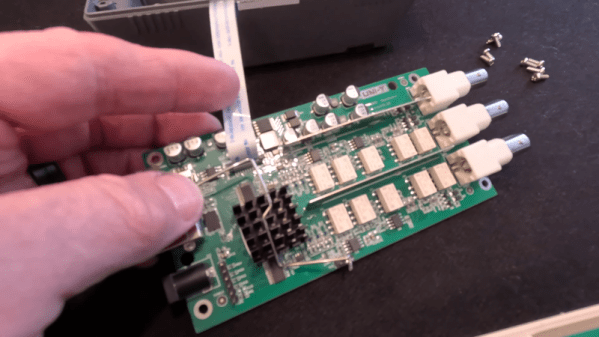
There was a time when test equipment was big and heavy. Those days are gone, and [Kiss Analog] shows us the inside of a Uni-T UTG962E arbitrary waveform generator. The device is truly tiny. You might think this is due to the dense packing of the circuit board. However, one board is packed but the other board seems to have a high degree of integration on one IC. You can check out the video below.

The main processor is some sort of ARM — we think an STM32F-series part. The markings were hard to make out under the microscope.

Continue reading “Tiny Signal Generator Revealed”

Hackaday Podcast Episode 263: Better DMCA, AI Spreadsheet Play, And Home Assistants Your Way

No need to wonder what stories Hackaday Editors Elliot Williams and Al Williams were reading this week. They’ll tell you about them in this week’s podcast. The guys revisit the McDonald’s ice cream machine issue to start.   This week, DIY voice assistants and home automation took center stage. But you’ll also hear about AI chat models implemented as a spreadsheet, an old-school RC controller, and more.

How many parts does it take to make a radio? Not a crystal radio, a software-defined one. Less than you might think. Of course, you’ll also need an antenna, and you can make one from lawn chair webbing.

In the can’t miss articles, you’ll hear about the problems with the x86 architecture and how they tried to find Martian radio broadcasts in the 1920s.

Miss any this week? Check out the links below if you want to follow along, and as always, leave your comments!

Direct download in DRM-free MP3.

Continue reading “Hackaday Podcast Episode 263: Better DMCA, AI Spreadsheet Play, And Home Assistants Your Way”

Weird Things To Do With FPGAs

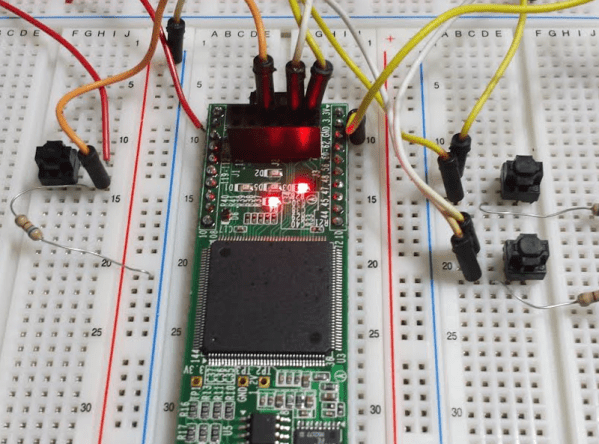
There’s an old joke about how can you find the height of a building using a barometer. One of the punchlines is to drop the barometer from the roof and time how long it takes to hit the ground. We wonder if [Alexlao512] had that in mind when he wrote a post about unconventional uses of FPGAs. Granted, he isn’t dropping any of them off a roof, but still. The list takes advantage of things we usually try to avoid such as temperature variation, metastability, and the effects of propagation delays.

For example, you probably know that hooking up an odd number of inverters into a loop forms an oscillator—the so-called ring oscillator. The post discusses how you can use an oscillator like that to measure propagation delay or even as a strain gauge. If you put pressure on the FPGA chip, the frequency of the ring oscillator will subtly vary.

Continue reading “Weird Things To Do With FPGAs”