STEM Award Goes To Accessible 3D Printing Project

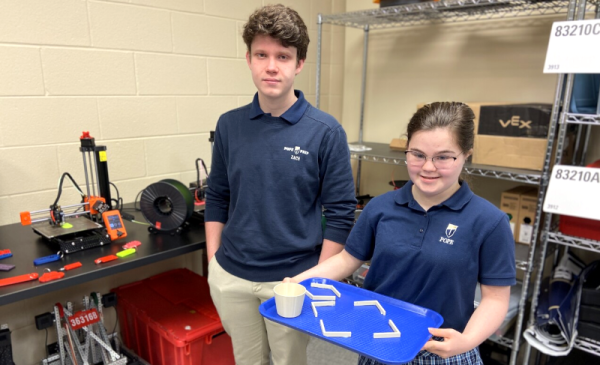
When you are a 15-year old and you see a disabled student drop the contents of their lunch tray while walking to a table, what do you do? If you are [Adaline Hamlin], you design a 3D printed attachment for the trays to stop it from happening again.

The work was part of “Genius Hour” where [Hamlin’s] teacher encouraged students to find things that could be created to benefit others. An initial prototype used straws to form stops to fit plates, cups, and whatever else fit on the tray. [Zach Lance], a senior at the school’s 3D printing club, helped produce the actual 3D printed pieces.

Continue reading “STEM Award Goes To Accessible 3D Printing Project”

PyScript: Python In The Web Browser

A chainsaw can make short work of clearing out the back forty. It can also make a good horror movie. So while some people will say we don’t need another tool to allow more malicious scripting in the browser, we also know that, like any tool, you can use it or abuse it. That tool? PyScript, which is, of course, Python in the browser.

The tool is in the early experimental phase, so the project doesn’t suggest using it in a production environment yet. However, if it works well, the promise is not just that you can write browser-based applications in Python — you’ll have a handy way to reuse existing Python code and even be able to run the same code on the browser that currently runs on the server. This has a lot of implications for improved client/server applications, or cases where you want to be able to run against a local backend when disconnected and a remote backend when you do have a connection. Of course, you can interoperate with JavaScript, too.

Continue reading “PyScript: Python In The Web Browser”

Injekto Injection Machine Reaches 2.0

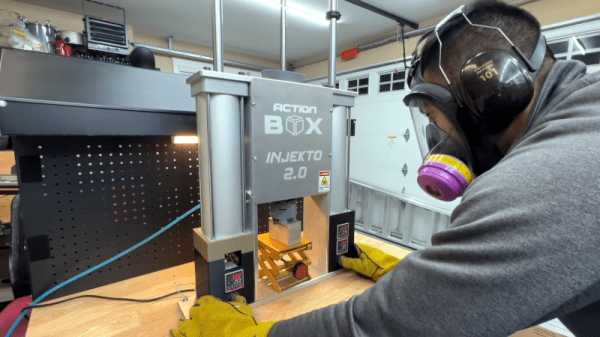
Last time we looked in on Injekto — a homemade plastic injection machine — it was at version 1.0. A recent video from the team that you can see below shows version 2 which is much improved and can work with 3D printed molds. Injection molding takes a lot of pressure and the machine certainly looks stout with lots of machined aluminum.

If you want to skip the build process, you can skip up to around the 9-minute mark. That’s where they show a machined mold and a 3D printed mold being used with the machine.

Continue reading “Injekto Injection Machine Reaches 2.0”

LTSpice Tips And A Long Tutorial

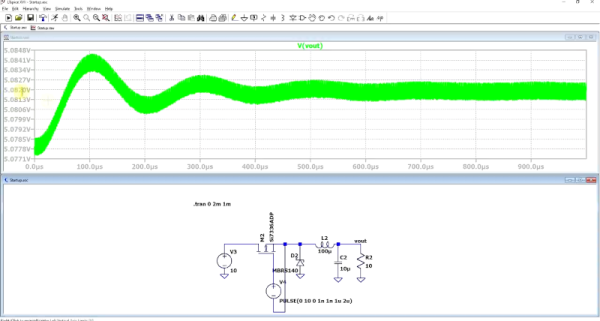
We always enjoy videos from [FesZ], so when we saw his latest about tips and tricks for LTSpice, we decided to put the 20 minutes in to watch it. But we noticed in the text that he has an entire series of video tutorials about LTSpice and that this is actually episode 30. So there’s plenty to watch.

Like any tips and tricks video, you might know some of them and you may not care about some of them — for example, the first one talks about setting the colors which is a highly personal preference.  But it is a good bet you’ll find something to like in the video.

Continue reading “LTSpice Tips And A Long Tutorial”

The World’s Most Expensive 3D Printers

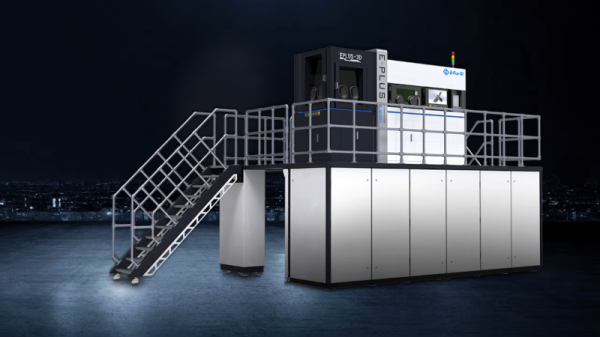
How much would you pay for a 3D printer? Granted, when we started a decent printer might run over $1,000 but the cost has come way down. Unless of course, you go pro. We were disappointed that this [All3DP] post didn’t include prices, but we noticed a trend: if your 3D printer has stairs, it is probably a big purchase. According to the tag line on the post, the printers are all north of $500,000.

Expensive printers usually have unique technology, higher degrees of automation, large capacity or some combination of that, and a few other factors. At least two of the printers mentioned had stairs to reach the top parts of the machine. And the Black Buffalo — a cement printer — uses a gantry that looks like it is part of a light show at a concert. It is scalable, but apparently can go up to three stories tall!

Continue reading “The World’s Most Expensive 3D Printers”

Cheap Oscilloscope Is… Well… Cheap

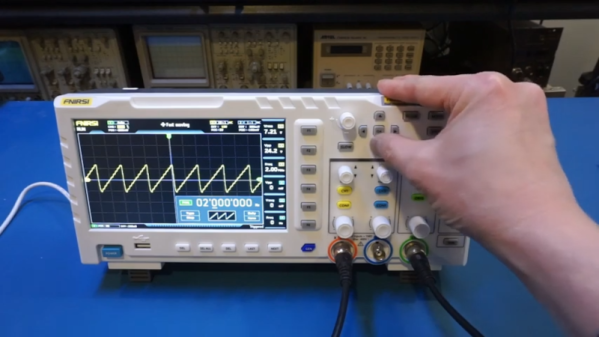
We always enjoy watching [Kerry Wong] put an oscilloscope through its paces. His recent video is looking at a very inexpensive FNIRSI 1014D ‘scope that you can also find rebranded. You can usually find these for well under $200 at the usual places. Can you get a reasonable scope for that cost? [Kerry] has a list of issues with the scope ranging from short memory depth to low sensitivity. He did, however, like that it is USB powered so it can be operated from a common battery pack, which would make it truly floating.

The ‘scope looks like a lot of other inexpensive ‘scopes, but you can see some concessions to price. For example, the encoder knobs don’t have a push button function, making the scope more difficult to operate. While the specs are relatively modest, [Kerry] wasn’t sure the instrument was even living up to them.

Continue reading “Cheap Oscilloscope Is… Well… Cheap”

The Origin Of The Fresnel Lens

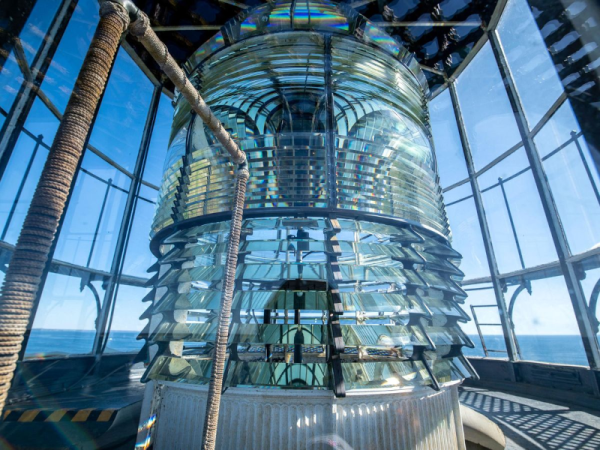
If you are a Hackaday reader, you probably know what a Fresnel lens is. You find them in everything from overhead projectors to VR headsets. While it seems commonplace now, the Fresnel lens was an important invention for its day because it revolutionized maritime navigation and, according to a post over at IEEE Spectrum, that was the driving force behind its invention. In fact, the lens has been called “the invention that saved a million ships“.

The problem stems from issues in navigation. Navigating by the sun and the stars is fine, but not workable when you have heavy cloud cover, or other reasons you can’t see them. A lighthouse often marked an important point that you either wanted to navigate towards or, sometimes, away from.  Sure, today, we have GPS, but for a long time, a lighthouse was your best bet.

Continue reading “The Origin Of The Fresnel Lens”