BBC Micro:bit Reads Morse Code With MakeCode

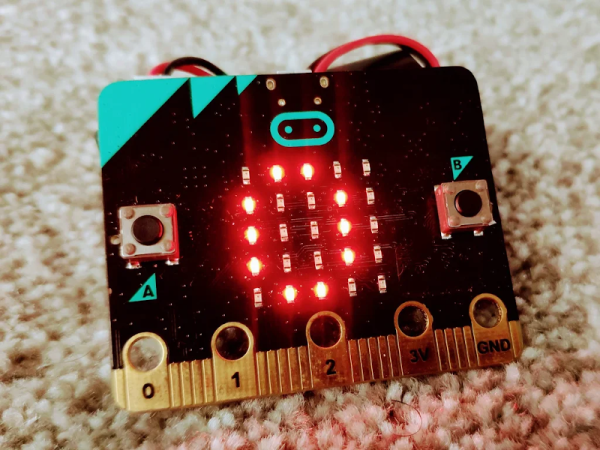
We always have mixed feelings about the drag-and-drop programming languages. But we were impressed with [SirDan’s] Morse code decoder built with the graphical MakeCode. Granted, it is reading 5 element groups from a button on the BBC micro:bit and not worrying about details such as intercharacter or interelement spacing or word spacing. But it is still a nice demo for MakeCode.

Interestingly, the online editor for MakeCode can apparently simulate well enough to test the program. However, [SirDan] only provides the hex file so we couldn’t try it out. There is a screenshot of the visual code, but you’d have to work out the part that didn’t fit on the screenshot (the data arrays are pretty long).

Continue reading “BBC Micro:bit Reads Morse Code With MakeCode”
Repairing Underground Power Cables

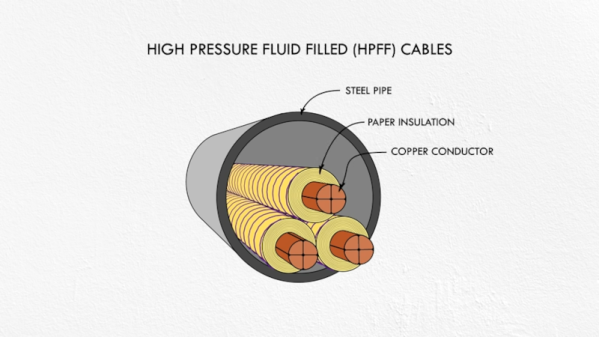
When we were kids, overhead power cables were a constant fixture in the neighborhood. Not only were they the bane of our kites, but they also had a tendency to fail during storms leaving us in the dark. These days lots of cables go underground — safer for kites and harder to storm damage. On the other hand, if they do need repair, it is a major operation, as [Practical Engineering] discusses in a recent post you can watch below.

In the story, a large underground distribution cable — the Scattergood-Olympic transmission line — had a failure in the late 1980s. The 10 mile line has three high-voltage phases and when the line was created, running high voltage lines underground was a bit exotic.

Continue reading “Repairing Underground Power Cables”

Fourier Transforms (and More) Using Light

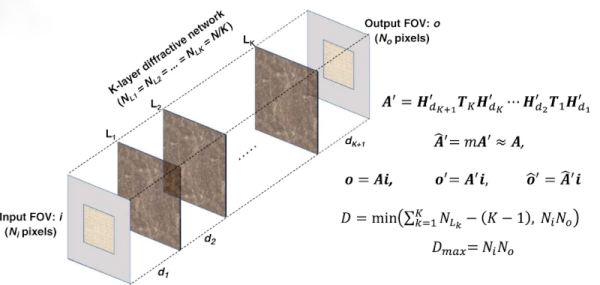
Linear transforms — like a Fourier transform — are a key math tool in engineering and science. A team from UCLA recently published a paper describing how they used deep learning techniques to design an all-optical solution for arbitrary linear transforms. The technique doesn’t use any conventional processing elements and, instead, relies on diffractive surfaces. They also describe a “data free” design approach that does not rely on deep learning.

There is obvious appeal to using light to compute transforms. The computation occurs at the speed of light and in a highly parallel fashion. The final system will have multiple diffractive surfaces to compute the final result.

Continue reading “Fourier Transforms (and More) Using Light”

Shortwave Radio Picks Up Sideband

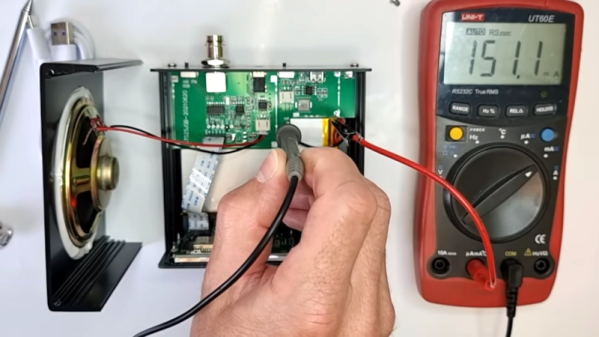
With the push to having most of a radio receiver as part of a PC, it might seem odd to have a standalone communication receiver, but [OM0ET] reviews the latest one he picked up, an ATS25. Inside isn’t much: a battery, a speaker, an encoder, and a Si4732 that provides the RF muscle.

It appears the receiver is pretty broadband which could be a problem. [OM0ET] suggests adding selectivity in the antenna or adding an extra board to use as a bandpass filter.

Continue reading “Shortwave Radio Picks Up Sideband”

101 Uses For An Everready — Flashlight History

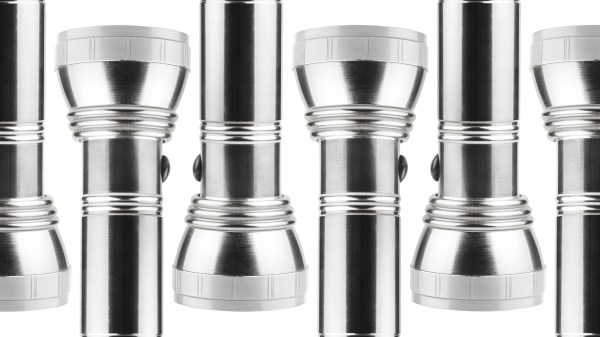
For some reason, I’m always interested in why things are called what they are. For example, I’ve been compelled in the past to research what Absorbine Senior is. Not that it is important, but Absorbine Junior is a smaller size of horse liniment, so you don’t have to buy a drum of ordinary Absorbine just to rub down your sore thumb. So it isn’t a mystery that I would find myself musing over why we call a flashlight a flashlight.

You don’t think of a flashlight as flashing, under normal circumstances, at least. Turns out the answer lies in the history of the device, its poor beginnings, and our willingness to treat imperfect components as though they were much better than they are. That last point, by the way, still has ramifications today, so even if you aren’t a fan of flashlight history, keep reading.

Portable Lighting

Ever since people learned to use fire, there’s been a desire for portable lighting. Torches, candles, and even oil lamps have all had their place. But burning things for light in small cramped spaces leaves a lot to be desired. It isn’t surprising that people quickly turned to electricity when that seemed to be feasible.

Continue reading “101 Uses For An Everready — Flashlight History”

Excel Ray Tracing With Help From C

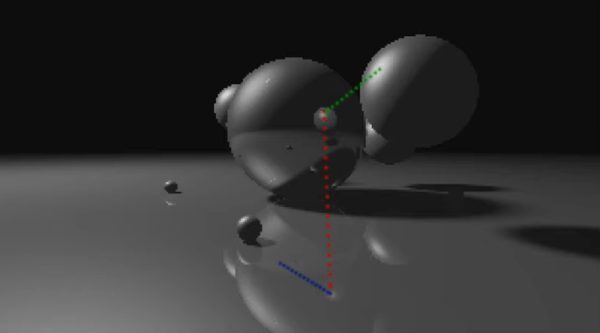
It isn’t news that [s0lly] likes to do ray tracing using Microsoft Excel. However, he recently updated his set up to use functions in a C XLL — a DLL, really — to accelerate the Excel rendering. Even if ray tracing isn’t your thing, the technique of creating custom high-performance Excel functions might do you some good somewhere else.

We’ve seen [s0lly’s] efforts before, and you can certainly see that the new technique speeds things up and produces a better result, which isn’t especially surprising. In addition to being faster, the new routines produce more detail.

Continue reading “Excel Ray Tracing With Help From C”

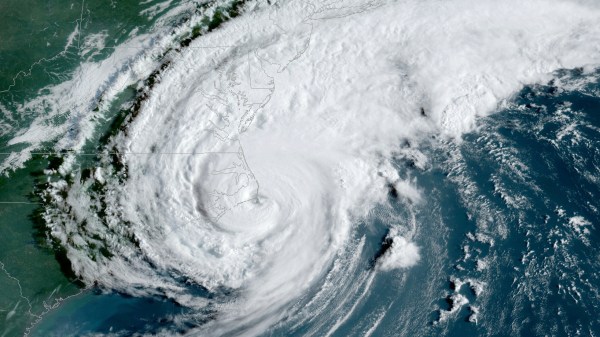
Satellite image of hurrican Dorian

Hurricane Hunting From Outer Space

If you live in the right part of the world, you spend a lot of the year worried about hurricanes or — technically — tropical cyclones. These storms carry an amazing amount of power and can change your life. However, we are relatively spoiled these days compared to the past. It is hard to imagine, but there was a time when a hurricane’s arrival was something of a mystery. Sure, ships would report what they encountered, but finding exact data about a hurricane was a bit hit or miss. We often talk about space technology making life better. Weather forecasting — especially for tropical storms — is one place where money spent in space has made life much better on Earth.

The lack of data about storms can be fatal. The Great Galveston hurricane of 1900 took around 12,000 lives. It might have had a better outcome, but forecasters missed where the storm was heading, announcing that it would go from Cuba to Florida which was just totally wrong. Not that a forecaster couldn’t make a mistake today, but with aircraft and satellite coverage, you’d know very quickly that the prediction was wrong and you’d sound the alarm. In truth, the prediction models have become very good over the years, so the chances of this happening today are virtually nil in any event. But being able to precisely locate and track storms helps reduce the impact of the storm and also feeds data into the models that makes them even more accurate for the future.

Continue reading “Hurricane Hunting From Outer Space”