Better History Through X-Rays

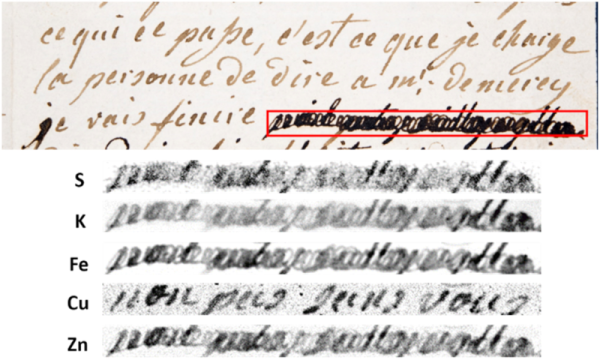
Even if you aren’t a giant history buff, you probably know that the French royal family had some difficulties in the late 1700s. The end of the story saw the King beheaded and, a bit later, his wife the famous Marie Antoinette suffered the same fate. Marie wrote many letters to her confidant, and probable lover, Swedish count Axel von Fersen. Some of those letters have survived to the present day — sort of. An unknown person saw fit to blot out parts of the surviving letters with ink, rendering them illegible. Well, that is, until now thanks to modern x-ray technology.

Anne Michelin from the French National Museum of Natural History and her colleagues were able to foil the censor and they even have a theory as to the ink blot’s origin: von Fersen, himself! The technique used may enable the recovery of other lost portions of historical documents and was published in the journal Science Advances.
Continue reading “Better History Through X-Rays” →

RISC-V In… Typescript?

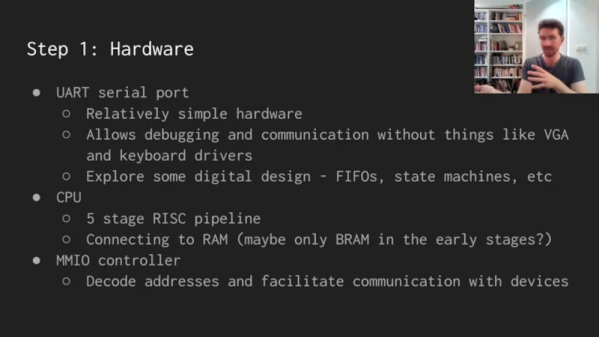
We are accustomed to seeing RISC-V implementations in Verilog or VHDL, but [Low Level JavaScript] has one in TypeScript. Before you dismiss it as a mere emulator, know that the project relies on gateware-ts, a conversion between TypeScript and Verilog. From there, you can actually put the CPU on an FPGA. You can see the launch video below and there is one development video as well as, presumably, more to come.

We aren’t sure if many FPGA designers will be willing to switch to TypeScript. But if you are comfortable with it, it might open up FPGA development without having to learn as much of a new language.

Continue reading “RISC-V In… Typescript?” →

Solar Power Goes Back To 1910 Tech

If you want to read about a low-tech approach to solar cells invented — and forgotten — 40 years before Bell Labs announced the first practical silicon solar cell, we can’t promise the website, Low Tech Magazine, will be available. Apparently the webserver it is on is solar-powered, and a disclaimer mentions that it sometimes goes offline.

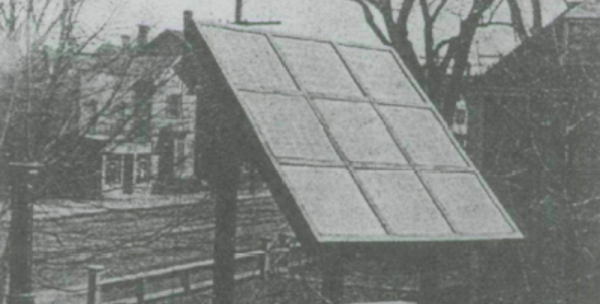
The article by [Kris De Decker] tells of George Cove and includes a picture from 1910 of the inventor standing next to what looks suspiciously like a solar panel (the picture above is from a 1909 issue of Technical World Magazine). His first demonstration of the technology was in 1905 and there is a picture of another device from 1909 that produced 45 watts of power using 1.5 square meters with a conversion efficiency of 2.75%. That same year, a new prototype had 4.5 square meters and used its 240-watt output to charge 5 lead-acid batteries. The efficiency was about 5%.

Continue reading “Solar Power Goes Back To 1910 Tech” →

This Homemade Mass Spectrometer Works

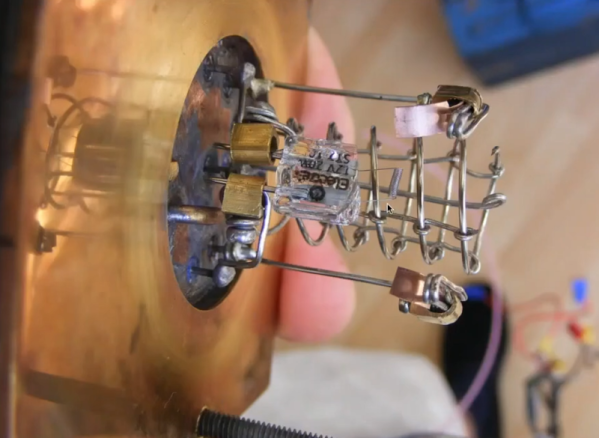
Hats off to [Paul Brooking] as he shows off his homemade mass spectrometer in two recent videos you can see below. The first video demonstrates that the device works. The second video shows details about how it was made.

It’s not a good starter project, requiring quite a bit of sophisticated gear including two-stage vacuum pumps, Peltier cold plates, and ion sources, but if you aren’t familiar with mass spectrometers the basic idea is simple enough. You take a sample and bombard it with electrons. This creates a stream of ions of the component parts of the sample. Ions of heavy elements, obviously, weigh more than ions of lighter elements. A magnetic field deflects the ions, and the lighter ones are deflected more than the heavier ones. By detecting ions at a certain spot in the deflected beam, you can determine the relative amount of ions at a certain mass.

Continue reading “This Homemade Mass Spectrometer Works” →

Sinclair Pocket TV Teardown

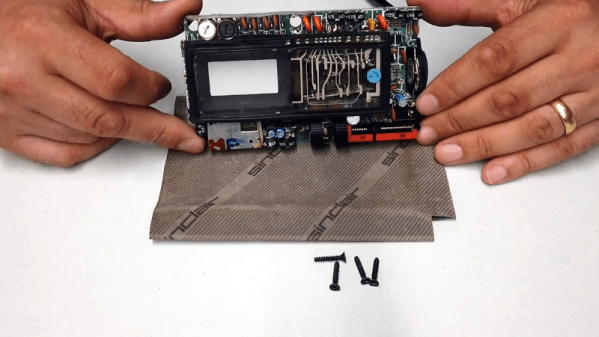
A pocket-sized TV is not a big deal today. But in 1983, cramming a CRT into your pocket was quite a feat. Clive Sinclair’s TV80 or FTV1 did it with a very unique CRT and [Dubious Engineering] has a teardown video to show us how it was done.

A conventional CRT has an electron gun behind the screen which is why monitors that use them are typically pretty thick. The TV80’s tube has the electron gun to the side to save space. It also uses a fresnel lens to enlarge the tiny image.

Continue reading “Sinclair Pocket TV Teardown” →

IBM Attempts An Uncrewed Atlantic Crossing (Again)

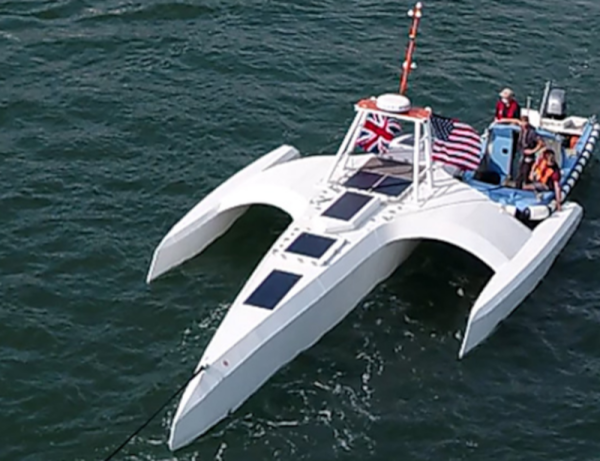
IBM and a non-profit company, ProMare, failed to send their 49-foot Mayflower autonomous ship across the Atlantic back in June. Now they are almost ready to try again. The Mayflower will recreate the path of its more famous namesake.

The total voyage is set to take a month, but the last attempt developed mechanical problems after three days. Now they are running more sea trials closer to shore before attempting another crossing in 2022. Continue reading “IBM Attempts An Uncrewed Atlantic Crossing (Again)” →

Magnetic Experiments Shows Gradients

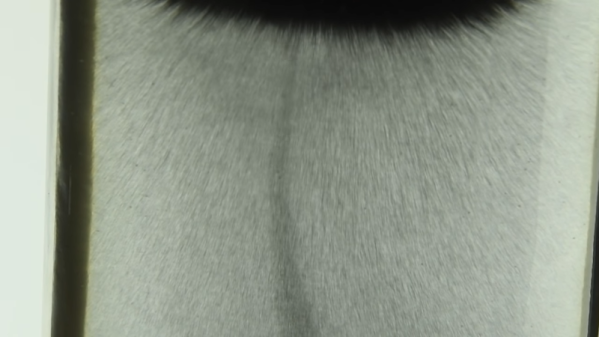
You’ve probably heard the term magnetic gradient before, but have you ever seen one? Now you can in [supermagnetman’s] video, below. The key is to use very fine (2 micron) iron filings and special silicone oil. The video is a good mix of whiteboard lectures and practical hands-on experimenting. Just watching him spin the iron filings in the bottle was entertaining. There’s sources in the video description for the oil and the filings if you want to replicate the demonstrations for a classroom or just for your own enjoyment.

It’s one thing to know the math behind magnetic fields. It’s another to be able to use them in practical applications. But a good understanding of the physical manifestation of the magnetic field coupled can help clarify the math and vice versa. There’s a lot of common sense explanations too. For example, the way the filings accelerate as they get closer to the magnet explains why the patterns form the way they do. Iron filings are a traditional way to “see” magnetic fields. Ask anyone who ever had a Wooly Willy.

Iron filings can be fun to play with, although we don’t think we’ve ever had any this fine. If you prefer your magnetic field visualizations to be higher-tech, we have the answer.

Continue reading “Magnetic Experiments Shows Gradients” →