Raspberry Pi Pico ADC Characterized

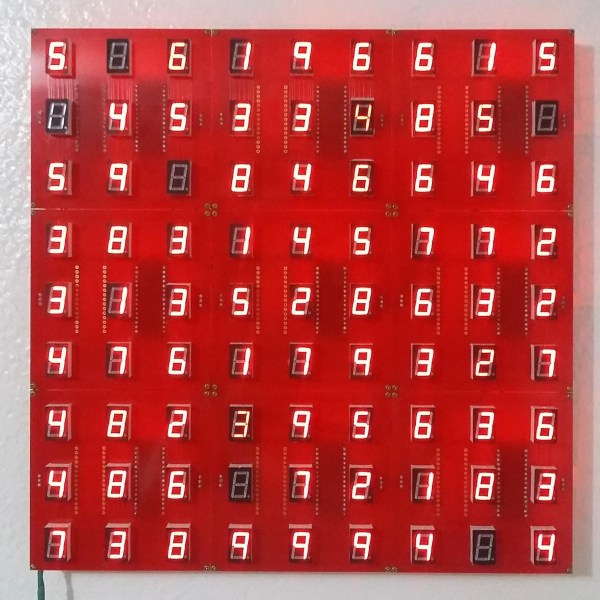
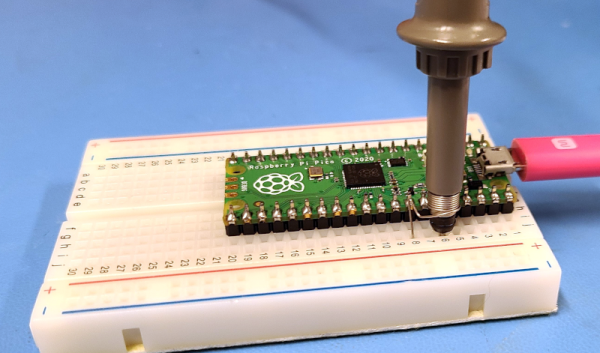
[Markomo] didn’t find much useful information about the Raspberry Pi PIco’s analog to digital converter, so he decided to do some tests to characterize it. Lucky for us, he documented the findings and shared them. The results are in a series of blog posts that cover power supply noise, input-referred noise, signal to noise ratio, and distortions.

There are some surprising results. For example, the Pico’s low noise regulator mode appears to produce more noise than having it set for normal operation. There also appears to be a large spike in nonlinearity around certain measurements.
Continue reading “Raspberry Pi Pico ADC Characterized”

Photorender Your 3D Models

Of course, you’ll want to take your latest 3D design and print it so you’ll have a physical object. But in some cases, you’d like to have a rendering of it. If you use OpenSCAD, FreeCAD, or most other CAD programs you can get a simple rendering of your object, but what if you want something that looks real? [Teaching Tech] shows how you can use a website, Vectary, to get realistic photo renderings of your 3D models. (Video, embedded below.) The free plan has a few limits, but nothing that should bother most people.

Vectary is sort of like a super version of TinkerCad with a lot of options for realistic modeling and augmented reality. Some of the more advanced features are behind a subscription plan, but for what [Teaching Tech] is showing, you can use the free plan.

Continue reading “Photorender Your 3D Models”

Web Pages (and More) Via Shortwave

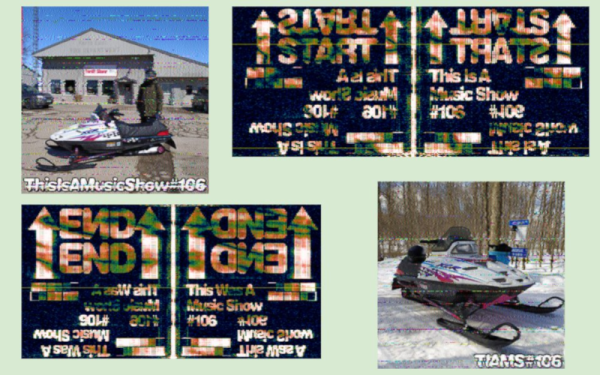
If you are a ham radio operator, the idea of sending pictures and data over voice channels is nothing new. Hams have lots of techniques for doing that and — not so long ago — even most data transmissions were over phone lines. However, now everyone can get in on the game thanks to the cheap availability of software-defined radio. Several commercial shortwave broadcasters are sending encoded data including images and even entire web pages. You can find out more at the Swradiogram website. You can also find step-by-step instructions.

WINB in Pennsylvania and WRMI Florida both have shows that include interspersed data. To play along, you’ll need a decoder like Fldigi or TIVAR. If you don’t have sufficient radio gear, you can probably borrow some from the Internet.

Continue reading “Web Pages (and More) Via Shortwave”

A Different Kind Of 3D Printer: Desktop Holograms

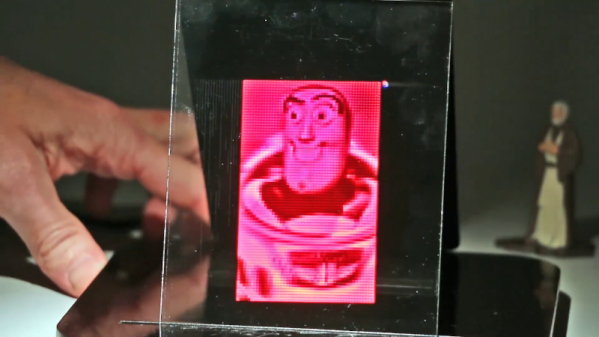
Holograms aren’t new, but a desktop machine that spits them out could be available soon, presuming LitiHolo’s Kickstarter pans out. The machine will have a $1600 retail price and fits in a two-foot square. It can generate 4×5 inch holograms with 1mm hogels (the holo equivalent of a pixel).

The machine allows for 23 view zones per hogel and can create moving holograms with a few seconds of motion — like the famous kiss-blowing holograms.

Continue reading “A Different Kind Of 3D Printer: Desktop Holograms”

Historical Hackers: Hero Builds Vending Machines

We tend to think of mechanical contrivances as products of the industrial revolution and true automation as something computers handle. Yet even before computers, automation existed — using timing motors and cams and other mechanical contraptions. But it might surprise you to know that there was actually some sophisticated automation going way back. Really way back, invented in a world without computers, CAD software, or even electricity. For example, around 50 AD an inventor named Hero — sometimes known as Heron — built machines powered by steam and wind. His inventions included vending machines and music players.

It is hard to imagine what kind of music player or, indeed, vending machine you could build in 50AD. Some of Hero’s inventions were used in temples to, for example, dispense holy water. Others were used in theater to do things like automatically lighting a fire or creating thunder effects. There was even an entirely automated puppet show that used knotted ropes to put on a ten-minute production with no human assistance.

Continue reading “Historical Hackers: Hero Builds Vending Machines”

3D Printer Air Compressor Is A Wankel

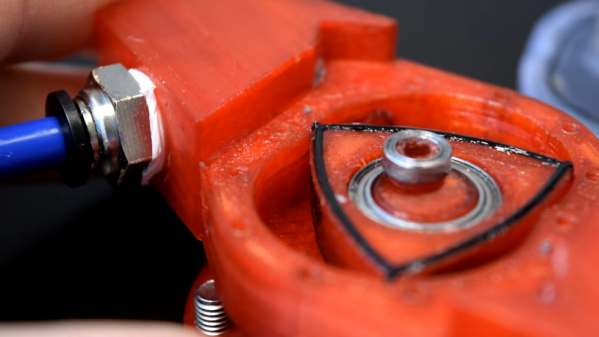
We wonder if mechanics are as annoyed when we say “engine” as we get when someone talks about a “computer” or a “radio.” Sure, you know what all three of those words mean, but there are many different kinds of radios, computers, and engines. In [3DprintedLife’s] case, he made a compressed air engine of the Wankel style.

The Wankel — a rotary engine — is most famous for its use in some Mazda cars. If you’ve done a lot of 3D printing, you know that creating an air-tight piston on a 3D printer is no mean feat. Of course, he didn’t do it right off the bat. It took what looks like a number of iterations to get it going, and he shares some of what he learned doing this project.

Continue reading “3D Printer Air Compressor Is A Wankel”

3D Printed Lenticular Lens Makes 3D Display

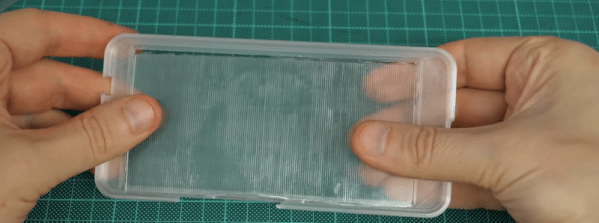
[Bitluni] has been experimenting with resin printing lenses — in particular, lenticular lenses. You’ve probably seen lenticular lenses before in 3D greeting cards or children’s books. By presenting a slightly different image at different angles, your eyes perceive stereo vision giving the illusion of depth. You can see his results in the video below.

Honestly, even if you don’t want to make a display like this yourself, the demonstration of how a lenticular lens works using a laser is worth watching. Sure, you know in theory what’s going on, but seeing it visually exposed is great.

Continue reading “3D Printed Lenticular Lens Makes 3D Display”