Civilian RC Car Uses Lego NXT And Ada

Back in the last century, the US Department of Defense declared that Ada was going to be used everywhere and for everything. Books were published, schools build curriculum. Working programmers, however, filled out waivers to continue working in their languages of choice. As a result, only a little bit of safety-critical software really used Ada. However, we’ve noticed a bit of a resurgence lately. Case in point: an RC car using Ada for the brains. You can watch it tool around in the video below.

This isn’t the first time we’ve heard about Ada in the past few months. Partially, this could be because of the availability of the GNU compiler, although that’s been around since 1995, so maybe there’s another explanation. Ada’s strong typing does tend to plug holes that hackers exploit, so while we would hate to say it is hack proof, it certainly is hack resistant compared to many popular languages.
Continue reading “Civilian RC Car Uses Lego NXT And Ada” →

Honeywell May Pull Into The Quantum Computer Lead

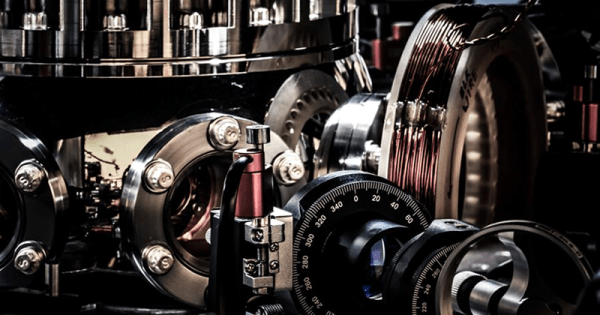
It has been a while since we thought about computers and thought about Honeywell. Sure, they had a series of computers they bought from General Electric and Computer Control Company in the 1970s. Even before that they joined with Raytheon and produced vacuum tube computers that later morphed into transistor-based computers. But in recent years, you are more likely to think of Honeywell for thermostats, air filters, and industrial controls. But now, Honeywell has come out of the computer shadows with some impressive quantum computer hardware and they clearly have big plans.

Comparing quantum computers is a bit dicey just as, for example, judging CPUs by instructions per second has its problems. In the past, vendors have jockeyed for the maximum number of qubits, but that’s misleading in some cases. Processing power depends on the number of qubits, their quality, and how they are connected. IBM introduced the idea of quantum volume and Honeywell claims their new machine will hit 64 by that measure, twice that of anyone else’s quantum computer that we know about.

Continue reading “Honeywell May Pull Into The Quantum Computer Lead” →

Hybrid Supercapacitors Are — Well — Super

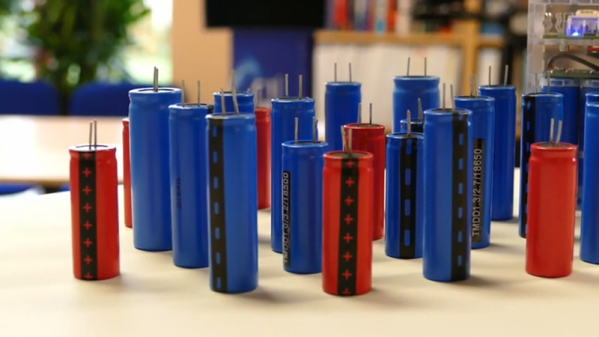
Kurt.energy is promoting a new line of hybrid supercapacitors. By itself, that wouldn’t be very newsworthy, but the company claims these graphene-based supercapacitors merge the best features of both supercapacitors and lithium-ion batteries. Based on technology from a company called Shenzhen Toomen New Energy, the capacitors are optimized for either high energy or high power. They can reportedly charge and discharge 10-20 times faster than lithium-ion batteries. Of course, we’ve heard wild claims surrounding graphene capacitors before and, so far, they haven’t seemed very credible.

In addition to high performance, the company claims the capacitors are safe from overcharging, short circuit, and other safety issues that plague batteries. The devices are said to operate — including charging — from -40C to 80C. You can see a video from the company, below.

Continue reading “Hybrid Supercapacitors Are — Well — Super” →

Hearing Aid Reads Your Mind

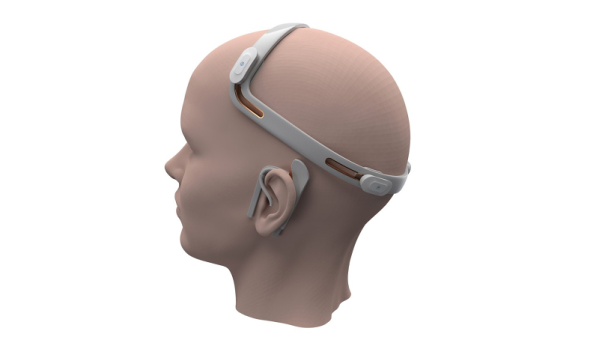
If you’ve ever seen an experienced radio operator pull a signal out of the noise, or talked to someone in a crowded noisy restaurant, you know the human brain is excellent at focusing on a particular sound. This is sometimes called the cocktail party effect and if you wear a hearing aid, this doesn’t work as well because the device amplifies everything the same. A German company, Fraunhofer, aims to change that. They’ve demonstrated a hearing aid that uses EEG sensors to determine what you are trying to hear. Then it uses that information to configure beamforming microphone arrays to focus in on the sound you want to hear.

In addition to electronically focusing sound, the device stimulates your brain using transcranial electrostimulation. A low-level electrical signal tied to the audio input directly stimulates the auditory cortex of your brain and reportedly improves intelligibility.

Continue reading “Hearing Aid Reads Your Mind” →

Retrotechtacular: Mobile Phones 1940s Style

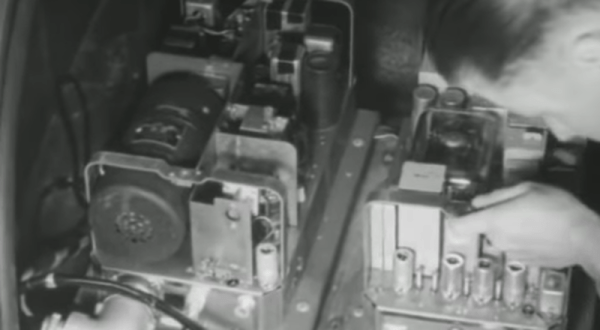
We think of the mobile phone — well, what we would call a cell phone — as something fairly modern. Many of us can still remember when using a ham radio phone patch from your parked car would have people staring and murmuring. But it turns out in the late 1940s, Bell Telephone offered Mobile Telephone Service (MTS). It was expensive and didn’t work as well as what we have now, but it did let you make or receive calls from your automobile. After the break, you can see a promotional film about MTS.

The service rolled out in St. Louis in the middle of 1946. The 80-pound radios went in the trunk with a remote handset wired to the dashboard. At first, there were only 3 channels but later Bell added 29 more to keep up with demand. An operator connected incoming and outbound calls and if three other people were using their mobile phones, you were out of luck.

Continue reading “Retrotechtacular: Mobile Phones 1940s Style” →

Plastic Cleanup Via Retrobrighting

If you work on old radios, electronics is only one of the skills you need. The other is wood or metal working to restore the cabinets and chassis. However, more recent electronics have plastic and old plastic tends to turn yellow. [Odd Experiments] shows how to whiten plastic using a UV light source, aluminum foil, and hydrogen peroxide. Generally, ABS is the plastic at fault, especially those mixed with bromine as a fire retardant. You can see the results in the video below.

Note the peroxide in use was 12% — much stronger than what’s probably in your medicine cabinet. That’s usually only 3% solution, although you can get different strengths including some over 30% if you shop. However, if you search you’ll find that people have used 12%, 6%, and even 3% successfully, although we’d imagine it takes more time with 3%.

Continue reading “Plastic Cleanup Via Retrobrighting” →

MessagePack Is A More Efficient JSON

It is an age-old problem, that of having some data you want to store somewhere, and later bring it back. How do you format the data? Custom file formats are not that hard, but if you use an existing format you can probably steal code from a library to help you. Common choices include XML or the simpler JSON. However, neither of these are very concise. That’s where MessagePack comes in.

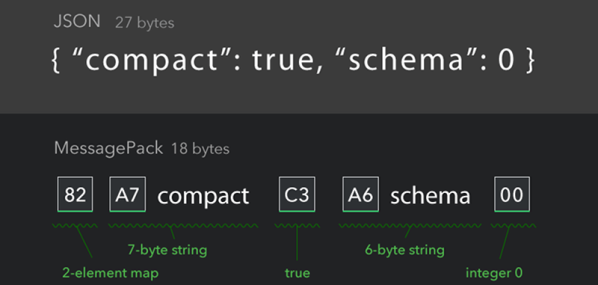
For example, consider this simple JSON stanza:

{"compact":true, "schema":0}

This is easy to understand and weighs in at 27 bytes. Using MessagePack, you’d signal some special binary fields by using bytes >80 hex. Here’s the same thing using the MessagePack format:

 
0x82 0xA7 c o m p a c t 0xC3 0xA6 s c h e m a 0x00

Of course, the spaces are there for readability; they would not be in the actual data stream which is now 18 bytes. The 0x82 indicates a two-byte map. The 0xA7 introduces a 7-byte string. The “true” part of the map is the 0xC3. Then there’s a six-byte string (0xA6). Finally, there’s a zero byte indicating a zero.

Continue reading “MessagePack Is A More Efficient JSON” →