This Radio Control Sailboat Uses 2X4s

When [PeterSripol] was a kid, he made a simple sailboat from a scrap piece of 2×4 and some napkin sails. He’s not 8 years old anymore, but he decided he wanted to make another 2X4 sailboat using the skills he’s learned since he was a kid.

You’ll have to get past storytime and mice, but the build skill is evident. There’s a RC rudder, a keel with lead shot and overall it is a good looking boat for such a simple build.

Continue reading “This Radio Control Sailboat Uses 2X4s”

Roofing Radio Telescope Sees The Galaxy

[David Schneider] asked himself, “How big a radio antenna would you need to observe anything interesting?” The answer turns out to be a $150 build of a half meter antenna. He uses it to detect the motions of the spiral arms of the Milky Way. The first attempt was a satellite TV dish and a cantenna feed, which didn’t work as the can wasn’t big enough to pick up signals at the 21cm wavelength of hydrogen emissions. Interstellar gas clouds are known to emit radio energy at this frequency.

Looking online, [David] tried aluminized foam board insulation, but was worried that the material didn’t seem to actually be conductive. A quick thrown-together Faraday cage with a cell phone didn’t seem to block any calls. Abandoning that approach, he settled on aluminum flashing used for roofing.

Continue reading “Roofing Radio Telescope Sees The Galaxy”

3D Printing Batteries

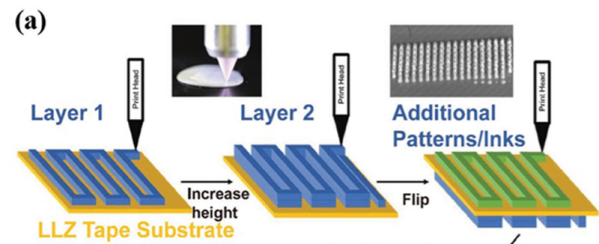
We’ve all gotten pretty adept at 3D printing keychains and enclosures. Some people can even 3D print circuit boards to an extent. But the real goal is a Star Trek-style replicator that just pushes out finished products. Printing different components would be a key technology and unless you want to supply external power, one of those components better be a battery or other power source like a solar cell. A recent paper entitled Additive Manufacturing of Batteries explores this technology. The paper is behind a paywall, but you can probably find a copy if you are persistent.

Some of the techniques are pretty exotic. For example, holographic lithography can produce high-performance lithium-ion batteries. However, some of the processes didn’t sound much different than some of the more common printing techniques employed by desktop printers, although with more exotic materials. For example, some batteries can be made with inkjet printing and even fused deposition printing. Continue reading “3D Printing Batteries”

Google Creates Debuggable IPhone

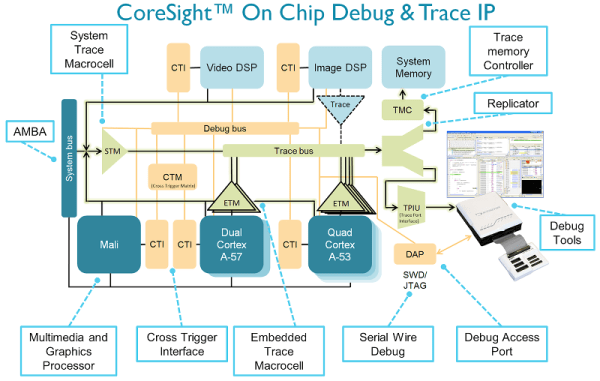
Apple is known for a lot of things, but opening up their platforms to the world isn’t one of those things. According to a recent Google post by [Brandon Azad], there do exist special iPhones that are made for development with JTAG ports and other magic capabilities. The port is in all iPhones (though unpopulated), but is locked down by default. We don’t know what it takes to get a magic iPhone, but we are guessing Google can’t send in the box tops to three Macbook Pros to get on the waiting list. But what is locked can be unlocked, and [Brandon] set out to build a debuggable iPhone.

Exploiting some debug registers, it is possible to debug the A11 CPU at any point in its execution. [Brandon’s] tool single steps the system reset and makes some modifications to the CPU after key instructions to prevent the lockdown of kernel memory. After that, the world’s your oyster. KTRW is a tool built using this technique that can debug an iPhone with a standard cable.

Continue reading “Google Creates Debuggable IPhone”

The $5 FPGA

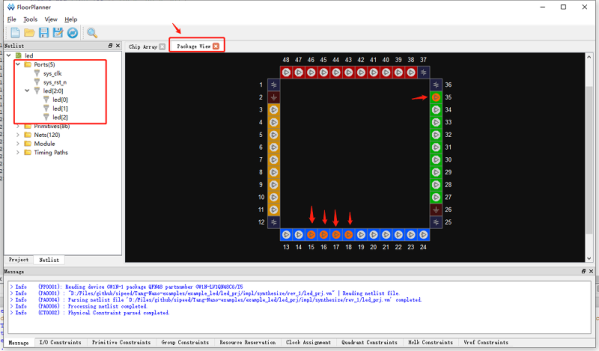
You ever wonder exactly what’s inside that cheap stuff you get from China? Sometimes it is cheap parts you’ve never heard about. Case in point: if you are willing to import, you can score an FPGA board for about $5. The downside? You’ve probably never heard of the GOWIN Semi GW1N  — one of the Little Bee FPGAs — that’s onboard.

There is some English documentation which leaves room for interpretation and you’ll have to use their IDE. Then again, it might be a fun puzzle to get one of these working. Looks like Seeed has them available for $4.90.

According to the Wiki, the onboard chip is GW1N-LV1QN48C6/I5, equipped with 1152 LUT4 logic resources, 1 PLL and a total of 72Kbit SRAM. The development board brings out all I/O interfaces. There’s also 64 Mbits of PSRAM. The board also has an RGB interface for a display, a 24 MHz clock, and the USB programming/debugging interface.

We didn’t try it, but the development tool looks to be available for Windows or Linux. Browsing through the wiki gives the impression it is usable, although probably simple — which could be an advantage compared to some other tool suites.

Worth a try? The Lattice chips are not that expensive and are well supported by open source tools. Then again, people want to try the very cheap (under a dime) CPU that is in a lot of products. So why not FPGAs, too?


Rarely Adjusted Slicer Setting Makes A Difference

When you 3D print something, you probably adjust the layer height based on your desired print quality. Speed is another parameter that many people adjust. But what about extrusion width? The parameter is there, but most people leave it at the defaults. [Stephan] wondered about it, and after running some tests, made a video you can see below trying to determine if it affected strength and print quality.

The tests were pretty straightforward. Some Benchys and other test pieces at each setting were observed and — in some cases — destroyed. He ranged the width from 90% to 250% of a 0.4mm nozzle. Important to note, his results are from a nozzle that has a flat lip around the aperture. If yours doesn’t look like that, you will see different results.

Continue reading “Rarely Adjusted Slicer Setting Makes A Difference”

SPARC CPU In A Cheap FPGA

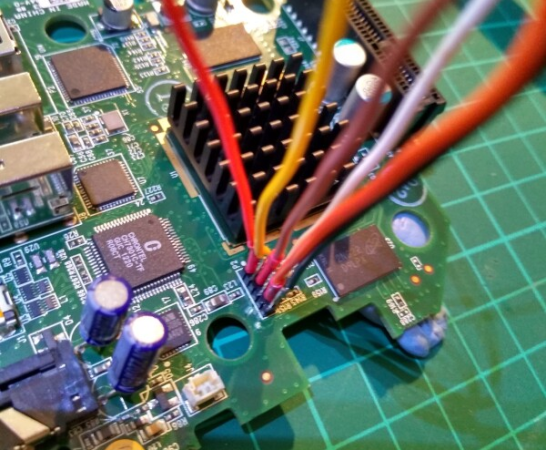
There was a time when SPARC CPUs were the sole realm of pricey Sun workstations, but now you can put one on an FPGA with just a little trouble. The problem is you need a fairly big FPGA which isn’t always cheap unless someone goes out of business and you get lucky. [Ttsiodras] picked up a Pano logic thin client. Pano went under and their entire inventory is out on the surplus market at cheap prices. With a little FPGA magic, you can turn a few bucks into a SPARC-based computer.

The insides of the workstation have a Spartan 6 FPGA inside and you’ll need to solder in some JTAG wires, but that shouldn’t put anybody here off.  Of course, the Spartan 6 isn’t the newest tech so you’ll have to get an old version of the Xilinx tools but that’s not hard either. However, there is a strange irony you’ll need to be aware of if you use Linux.

Continue reading “SPARC CPU In A Cheap FPGA”