You Are Probably Using NASA Technology

You often hear people — especially non-hacker types — complain that money spent on space travel would be better off spent here on Earth. Of course that ignores one big factor, that space programs have resulted in a host of spin off technologies, many of which you use every day. JPL has an infographic that covers twenty things we wouldn’t have without space travel, and while it could be said that some of these things might have been invented anyway it would doubtless have taken much longer without the necessity and the income from space programs. If you want more detail, Tech Briefs has an interesting interview on the subject of what tech spun off the Apollo program.

Some of the inventions are pretty obvious, and others are more refinements of things that already existed. We all knew NASA pioneered freeze drying for food, for instance. However, some of them are pretty surprising. For example, according to the infographic, NASA asking Black and Decker to develop a moon sample collector led to the Dust Buster.

Continue reading “You Are Probably Using NASA Technology”

Linux Fu: Named Pipe Dreams

If you use just about any modern command line, you probably understand the idea of pipes. Pipes are the ability to connect the output from one program to the input of another. For example, you can more easily review contents of a large directory on a Linux machine by connecting two simple commands using a pipe:

ls | less

This command runs ls and sends its output to the input of the less program. In Linux, both commands run at once and output from ls immediately appears as the input of less. From the user’s point of view it’s a single operation. In contrast, under regular old MSDOS, two steps would be necessary to run these commands:

ls > SOME_TEMP_FILE
less < SOME_TEMP_FILE

The big difference is that ls will run to completion, saving its output a file. Then the less command runs and reads the file. The result is the same, but the timing isn’t.

You may be wondering why I’m explaining such a simple concept. There’s another type of pipe that isn’t as often used: a named pipe. The normal pipes are attached to a pair of commands. However, a named pipe has a life of its own. Any number of processes can write to it and read from it. Learn the ways of named pipes will certainly up your Linux-Fu, so let’s jump in!

Continue reading “Linux Fu: Named Pipe Dreams”

The Physics Behind Antennas

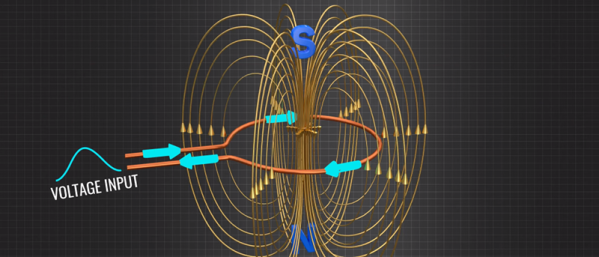
If you have done any sort of radio work you probably have a fair idea about what antennas do. It is pretty easy to have a cursory understanding of them, too. You probably know there’s something magic about antennas that are a quarter wave long or a half wave long and other multiples. But do you know why that matters? Do you understand the physics of why wire in a special configuration will cause signals to propagate through space? [Learn Engineering] does, and their new video is one of the best graphical explanations of what’s really going on in an antenna that we’ve seen. You can watch the video below.

If you tackle antennas using math, it is a long discussion. However, this video is about 8 minutes long and uses some great graphics to show how moving charges can produce a propagating electromagnetic field.

Continue reading “The Physics Behind Antennas”

Earthquake Detection On A Chip

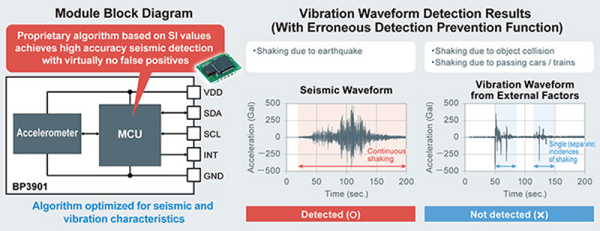
If you’ve ever been in an earthquake you’d assume it would be pretty easy to detect one. If things are shaking, there’s an earthquake. In reality, though, a lot of things can shake a sensitive instrument that is detecting shaking, so — for example — mechanical sensors will produce a lot of false positives. Now, however, you can filter out errant vibrations and reliably detect earthquakes on a chip.

The Rohm BP3901 has two primary features. First, it supposedly eliminates false detections due to things like a heavy truck rumbling by. In addition, while most sensors must be mounted completely flat, the BP3901 has a compensation method for angle which lets you mount it as much as 15 degrees rotated in either direction and still get good results. That’s because the BP3901 is based on the combination of an accelerometer and a microcontroller in one package to detect movement, characterize it based on an algorithm and reacting through an I2C bus and an INT pin.

Rohm suggests you could power the BP3901 for about 5 years with two AA batteries with the example of averaging 10 three-minute wake up events a month. We aren’t sure why we want to detect an earthquake, but we think we do. Imagine a large sensor network sending back real-time data as an earthquake happens — something we saw last year using Raspberry Pi. That project used a Geophone as the detector, which could be replaced by this chip. Rohm plans to have “OEM quantities” for sale next month which we hope means we can get smaller quantities from distributors.

A lot of people spend a lot of time thinking about how to predict earthquakes, as we’ve seen before. Of interest, the ancient Romans may have had a way to deflect earthquakes, so they probably didn’t care as much about detecting them.

The Power Of Directional Antennas

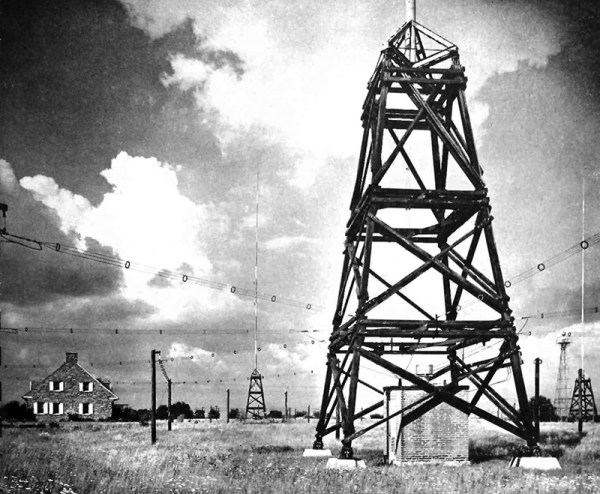
AM broadcasting had a big problem, but usually only at night. During the day the AM signals had limited range, but at night they could travel across the country. With simple wire antennas, any two stations on the same frequency would interfere with each other. Because of this, the FCC required most radio stations to shut down or reduce power at night leaving just a handful of “clear channel” stations for nighttime programming. However, creating directional antennas allowed more stations to share channels and that’s the subject of a recent post by [John Schneider].

When it comes to antennas, ham radio operators often think bigger is better. After all, hams typically want to work stations far away, not some specific location. That’s not true in the commercial world, though. The big breakthrough that led to, for example, cell phones was the realization that making smaller antennas with lower power at higher frequencies would allow for reuse of channels. In those areas the focus is on making cells smaller and smaller to accommodate more people. You can think of AM broadcasting as using the same idea, except with relatively large cells.

Continue reading “The Power Of Directional Antennas”

Spice With A Sound Card

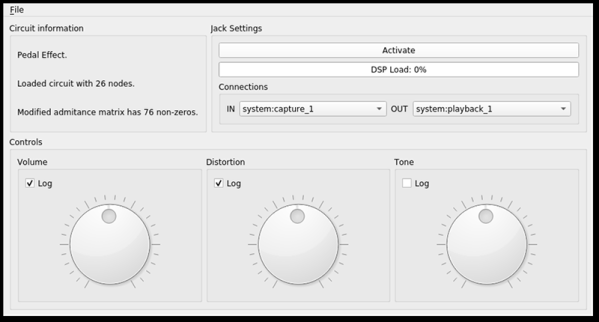
In years gone by, trying out a new circuit probably would have meant heating up a soldering iron. Solderless breadboards have made that even easier and computer simulation is easier still, but there’s something not quite as satisfying about building a circuit virtually. [Thedeuluiz] has a way to get some of the best of both worlds with the RTSpice project.

The idea is simple in concept, although not as simple in execution. The program does a Spice-like simulation of a circuit and can accept input and produce output from a PC’s sound card. Obviously, that means you can’t simulate RF circuits — at least not at the input and the output. It also means the simulation has to run lightning fast to keep up with the sound card sample rate. According to the author, it works best with modest circuits but exactly how big you can go will depend on your hardware.

Continue reading “Spice With A Sound Card”

Locking Up Lock Washers

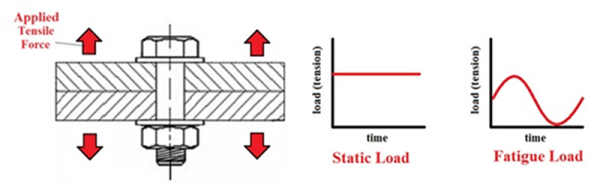
We’ll admit most of us are more comfortable with solder and software than mechanical things. However, between robots, 3D printers, and various other mechanical devices, we sometimes have to dig into springs, belleville washers, and linear actuators. Unless you are a mechanical engineer, you might not realize there’s a lot of nuances to something even as simple as a nut and bolt. How many threads do you need to engage? Do lock washers work? [Engineer Dog] has a post that answers these and many other questions.

The top ten list starts off with something controversial: split ring lock washers don’t work. The original post cites a paper that claims they don’t except in very special circumstances. However, he updated the post later to say that some people disagree with his cited study. In the end, you’ll have to decide, but given there are other options, maybe we’ll start using those more often.

Continue reading “Locking Up Lock Washers”