Field Expedient Quenches Your Thirst For A Soldering Station

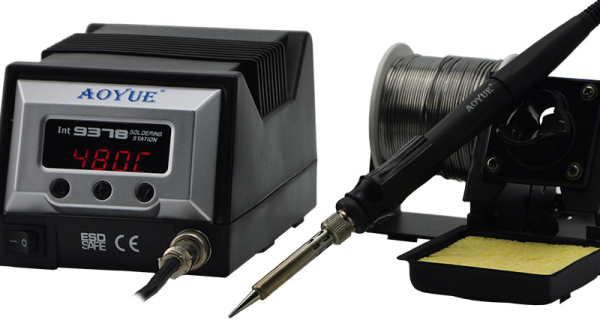
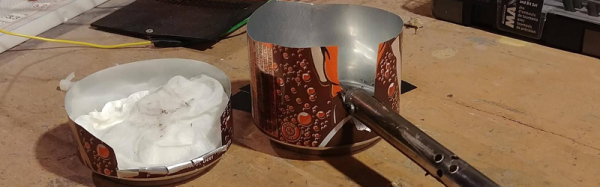
In the category of first world problems, it seems that these days no one is happy with just a plain old soldering iron. Today, everyone wants a station with bells, whistles, and features. If all you have is the iron, take heart. Grab a soda, drink it, and then duplicate [Kalvin178’s] makeshift solder station.

The idea is simple: cut or tear a soda can and press in the sides to make a V-shaped holder for the iron. A smaller part of the can might hold a wet paper towel, a sponge, or some copper scrubbing pads to clean your tip.

Continue reading “Field Expedient Quenches Your Thirst For A Soldering Station”

AI: This Decade’s Worst Buzz Word

In hacker circles, the “Internet of Things” is often the object of derision. Do we really need the IoT toaster? But there’s one phrase that — while not new — is really starting to annoy me in its current incarnation: AI or Artificial Intelligence.

The problem isn’t the phrase itself. It used to mean a collection of techniques used to make a computer look like it was smart enough to, say, play a game or hold a simulated conversation. Of course, in the movies it means HAL9000. Lately, though, companies have been overselling the concept and otherwise normal people are taking the bait.

The Alexa Effect

Not to pick on Amazon, but all of the home assistants like Alexa and Google Now tout themselves as AI. By the most classic definition, that’s true. AI techniques include matching natural language to predefined templates. That’s really all these devices are doing today. Granted the neural nets that allow for great speech recognition and reproduction are impressive. But they aren’t true intelligence nor are they even necessarily direct analogs of a human brain.

Continue reading “AI: This Decade’s Worst Buzz Word”

Fidget Spinner Gets Useful As MIDI Controller

Fidget spinners are not only a fad, but pretty much useless. Sounds like a job for hacking to make the toys have some actual purpose. [D777k] took up the challenge and created a MIDI controller from a common spinner. You can see a video of the results, below.

The device uses a LightBlue Bean controller and Garage Band as the MIDI software. Granted, it might not be super useful, but it is better than just a plain old spinner. [D777k] calls it a “whirling dervish of sound making!

The Arduino code that drives the thing is very simple. It reads three axes of acceleration and uses that to drive the MIDI software. When the acceleration exceeds a threshold, the software creates a new note based on the sums and differences of the accelerations.

The Lightblue Bean isn’t anything new, but it is well suited for this kind of service. Certainly, making a toy into a MIDI controller isn’t an original idea, either. But it sure is fun.

Continue reading “Fidget Spinner Gets Useful As MIDI Controller”

A Video Game Odyssey: How Magnavox Launched The Console Industry

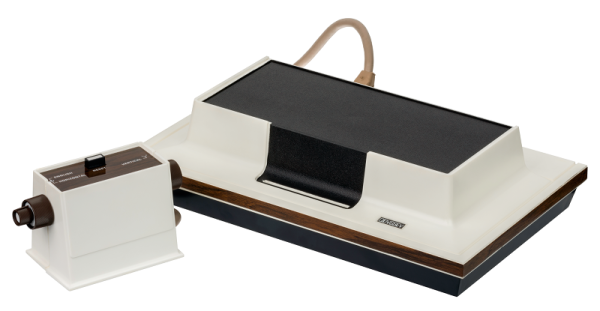
What was the first video game console? If you said the Atari 2600, you would be wrong, but we’d forgive you. After all, the Atari was early and widely sold. It also had the major features you expect from a video game. However, there was an earlier console available. the Magnavox Odyssey.

This system was black and white, had two wired controllers, and while it didn’t quite have cartridges, you could select from one of several games. The system seems inexpensive today at $100 (not including the optional light gun). However, adjusting for 1972 currency value, that’s equivalent to about $600 today.

It was not an impulse buy, and the differentiation between games was mostly an exercise in imagination. But the the Magnavox Odyssey nevertheless brought computer technology into the home and that was exciting. It proved a market existed for home video gaming, and served no small part in the success of Atari.

Continue reading “A Video Game Odyssey: How Magnavox Launched The Console Industry”

Breadboarding With E-Paper

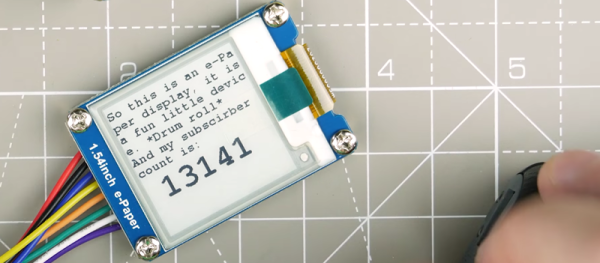
[David Watts] picked up an inexpensive Waveshare e-Paper display. He made a video about using it with a breadboard, and you can see it below.

The E-Paper or E-Ink displays have several advantages. They are low power, they retain their display even without power, and they are very visible in direct light. The downside is they don’t update as fast as some other display technologies.

Continue reading “Breadboarding With E-Paper”

Wolfram Alpha Shows Its Work

The bane of math students everywhere is the teacher asking for you to show your work. If you’ve grown up where a computer is a normal part of school work, that might annoy you since a lot of tools just give you an answer. We aren’t suggesting you cheat at homework, but we did notice that Wolfram Alpha now shows more of its work when it solves many common math problems.

Granted, the site has always shown work on some problems. However, a recent update shows more intermediate steps and also covers more kinds of problems in a step-by-step format. There are examples, but be aware that for general use, you do need to upgrade to pro (about $6 a month or less if you are student or teacher).

Continue reading “Wolfram Alpha Shows Its Work”

Think You Know Everything About Soldering?

[Joshua] has frequent discussions about his soldering techniques with viewers of his YouTube channel. He finally decided to interview [Randy Rubinstein] who is the president of SRA Soldering. In nearly an hour, they talk about everything from solder alloys to proper temperature. They also talk about lead exposure, flux cleaning, and lead-free solder.

They also talk about strategies for rework with lead-free and using special solder for removing SMD components. Honestly, although the first frame of the video says “your solder sucks,” we didn’t really find any earth-shattering revelations about something everyone’s doing wrong. We did, however, find a lot of good advice and some interesting details about things like the uses for different solder alloys.

Continue reading “Think You Know Everything About Soldering?”