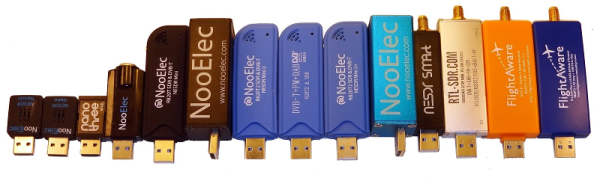
19 RTL-SDR Dongles Reviewed

Blogger [radioforeveryone] set out to look at 19 different RTL-SDR dongles for use in receiving ADS-B (that’s the system where airplanes determine their position and broadcast it). Not all of the 19 worked, but you can read the detailed review of the 14 that did.

Granted, you might not want to pick up ADS-B, but the relative performance of these inexpensive devices is still interesting. The tests used Raspberry PI 3s and a consistent antenna and preamp system. Since ADS-B is frequently sent, the tests were at least 20 hours in length. The only caveat: the tests were only done two at a time, so it is not fair to directly compare total results across days.
Continue reading “19 RTL-SDR Dongles Reviewed”

The (Robot) Body Electric

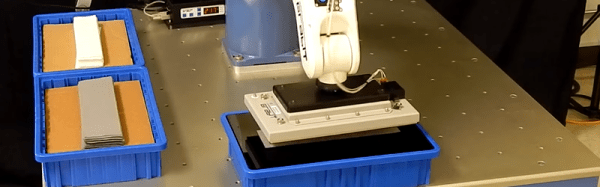
If you deal with electronics, you probably think of static electricity as a bad thing. It blows up MOSFETs and ICs and we take a lot of pains to prevent that kind of damage. But a start-up company called Grabit is using static electricity as a way to allow robots to manipulate the real world. In particular, Nike is using these robots to build shoes. You can see a demo video, below.

Traditional robots use human-like hands or claw-like grippers to mimic how humans handle material. But Grabit has multiple patents on electroadhesion. The original focus was wall-climbing robots, but the real pay off has been in manufacturing robots since the electrostatic robots can do things that mechanical hands are a long way from duplicating.

Continue reading “The (Robot) Body Electric”

Linux Graphics Programming

There was a time when embedded system developers didn’t need to worry about graphics. When you have a PIC processor and two-line LCD, there isn’t much to learn. But if you are deploying Linux-based systems today, graphics are a real possibility. There are many options for doing Linux graphics including Wayland, X11, and frame buffers. Confused? This tutorial can help. The sections on Wayland and Mir are under construction, but that’s probably not what you are going to be using on a typical hacker project for the foreseeable future, anyway.

Of course, even inside those broad categories, you have multiple choices. If you are doing X11, for example, you can go low-level or pick any of a number of high-level libraries.

Continue reading “Linux Graphics Programming”

A Diode By Any Other Name

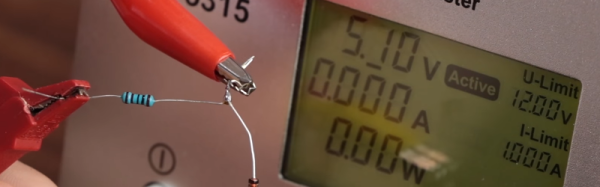
As active devices go, it doesn’t get much simpler than a diode. Two terminals. Current flows in one direction and not in the other. Simple, right? Well, then there are examples with useful side effects like light emitting diodes. [GreatScott] points out that there are other useful diodes and, in particular, he posted a video covering Schottky and Zener diodes.

These special diodes have particular purposes. A Schottky diode has a very low voltage drop and fast switching speed. Zener diodes have application in simple voltage regulation.

Continue reading “A Diode By Any Other Name”

Sorry US; Europeans Listen To Space With GRAVES

In Europe, the GRAVES radar station beams a signal on 143.050 MHz almost straight up to detect and track satellites and space junk. That means you will generally not hear any signal from the station. However, [DK8OK] shows how you can–if you are in Europe–listen for reflections from the powerful radar. The reflections can come from airplanes, meteors, or spacecraft. You can see a video from [way1888] showing the result of the recent Perseid meteor shower.

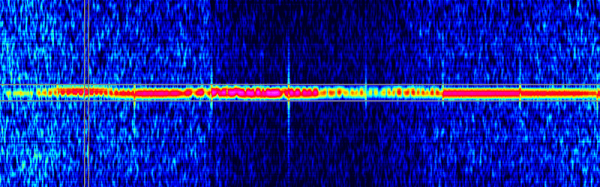
Using a software-defined radio receiver, [DK8OK] tunes slightly off frequency and waits for reflections to appear in the waterfall. In addition to observing the signal, it is possible to process the audio to create more details.

Why is there a giant vertical radar transmitter in the middle of France? The transmitter uses a phased array to send a signal over a 45-degree swath of the sky at a time. It makes six total steps every 19.2 seconds. A receiver several hundred miles away listens for reflections.

Even the moon reflects the signal when it is in the radar’s path. If you are interested in a moon bounce, you may be able to build a station to hear the reflections without being in Europe.

Of course, if you can transmit yourself, you might want to bounce your own signal off airplanes. If you want to do it old school, you could emulate [Zoltán Bay].

Continue reading “Sorry US; Europeans Listen To Space With GRAVES”

DSLogic Plus Teardown And Review

The DSLogic open source logic analyzer is on its second release (the plus version) and [OpenTechLab] has a comprehensive review of the new model, which, unlike the original model, includes a different method of connecting probes and provides a separate ground for each input pin.

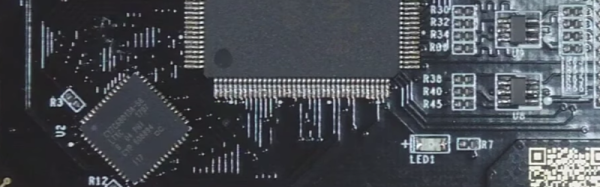
The device is pretty simple inside with an FPGA, a RAM, and a USB microcontroller. There’s also a configuration EEPROM and a switching power supply. The device stores up to 256 megabits internally and can sample 400 million samples per second on 4 of its 16 channels. [OpenTechLab] even puts the board under a microscope and maps out the input circuit.

Continue reading “DSLogic Plus Teardown And Review”

Forget Troy. Try HelenOS

Even though it seems like there are a lot of operating system choices, the number narrows if you start counting kernels, instead of distributions. Sure, Windows is clearly an operating system family, and on the Unix-like side, there is Linux and BSD. But many other operating systems–Ubuntu, Fedora, Raspian–they all derive from some stock operating system. There are some outliers, though, and one of those is HelenOS. The open source OS runs on many platforms, including PCs, Raspberry PIs, Beaglebones, and many others.

Although the OS isn’t new, it is gaining more features and is now at version 0.7. You can see a video about some of the new features, below.

According to the project’s web site:

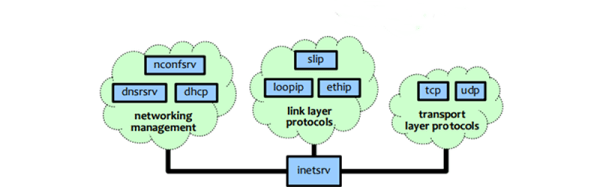
HelenOS is a portable microkernel-based multiserver operating system designed and implemented from scratch. It decomposes key operating system functionality such as file systems, networking, device drivers and graphical user interface into a collection of fine-grained user space components that interact with each other via message passing. A failure or crash of one component does not directly harm others. HelenOS is therefore flexible, modular, extensible, fault tolerant and easy to understand.

Continue reading “Forget Troy. Try HelenOS”