Custom Mouse Rocks Neat Thumbstick Design

A mouse is just two buttons, and a two-dimensional motion tracking system, right? Oh, and a scroll wheel. And a third button. And…now you’re realizing that mice can be pretty complicated. [DIY Yarik] proves that in spades with his impressive—and complex—mouse build. The only thing is, you might argue it isn’t really a mouse.

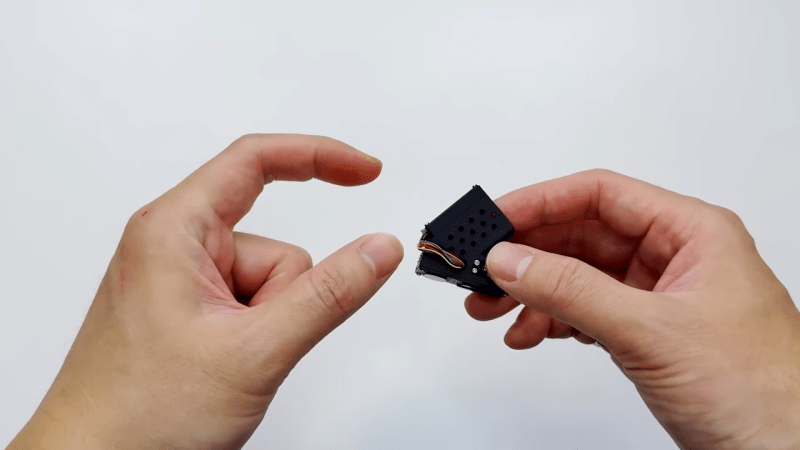
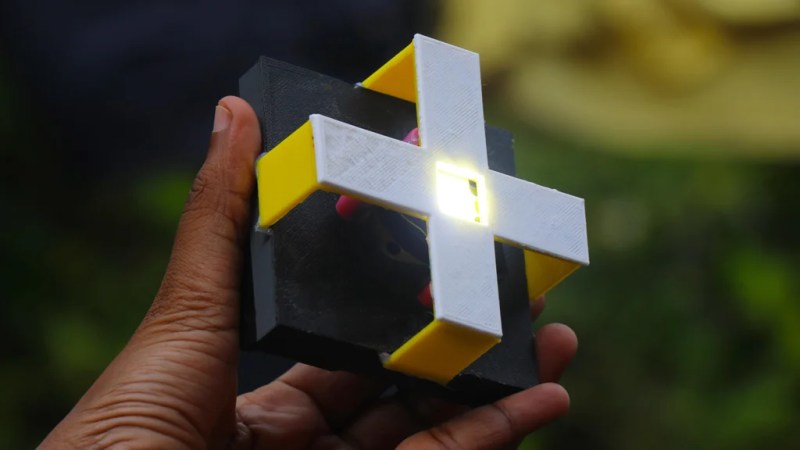
The inspiration for the mouse was simple. [Yarik] wanted something that was comfortable to use. He also wanted a mouse that wouldn’t break so often—apparently, he’s had a lot of reliability issues with mice in recent years. Thus, he went with a custom 3D-printed design with a wrist rest at the base. This allows his hand to naturally rest in a position where he can access multiple buttons and a central thumbstick for pointing. In fact, there’s a secondary scroll control and a rotary dial as well. It’s a pretty juicy control surface. Code is up on GitHub.

The use of a thumbstick is controversial—some might exclaim “this is not a mouse!” To them, I say, “Fine, call it a pointing device.” It’s still cool, and it look like a comfortable way to interface with a computer.

We’ve seen some other neat custom mice over the years, too, like this hilarious force-feedback mouse. Video after the break. Continue reading “Custom Mouse Rocks Neat Thumbstick Design”

There’s Now A Wiki For Hacking Redbox Machines

With the rapidly evolving situation surrounding the Redbox vending machines still out in the wild, it’s about time somebody put together a Wiki to keep it all straight.

The unredbox wiki has information on the various different hardware revisions that Redbox put out into the wild, from the regular outdoor machines to the weird indoor blue variant. The site also has breakdowns on individual components. For example, it covers the computers inside the machines, built by Dell, Lenovo, and Premio, and bits and pieces like the DVD carousel and the modems used inside.

Basically, if you’re working with these machines and you don’t have a manual, this resource could help you out.  As could the neat video below that shows the internals of a Redbox machine during the reloading process.

Whatever you do, though, don’t steal the kiosks. There’s folks handling that already, you’re not allowed to just walk up and haul them away. Check out our earlier coverage of people that are still out there renting from these machines, too.

Continue reading “There’s Now A Wiki For Hacking Redbox Machines”

Simple Hydrogen Generator Makes Bubbles And Looks Cool

Hydrogen! It’s a highly flammable gas that seems way too cool to be easy to come by. And yet, it’s actually trivial to make it out of water if you know how. [Maciej Nowak] has shown us how to do just that with his latest build.

The project in question is a simple hydrogen generator that relies on the electrolysis of water. Long story short, run a current through water and you can split H2O molecules up and make H2 and O2 molecules instead. From water, you get both hydrogen to burn and the oxygen to burn it in! Even better, when you do burn the hydrogen, it combines with the oxygen to make water again! It’s all too perfect.

This particular generator uses a series of acrylic tanks. Each is fitted with electrodes assembled from threaded rods to pass current through water. The tops of the tanks have barbed fittings which allow the gas produced to be plumbed off to another storage vessel for later use. The video shows us the construction of the generator, but we also get to see it in action—both in terms of generating gas from the water, and that gas later being used in some fun combustion experiments.

Pedants will point out this isn’t really just a hydrogen generator, because it’s generating oxygen too. Either way, it’s still cool. We’ve featured a few similar builds before as well.

(Pedantic editor’s note: Because this build doesn’t separate the H2 from the O2, what you get is a stoichiometric mix, or HHO, or “Oxyhydrogen“. By virtue of being in exactly the right ratio to combust, this stuff is significantly more explosive than pure H2. Be careful!)

Continue reading “Simple Hydrogen Generator Makes Bubbles And Looks Cool”

The Great Redbox Cleanup: One Company Is Hauling Away America’s Last DVD Kiosks

Remember Redbox? Those bright red DVD vending machines that dotted every strip mall and supermarket in America, offering cheap rentals when Netflix was still stuffing discs into paper envelopes? After streaming finally delivered the killing blow to physical rentals, Redbox threw in the towel in June 2024, leaving around 34,000 kiosks standing as silent monuments to yet another dead media format.

Last month, we reported that these machines were still out there, barely functional and clinging to life. Now, a company called The Junkluggers has been tasked with the massive undertaking of clearing these mechanical movie dispensers from the American retail landscape, and they’re doing it in a surprisingly thoughtful way. I chatted to them to find out how it’s going.

Continue reading “The Great Redbox Cleanup: One Company Is Hauling Away America’s Last DVD Kiosks”

Ruined 1993 ThinkPad Tablet Brought Back From The Brink

Collecting retrocomputers is fun, especially when you find fully-functional examples that you can plug in, switch on, and start playing with. Meanwhile, others prefer to find the damaged examples and nurse them back to health. [polymatt] can count himself in that category, as evidenced by his heroic rescue of an 1993 IBM ThinkPad Tablet.

The tablet came to [polymatt] in truly awful condition. Having been dropped at least once, the LCD screen was cracked, the case battered, and all the plastics were very much the worse for wear. Many of us would consider it too far gone, especially considering that replacement parts for such an item are virtually unobtainable. And yet, [polymatt] took on the challenge nonetheless.

Despite its condition, there were some signs of life in the machine. The pen-based touch display seemed to respond to the pen itself, and the backlight sort of worked, too. Still, with the LCD so badly damaged, it had to be replaced. Boggling the mind, [polymatt] was actually able to find a 9.4″ dual-scan monochrome LCD that was close enough to sort-of fit, size-wise. To make it work, though, it needed a completely custom mount to fit with the original case and electromagnetic digitizes sheet. From there, there was plenty more to do—recapping, recabling, fixing the batteries, and repairing the enclosure including a fresh set of nice decals.

The fact is, 1993 IBM ThinkPad Tablets just don’t come along every day. These rare specimens are absolutely worth this sort of heroic restoration effort if you do happen to score one on the retro market. Video after the break.

Continue reading “Ruined 1993 ThinkPad Tablet Brought Back From The Brink”

Microfluidic Motors Could Work Really Well For Tiny Scale Tasks

The vast majority of motors that we care about all stick to a theme. They rely on the electromagnetic dance between electrons and magnets to create motion. They come in all shapes and sizes and types, but fundamentally, they all rely on electromagnetic principles at heart.

And yet! This is not the only way to create a motor. Electrostatic motors exist, for example, only they’re not very good because electrostatic forces are so weak by comparison. Only, a game-changing motor technology might have found a way to leverage them for more performance. It achieves this by working with fluid physics on a very small scale.

Continue reading “Microfluidic Motors Could Work Really Well For Tiny Scale Tasks”

Laser Sound Visualizations Are Not Hard To Make

You might think that visualizing music with lasers would be a complicated and difficult affair. In fact, it’s remarkably simple if you want it to be, and [byte_thrasher] shows us just how easy it can be.

At heart, what you’re trying to do is make a laser trace out waveforms of the music you’re listening to, right? So you just need a way to move the laser’s beam along with the sound waves from whatever you’re listening to. You might be thinking about putting a laser on the head of a servo-operated platform fed movement instructions from a digital music file, but you’d be way over-complicating things. You already have something that moves with the music you play — a speaker!

[byte_thrasher’s] concept is simple. Get a Bluetooth speaker, and stick it in a bowl. Cover the bowl with a flexible membrane, like plastic wrap. Stick a small piece of mirror on the plastic. When you play music with the speaker, the mirror will vibrate and move in turn. All you then have to do is aim a safe laser in a safe direction such that it bounces off the mirror and projects on to a surface. Then, the laser will dance with your tunes, and it’ll probably look pretty cool!

We’ve seen some beautiful laser visual effects before, too. Just be careful and keep your power levels safe and your beams pointing where they should be.

Continue reading “Laser Sound Visualizations Are Not Hard To Make”