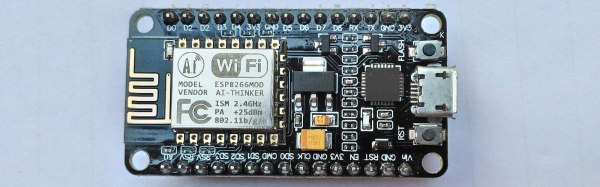
The ESP8266 is a remarkable piece of hardware. What we originally thought — and what was originally marketed as — a simple UART to WiFi bridge with Hayes modem commands has turned into one of the best embedded platforms around. It’s a powerful little microcontroller, it has WiFi, and it can send raw frames. That last bit is awesome, because it allows for some mischief or mirth making, depending on your point of view.
For his Hackaday Prize entry, [Tejas] is building a WiFi Jammer with an ESP8266. It’s a small device that is able to disconnect anyone from a WiFi AP. Should you build it? No. Can you? Sure, why not.
The code for this WiFi hacking tool is taken from the creator of the ESP8266 deauth toolkit, [spacehuhn], although [Tejas] is violating the license for [spacehuhn]’s (non-Open Source) code. This fantastic piece of firmware uses management packets to send a deauthentication frame, effectively allowing anyone to disconnect any device from a WiFi router. Why would anyone want to do this? Mischief, of course, but there are also a few techniques that could allow an attacker to get a password for the WiFi.
While there are ways to protect against deauth attacks, most routers don’t have management-frame protection enabled. In any event, we’re going to see exactly how annoying deauth attacks can be this week at DEF CON. The smart money is on a small percentage of DEF CON attendees lulzing about with ESPs and the Caesar’s CTO being very, very unhappy.