Sometimes when working on a righteous hack, we get goosebumps while watching our code execute faster than we could ever possibly comprehend. Seeing the pixels of the LCD come alive, hearing the chatter of relays and the hum of fans…it’s an amazing thing what electricity can do. And it is equally amazing when you realize that it all started one hundred and thirty five years ago, when [Thomas Edison] changed the world forever with the first practical electric light bulb.
That bulb was lit by a Direct Current – the same thing that runs the computer you’re reading this article on. The same thing that runs many of the hacks you read about here on Hack a Day, and almost all electronic devices in your house. But somewhere in the mix must exist a device that changes the Alternating Current from your wall outlet to the needed DC. Why? Why is it that we transport electricity as AC only to convert it to DC in our homes? You might answer:
“This argument was played out in the War of Currents back in the 1880’s.”
Indeed, it was. But that was a long time ago. Technology has changed. Changed so much to the point that the arguments in the War of Currents might no longer be valid. Join us after the break, where we rehash these arguments, and explore the feasibility of an all DC environment.
 This project is
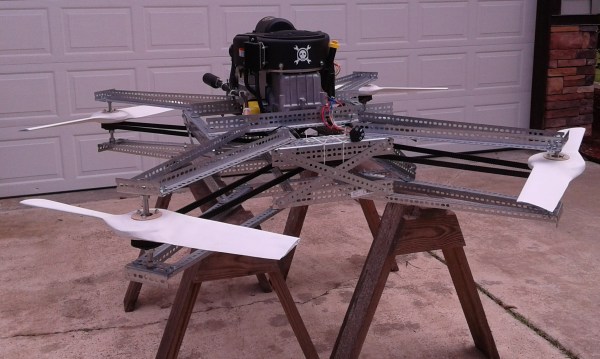
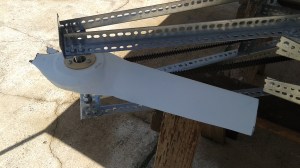 While the tight new engine was quickly losing RPM, the propeller and belt system still had quite a bit of inertia. As the video after the break shows, the belts started flapping and caught on the propeller blades. The front right prop tip caught the double-sided toothed belt, pulling it up and over the propeller. The other end of that same belt lives on the right rear prop. It too caught a propeller blade, snapping the composite blade clean off its hub. The bent steel pulley axles are a testament to the forces at work when things went wrong.
 The day’s harvest is collected, weighed, and bagged for further production. The fruits are crushed to remove each bean from its red jacket. Then, the beans are washed and spread out in the sun for 8-10 days. They are frequently rotated so they dry evenly. The dried coffee is packed in bags and sent into the city.
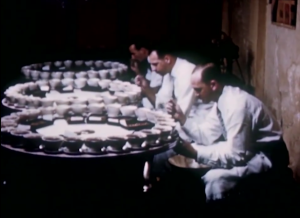
 At a warehouse, the coffee is inspected, sorted, and graded. Bags are stamped with the coffee’s country of origin and intended destination before going to the seaport. A very important step happens here. As each bag walks by on the shoulders of a worker, another guy stabs it to get a sample of the beans. The on-site A&P officials take over at this point and do their own inspections, sending samples to the US. Here, the coffees are roasted and taste tested for both strength and flavor from a giant lazy Susan full of porcelain cups.