[Fileark] has instructions for reprogramming keyless entry devices for your car. His demonstration video, which you can see after the break, shows how to make one key fob work for two different vehicles. In this case he’s working on a couple of Chevrolet trucks but there are instructions for GM, Ford, Dodge, Toyota, and Nissan. If you need to reprogram one of these you may find this useful, but we’re wondering how it can be incorporated into a project. If you can sniff out the communications that are going on during the programming you should be able to build and pair your own devices with a vehicle. Wouldn’t it be nice to incorporate your keyless entry into your wristwatch?
DelFly2 And DelFly Micro
[youtube=http://www.youtube.com/watch?v=4Mxq-nr9xyY]
The video you see above is the on board footage of the DelFly2 autonomous ornithopoter robot. Weighing 16 grams, it carries a small camera and can provide a live feed. If you’re amazed at the tiny size and weight of the DelFly2, check out the DelFly micro, video after the break, that weighs 3 grams. Remember when we thought 17 grams was small for an ornithopter?
All processing for the DelFly2 is done at a base station and transmitted to the flying bot to keep the weight down. The team also had to create their own brushless motor that runs at 60% efficiency and weighs only 1.6 grams. The 130mAh battery can sustain 15 minutes of horizontal flight or 8 minutes of hovering.
Electronic Vuvuzela
[youtube=http://www.youtube.com/watch?v=AHsgRuAKJdQ]
Want to annoy fellow fans but don’t have the lung power to do the job? [Hunter’s] electronic vuvuzela is just the thing you need. The plastic noisemakers were so prevalent at the world cup this year that some folks came up with audio filters to remove the sound. The electronic rendition is much smaller, using a 555 timer to mimic the instrument on a small speaker. [Hunter’s] build has buttons for five different notes which can be altered with some potentiometer. There’s no schematic but then again for something that’s annoying you don’t want to make it too easy to replicate.
Update: Hunter added the schematic to his site which spell doom for those who enjoy peace and quiet.
Programmable Drum Machine

This sequencer, called Drumssette, uses audio tape to churn out some beats. [Mike Walters] built this around a Tascam four track cassette recorder. The tape inside has a different drum sound on each of the tracks, with a corresponding row of red buttons. Pushing a button adds the drum sound to the loop on that beat. He’s using a series of digital logic gates to patch through the sounds as well as clocking the device from one of the tape’s tracks. It’s pretty neat to see the focus selector used in the video after the break to sync up the beginning of the repeated drum patterns. This isn’t the first time we’ve seen [Mike’s] work. If you missed it last year take some time to review the Melloman.
Update: Acrobatic Quadcopters Team Up

We usually envision small wheeled robots when we thing about swarm robotics but these cooperative quadcopters make us think again. This is an extension of the same project that produced those impressive aerial acrobatics. It may not be as flashy, but watching groups of the four-rotored flyers grab onto and lift loads is quite impressive. There is also a shot of one dropping a 2×4 and immediately compensating for the loss of weight. We’re not certain, but it looks like team lifting doesn’t require the 20 high-speed camera rig that the acrobatics did. We’ve embedded the demonstration video after the break.
A Letter From Jason Calacanis, The Owner Of Hack A Day
HaD Community,
We’ve heard the feedback, death threats and *sigh*s regarding the more accessible “top X” posts we’ve published recently. we’re going to pause on these while we internally discuss the mission and goals of Hackaday.
For background, I came up with the name Hackaday while brainstorming a site for hacks with [Phillip Torrone], who was then working on a hack every two or three weeks for a new blog called Engadget which [Peter Rojas] and I had founded. When we sold Weblogs Inc, the parent company of Engadget, Hackaday and 100 other blogs to AOL I pulled Hackaday out of the deal at the last-minute.
Why? Well, let’s just say that this dark overlord realized the dark overlords at the bigger Death Star (known as Time Warner) would not take kindly to having their set-top boxes and DVD players hacked. The head of legal department at said Death Star almost exploded when she read Hackaday.
Hackaday then existed in a shell company before I bought it from my former partners at weblogs inc. I did this, as opposed to selling it or shutting it down, because I know Hackaday is a unique place for a unique group of folks to share what they are working on.
My thinking has been “as long as I don’t lose too much money on this I’m fine with HaD just chugging along.” I’m happy to say that while I’ve lost a little money it’s not a lot (well, not happy, but not devastated. :-)
All that being said, I’d like to see Hackaday grow and expand its mission beyond “one hardware hack a day.” That’s why I asked the Hackaday crew to set up answers.hackaday.com and try out a Q&A forum for folks… which you guys seem to have embraced and used. It’s seems to be getting some traffic and is providing some utility.
What I’d like to see is for “classic hackaday” to expand into a place where a wider audience can learn and be inspired to hack *anything*.
So, if a casual internet users wants to rip their DVR apart and try upgrading the hard drive we should be the place they can learn how to do that. If they have a problem, they can ask a question here too.
If someone wants to jailbreak their iPhone or rip their iPad apart and embed it in the dashboard of their car they should be able to do that here.
… or if they want to learn some life hacks related to their Gmail account, we have a long article with the top 25 lifehacks for that.
So, my proposal to the community is to:
- a) Keep doing exactly what we’ve done an RSS feed called “classic”
- b) Expand the mission statement to something along the lines of “hack everything” (or maybe “hack anything” sounds more ambitious/fun?). Perhaps best said is: “hack everything, and inspire and help others to do that same.”
Thoughts? Feedback?
-Jason Calacanis

Android Development 101 – A Tutorial Series
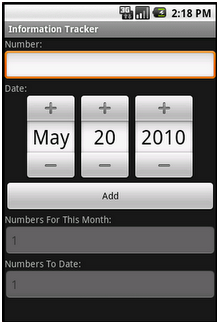
Android is the prime OS for developing applications in today for many reasons. The main reasons being that it is Open Source and Intuitive. In addition it uses Java for development, which is quite an easy language to get used to and develop in. This being said, a lot of you have great ideas for Android applications or applications in general but don’t know where to start. This series will take you behind the scenes and introduce you to the software that will be your best friend while developing for android. On this journey we will start with a “Hello World” and move on from there to create a database driven application with a touch and scroll interface. The final result will look something like this:

Continue reading “Android Development 101 – A Tutorial Series”