Adafruit Eagle Library

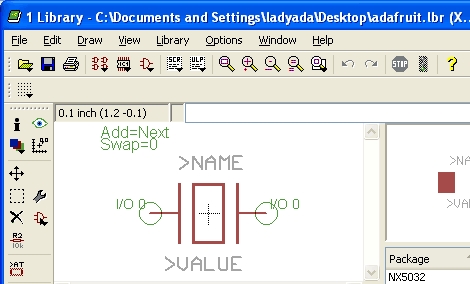
We love it when a PCB comes out right the first time. We’re careful enough with our designs that if something is wrong it’s usually a footprint problem, like we picked the wrong package for the components. Adafruit is helping to make the design process easier by sharing their Eagle library. Like the Eagle library version control we saw earlier in the month, this library is housed on github making it easy to stay up-to-date. The library includes many components (switches, crystals, IC’s, etc.), and fixes some prolbem-footprints, like 0805 surface mount pads.
Turntable Light Sequencer

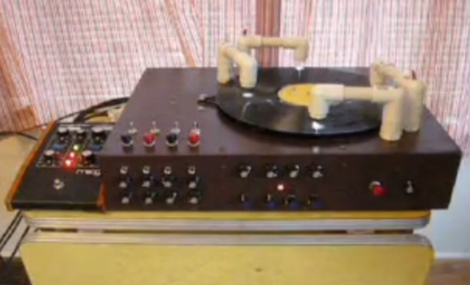
[Benjamin] built a sequencer that uses a turntable and light sensors to lay down a funky beat. If you like creepy videos with repeated gratuitous corderoy-clad rear-ends we’ve got you covered after the break. Art film aside, he’s got an interesting project. Four light sensors are mounted below the turning record with LEDs hovering above. His hatred for old LP records is apparent because holes must be drilled in a disc for the light to shine through. The four notes in the sequence can be altered in voice and color, along with controls for motor speed and direction. The project also has four manual inputs to add some variety to the repetitive beat sequence. It’s a bit less practical than the penny sequencer but fun none-the-less.

Continue reading “Turntable Light Sequencer” →

Coded Entry Using Your Wristwatch

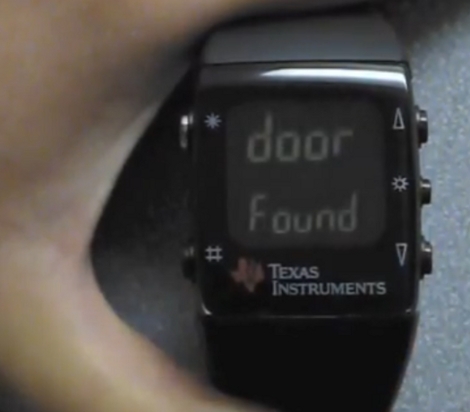
[Ziyan] and [Zach] built a door entry system that uses a code entered from your wristwatch. They’re using the TI eZ-430 Chronos that we saw in November. There is a project box mounted over the deadbolt lever. Inside, the wireless fob waits for the watch to connect. When a watch has connected and the correct code is received (using 128 bit encryption) the fob actuates a servo to turn the lock. On the user side of things the code is entered by tapping the watch. The built-in accelerometer picks up these taps and relays them to the door unit.

It’s a heck of a project! Check out their demonstration video after the break. We’d like to see a mechanical option for escaping the apartment in case the door unit fails but otherwise we think this is perfectly executed. We’re looking forward to seeing more projects that tap into this TI hardware.

Continue reading “Coded Entry Using Your Wristwatch” →

Buzzle: A Morse Code Puzzle Box

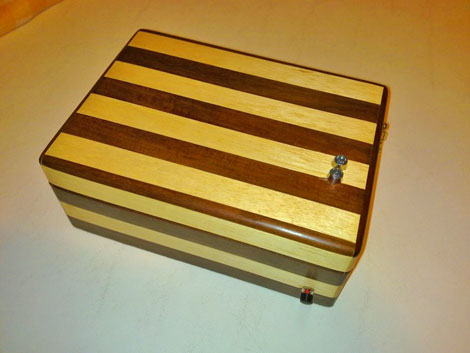
[lucasfragomeni] built the Buzzle after being inspired by the reverse geocache puzzle. The Buzzle was built as a gift to a friend. It’s a tricky gift too. His friend can’t open it until he decodes the words being displayed in morse code via an LED. A word is chosen at random, so you would have to decode it each time you want to open the box. That’s a pretty neat security feature. Sure it’s not the most secure, but it would keep casual peepers out. Unfortunately, the box was empty when his friend received it.

Robots In Space

[youtube=http://www.youtube.com/watch?v=nl6lZbyLkzs]

SPHERES (Synchronized Position Hold, Engage, Reorient Experimental Satellites) are experimental robots made at MIT for the purpose of testing robot locomotion in space. As you can see in the video above, they are capable of maneuvering pretty well. They seem to hold formation fairly tightly. They are using compressed CO2, through 12 different thrusters for positioning. They should be capable of autonomously navigating around each other as well as docking to one another.

Live High Altitude Balloon Launch

[Terry] is planning to launch his high altitude balloon within the next few days. As we’ve seen before he has gone for a general setup – GPS tracking, environment sensors including temperature and humidity and pressure, and 2 on board cameras – all with an expected height of about 100,000 feet. What makes this project unique is the transmission of live telemetry data to a Google Maps or Google Earth interface.

The planned launch date is Sunday the 24th about 00:00 UTC so long as the Civil Aviation Safety Approval for the launch is passed.

As a final note [Terry] wanted to let inspiring balloon launchers to check out the UK High Altitude Society – who have been an invaluable source of information.

Billy Bass With Selectable Clips

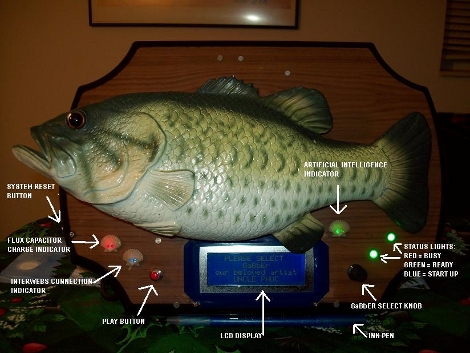
[Will] enjoys giving hacked items as Secret Santa gifts and this year he decided to augment a Billy Bass. These gag items have become a popular hack to use as a prop or to read your Twitter updates to you. Right of the bat he scrapped the original PCB and sent it to the gift’s future recipient as if he were a kidnapper extorting a family. He then set to work replacing the guts with a pair of PIC 18F452 microcontrollers. One uses power transistors to control the movement, the other controls an MP3 that handles the sound clips. The interface has some LEDs for added effect and uses a dial to select each sound clip which is displayed on a 4×20 character LCD.

The project has several voltage headaches as the motors operate at 6v and 4v, the microcontrollers and LCD display at 5v, and the MP3 is looking for 1.5v. That’s for voltages supplying this Frankenstein’d schematic. But he pulled it off, as you can see in the video after the break.

Continue reading “Billy Bass With Selectable Clips” →