Update: Nintendo DS Camera Control

All of the juicy details needed to control a camera from your Nintendo DS are now available at the Open Camera Control project. This is the descendant of [Steve Chapman’s] setup from a few years ago. The system has been polished up and has seen many feature additions. It’s been used in movie production and works with a wide range of cameras.

Start by building your own interface cable using an AVR microcontroller running the Arduino bootloader. Finish up by loading some open source software onto the DS to add a cornucopia of shot options.

[Thanks Pops Macgruder]

Hardware Jailbreak Eases Reboot Pains

This device can jailbreak an iPhone. It doesn’t require a computer and it can either reboot a phone that was one-time-boot jailbroken using the blackra1n exploit, or jailbreak a factory fresh unit. We wouldn’t say this solves the tethering problem caused by blackra1n (needing to return to a computer to reboot the phone), but it certainly does ease the pain. We saw some info about the board layout but no parts list or firmware. See the demo after the break and leave a comment if you have more information on the parts or code.

Continue reading “Hardware Jailbreak Eases Reboot Pains” →

Coffee Powered Car-puccino

We can only imagine how amazing this coffee burning car smells at it speeds down the highway at a maximum of 60mph. Don’t jump out of your seat so quick to get your own, while the idea sounds fantastic, the mileage will bring you back to earth rather quick. At 3 miles per kilo of coffee, it can turn that £36 210 mile trip into one between £910 and £1,820 with a stop to re-bean-fill every half hour!

Still, the Car-puccino is an amazing conversion, and we’re getting closer and closer to Back to the Future’s Mr. Fusion

[Thanks Tim]

50MHz To 100Mhz Scope Conversion

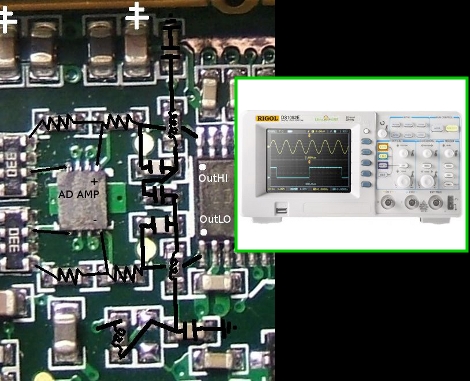
[Ross] is the proud owner of a 50 MHz Rigol DS1052E oscilloscope. He’d like to have the 100 MHz version but the $400 difference in price puts it out of his reach. After some extensive poking around on the PCB and pouring over datasheets, he managed to reverse engineer the design and upgrade to a 100 MHz version. This is as easy as desoldering one capacitor to deactivate a high-pass filter present in the lesser model of scope, unlocking the faster potential of its bigger brother.

Jeri Makes Integrated Circuits

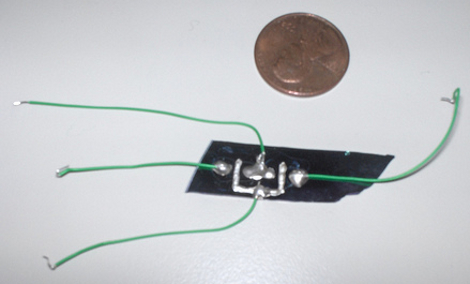
[Jeri Ellsworth] made this silicon inverter at home, by hand. It took her two years to get the process figured out and achieve something we didn’t think was possible. The complexity of manufacture, and the wide range of tools and materials needed seem insurmountable but she did it anyway. Her home chip fab Flickr set is well commented and details her work area and part of the processing. If you’re hurting for more check out her 40 minute Metalab talk which we’ve embedded after the break.

If her name sounds familiar but you just can’t place it you may know her from The Fatman and Circuit Girl. We’ve also featured some of her hacks, such as her Pinball challenge against [Ben Heckendorn], and her giant Etch-a-Sketch.

Continue reading “Jeri Makes Integrated Circuits” →

Noisy Super 8

[vimeo=http://www.vimeo.com/9196943]

[Matt Kemp] remade this super 8 film camera into a synthesizer. Inside you’ll find a light sensor pointed through the lens. This way, zooming, focusing, and pointing the lens elsewhere will change the sound. He also refit the original controls to monkey with the output. Turn your speakers up when you watch this, your co-workers will love you for it.

Game Glove Learns Your Weakness

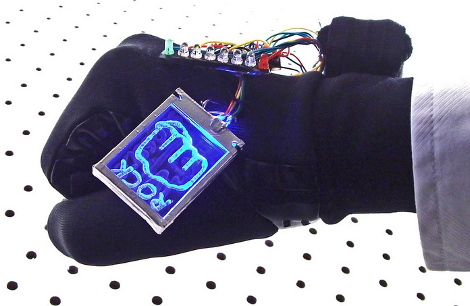
[Steve Hoefer] pulled together a great hack for the friendless. This glove will play a heated game of rock-paper-scissors against you. [Steve] realized that the middle and fourth fingers are all that need to be monitored to decide which of the three signs you are making. He used flex sensors on the back of these fingers as an input. There is also an accelerometer to judge the three shakes that lead up to the shoot.

The small screen you see displays what the glove chose and is a hack in itself. This idea adapts from an Evil Mad Scientist project, using three sheets of acrylic etched with the different icons and edge-lit with LEDs. All of this, along with a speaker and scoreboard, connect to an Arduino. The icing on the cake? [Steve] coded an adaptive learning algorithm that observes your playing style to gain an advantage.

See this in action after the break. Once you’ve mastered rock-paper-scissors you should consider building other glove-based peripherals.

Continue reading “Game Glove Learns Your Weakness” →