Lava Lamp Centrifuge

[youtube=http://www.youtube.com/watch?v=8-i9iI0ZA4M]

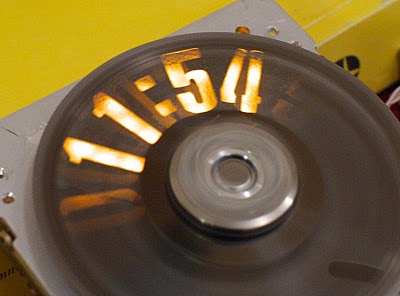
Like many projects, this one started with a harmless question. “Will lava lamps work in a high-gravity environment such as Jupiter?”. Well, as it turns out, this harmless question was not so easily answered. The only real solution was to test and prove for sure. To do this, [Neil Fraser] built a centrifuge in his living room. At 10 feet across and roughly 50 kilograms, this is no small toy. The end with the lava lamp is set to pivot, so at a stand still, it is positioned vertically and at full speed it is positioned horizontally. The whole process is recorded on video for proof. So, does a lava lamp work in high gravity? Watch the video or read the article to find out.

[via Makezine]
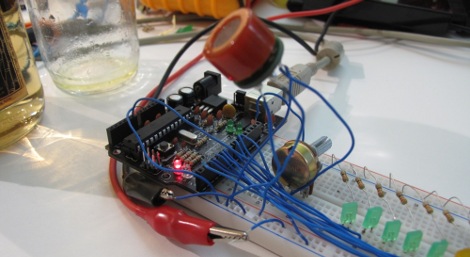
Don’t Worry Occifer, There Is No Blood In My Alcohol!

[Daniel] wrote up a quick tutorial on interfacing with the MQ-3, or better known Breathalyzer from SparkFun with Arduino. While we would have used perhaps an op-amp/comparator based system and kept it in a much smaller package, the idea was so quick and simple and enjoyable we hoped an article might keep some hackers from drinking and driving.

[Thanks CletustheYokel for pointing out our silly category mistake.]

137 Years Of Popular Science Online Free

137 years of the magazine Popular Science are now being hosted online by Google. You can peruse at your leisure, though you’ll have to search by keyword. We don’t see a date or issue browsing option. The cover art alone is worth your time, even if you’re not a fan of the articles. Many of us have fond memories of our childhood being influenced by the contents of these pages.

[via BoingBoing]

Time Delay Door Alarm

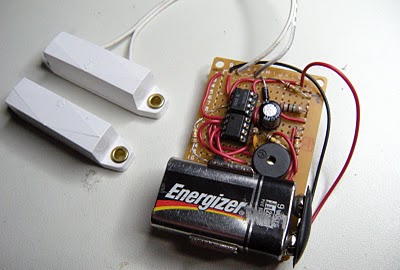
Ever accidentally left your front door ajar and had a pet escape? [BlackCow] came up with a simple solution to this problem. The circuit is fairly rudimentary but a great example of using the basics to get the job done. Now, instead of having an alarm that sounds as soon as the door is open, he has a 30 second delay. This helps avoid the “boy who cried wolf” effect also known as the “vista security warning” effect of being bothered too many times for a non issue.  We also have to say that we like his taste in blog layouts.

[via Hacked Gadgets]

Lucid Dreaming

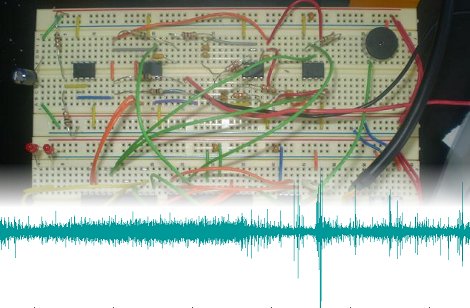
When we saw [merkz] use of an Arduino to produce lucid dreaming we were quite shocked. Unlike typical setups that just flash a light through sleep, his system monitors eye movement through electrodes and is able to send the data to a computer for graphing and analyzing.  The only problem being we couldn’t find a circuit diagram or code.

Not ones to be shot down so quickly, a Google revealed this thread on making ‘Dream Goggles’, which was really a Brain-Wave Machine based on the parallel port. Some modifications of an ECG collector’s electrodes using sound cards, and you could have your own lucid dreaming.

[Thanks Phil]

DIY Diodes

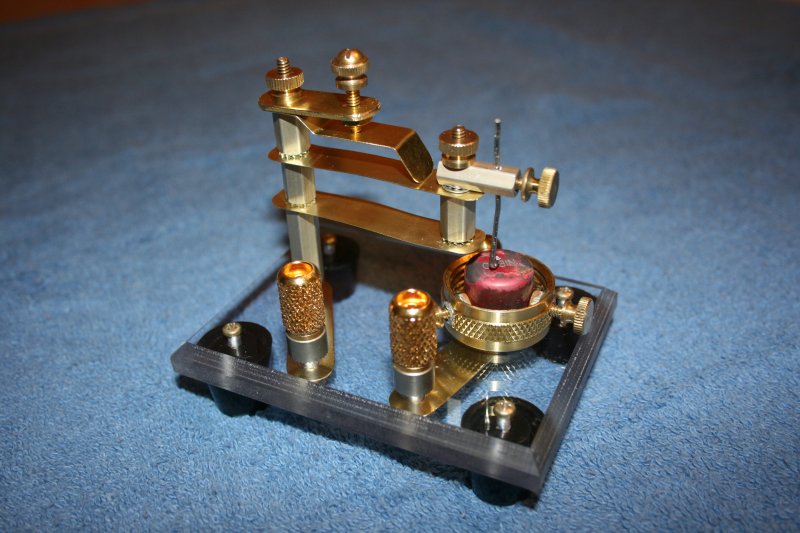
[H. P. Friedrichs], the creator of the Static Bleeder has created his own diodes. Using household chemicals, a film of cuprous oxide was made on a copper pipe cap. Cuprous oxide has been one of the first known semiconductor substances, has a low forward drop but is an otherwise asymmetrical conductor, odd V-I curves, and some neat photovoltaic action. The apparatus seen above is used to bring a piece of lead (in this case, solder) into contact with the salmon-colored cuprous oxide while electrical connections can be made to the binding posts at the front. What are your thoughts on this device?