Ubuntu Developer Week

ubuntu_dev_week4

Next week, August 31 through September 4, is Ubuntu Developer Week. If you’ve always wanted to help out with an open source project but didn’t know how to get into it, this is your chance. The week consists of 25 one-hour sessions held interactively through IRC and led by some of the best of the Ubuntu development team. Participate in as many or as few sessions as you want. Check out the Ubuntu Developer Week page or their fancy brochure (PDF) for more information.

Want to see what it’s all about before committing to a live session? You can view the IRC logs from the January sessions. In addition to ‘Getting Started’, you may find the ‘Packaging 101’ and ‘Launchpad Bug Tracking’ session notes interesting.

Center Brake Light LED Retrofit

brake_light_retrofit

[Matt] wanted to increase the intensity of the center brake light on his car. The factory installed light uses a 20w incandescent bulb and although aftermarket LED replacements are available, he decided to take the retrofit on himself. Using the Fresnel lens from the light assembly as protoboard, he mounted a row of 10mm LEDs along with their current limiting resistors. He then broke the glass from the original bulb, removed the filament, and soldered directly to the two electrodes. This way the bulb socket can still be used to connect to the car’s electrical system.

Ms. Pac-Man IPod Charging Cover

FSPKD86FYTCGWZL.MEDIUM

iPod chargers definitely are a unique entity on anyone’s desk. Allowing you to stand your iPod upright, charge, and maybe play a video at the same time, but they aren’t exactly beautiful. [russm313] got the brilliant idea of disguising his iPod (and charger) as a miniature Ms. Pac-Man arcade cabinet. Unlike some other small cabinets we’ve seen, it is just cover and can’t actually be played. But the idea is still original and the process is so simply we’re surprised it hasn’t been done before; just cardboard, glue, and some other small items are needed and you have a work of art. All that is left is figuring out how to adapt it for the iPhone. Check out his iPod playing a video of game play for a more authentic look, after the break.

Continue reading “Ms. Pac-Man IPod Charging Cover” →

Beef Up Your UPS

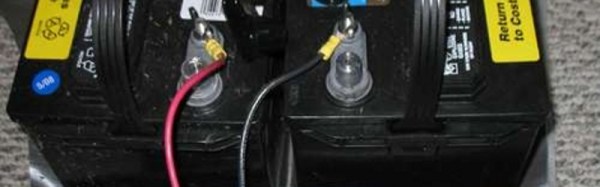
[Surferdude] was unhappy with the decreasing life of his aging uninterruptible power supply. He decided to beef it up using marine batteries. He extended the battery connections outside of the UPS case using #10 wire and swapped the two 12 volt gel cells with the heavy duty lead-acid batteries. Doing so upgraded the device from 20 amp-hours to 84 amp-hours at a cost of about $160. If you’re thinking about taking this on yourself, pay attention to the countinuous output rating of your UPS to prevent a fire risk.

XMPP And Home Automation

xmpp_office_lights

[Matthias] from Intuity Media Lab put together a nice bit on controlling office lights with XMPP from his Android phone. In the article, he explains the components involved in the project, why he chose XMPP, and lists everything you need to replicate it. The project makes use of a wide variety of tools and libraries, weaving together code from multiple languages to achieve its goal. Overall, his project is a welcome change in a world full of Twitter–based solutions.

Wireless Electricity

[ted id=619]

[Eric Giler] has a talk available over at TED that discusses and demos delivering electricity without wires. Called WiTricity, these methods were developed by a team at MIT a few years ago who were working off of the concepts of Nicolai Tesla. The facts shared about our current energy delivery system are a bit shocking; we’ve spent over $1 trillion in infrastructure and produce more than 40 billion disposable batteries each year.

The demonstration in the video starts about 6:30 into it. At first we see a flat panel television powered wirelessly from about 6 feet away, then the T-Mobile G1 powered from the same distance. The thought of new TVs coming with WiFi and WiTricity standard would mean just hanging it on the wall with no cords to run. We can also image cellphones that have a battery only for backup purposes when you were not near a transmitter.

The power transfer occurs between two coils that resonate at the same frequency and only that frequency. This remind us a bit of Orson Scott Card’s fantasy communications device from the Ender’s Saga.

Tiny Light-seeking Robots

tiny-light-seeking-bots

[Alex] continues to delight us with his projects. His third-generation tiny Braitenberg vehicle, a light seeking robot, is a big improvement over its predecessor, the mini Braitenberg vehicle. He’s moved from an Arduino based design to using the AVR ATtiny25v, replaced the breadboard with a PCB, and reduced the parts count. We think it was a great idea to use shrink tubing to shield the back of the photo-resistors from ambient light. Don’t miss the video of these little guys chasing a flashlight beam after the break. Continue reading “Tiny Light-seeking Robots” →