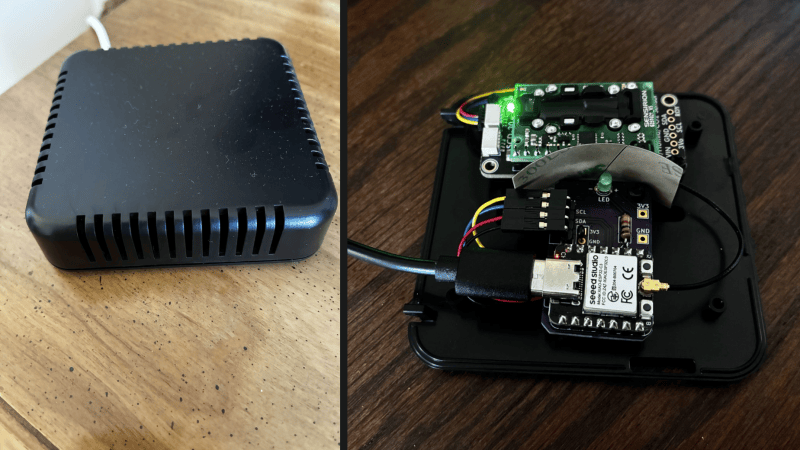
CO₂ buildup in a living area can be a serious problem, and a sensor that fails quietly cannot be relied upon. [William Collis] addressed this important issue by creating CO₂ monitors built to fail visibly.
[William] has a nice home setup that can monitor CO₂ levels in two places, but noticed an important issue: the system always displayed the last known-good sensor reading. An unchanging, healthy-looking number is good! Unless it isn’t, because a flat unchanging number is also exactly what a dead sensor looks like.
The solution was for [William] to change how the sensors are treated so a faulty sensor isn’t hidden behind apparently-good values, and the sensor itself flashes a visible fault LED in the case of a problem.
Each monitor is a Sensirion SCD30 CO₂ sensor, paired with a Seeed XIAO ESP32-C3 running ESPHome to communicate with Home Assistant, an open-source home automation framework. There was no need to rewrite the ESPHome firmware; all his modifications fit within the context of a configuration file and certainly seem to be improvements over the original.
Sensors that can be relied on are important, but if the system itself needs some ruggedizing maybe consider a homebrewed UPS for Home Assistant.

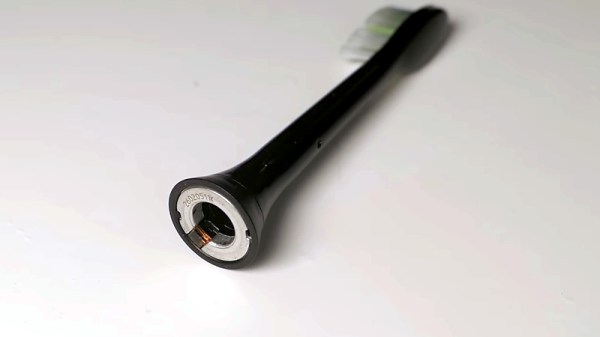
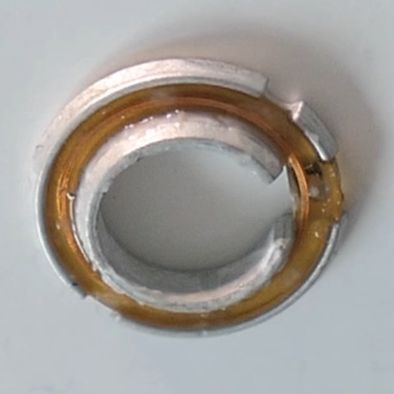 Depending on which type of electric toothbrush you are using, the replaceable brushes may contain an NFC chip that the handle and possibly base station uses to track various details, such as time spent brushing and when to replace the brush. The Philips Sonicare of [Circuit Helper] is one such unit, with its NFC chip