Arduino Environment On ATmega644

Our friend [Zach Hoeken] at NYC Resistor is porting the Arduino environment to an ATmega644 chip. This doesn’t really add new functionality to the ATmega644 as it is already fully programmable, but it does add a user-friendly and familiar environment to the ATmega, allowing users to build their Arduino-based projects with more powerful hardware. The ATmega is, after all, the biggest DIP package AVR makes, featuring 64k flash and 4k RAM (both four times as much as an Arduino) and 32 I/O pins, which is 12 more than an Arduino. The video is only proof of concept, so we will let you know when [Zach] releases more details.

[via NYC Resistor]
Mr. Modchip Ruling Released


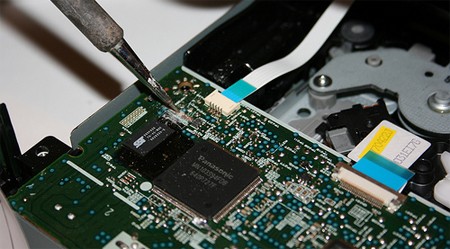
In an unexpected development, [Neil Stanley Higgs], aka Mr. Modchips, was cleared of his previous convictions in British courts for selling modchips for the Xbox 360 as well as modded consoles.

Notably, the prosecution did not argue that he infringed copyrights, but merely facilitated copyright infringement by selling modchips that circumvent the Xbox’s ETM. Since the copyright infringement argument was not made, existing law continues to hold sellers of pirated games and owners of modded consoles responsible for infringing the copyrights of game developers, as they are the ones who illegally copy the software. Pirated game sellers’ violation of the law is plain to see, but owners are still held responsible the moment they place the pirated disc into the loading tray and boot it up. The infringement in these cases occurs exactly when any part of the pirated game is loaded onto the console’s RAM, as this is considered another illegal copy.

[Higgs]’s charges hinged on whether the Xbox’s piracy prevention methods were intended to completely prevent pirated games from being played or merely act as a hindrance. The court felt it was the latter, and so they reversed the charges.

[via Xbox-Scene via Team Xecuter]
[photo: Raybdbomb]

Lamination For PC Board Etching


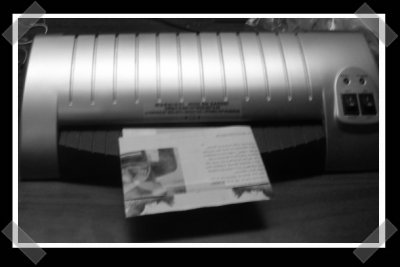
If you’ve ever tried ironing laser printed paper to transfer the toner, you know that it can be slightly frustrating. [Dave] sent in an interesting twist on this method. The laser printer is used to print onto paper from a magazine and then the board and paper are both run through a laminating machine six or seven times. From the writeup, it looks like this technique works great. (You’ll probably need a printer with a manual feed tray to get it to print on the magazine paper)

EMS Synthi AKS Teardown


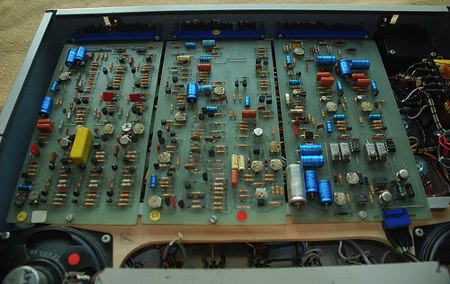
Here’s another bit of analog synth pr0n for you: Initially sold in 1972, the EMS Synthi AKS was a portable modular analog synthesizer with a built in keyboard and sequencer. The VCS 3 portion of the device had a unique routing matrix pegboard used to connect components together. [firegroove] has opened up his precious machine so that you can see all of the fine little bits that make it tick… and chirp.

[via Matrixsynth]

Kawasaki KZ440 Electric Conversion


[Ben Nelson] didn’t even know how to ride a motorcycle when he started on this electric conversion of a 1981 Kawasaki KZ440. The engine wasn’t a loss since the bike was nonrunning when he purchased it for $100. The permanent magnet Etek motor was $500 and each of the four yellow top batteries were $160 (only three pictured). He says that the majority of the conversion work only took two weekends. The resulting, still street legal, ride averages 20 miles per charge with a 45mph top speed.

More electric motorcycles on Hack a Day:

[via Ecomodder]

Defcon Badge Hacking Contest


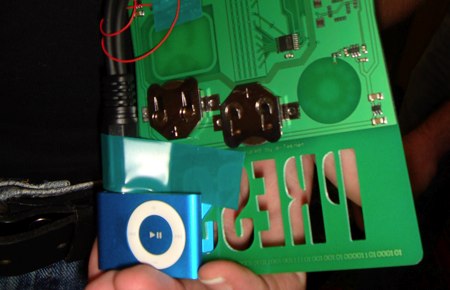
[Joe Grand] is designing the Defcon badges for the third year in a row. Just like the previous years, they’ll be hosting a badge hacking contest. This time around though, they’re going to start leaking clues in advance. Earlier contests were often frustrating because of the specialized equipment needed to talk to the microcontroller. Hopefully this year it will be a lot more accesible. The specs for the badge have not been released yet, but after last year’s 95 LED scrolling marque, we can’t wait to see what this year will bring. [Joe] has posted info on the previous two badge designs and resulting contests.

Hackit: The Bronco Table


While attending LA SIGGRAPH Maker Night, we got to talk to [Brett Doar] about his Bronco Table. The table is meant to make life more difficult by bucking off anything that’s set on top of it. Right now, it uses a tiny piezo mic to listen for the impact and then drives three leg motors in a random pattern. He envisions later generations either running away or following you intently when something is set on them.

The main problem with the current design is that you have to hit the table hard enough to make a noise the mic can pick up. The ideal solution would be able to detect anything, no matter what the material or how forcefully it was set down. How would you detect objects being placed on the surface (table doesn’t have to be wood)?