Smoothing 3D Prints With Acetone Vapor

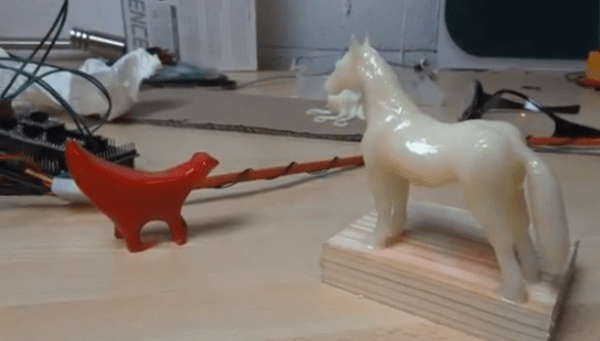
If you’ve ever used an extruding 3D printer, you know that the resulting prints aren’t exactly smooth. At the Southackton hackerspace [James] and [Bracken] worked out a method of smoothing the parts out using vapor. The method involves heating acetone until it forms a vapor, then exposing ABS parts to the vapor. The method only works with ABS, but creates some good looking results.

Acetone is rather flammable, so the guys started out with some safety testing. This involved getting a good air to fuel mixture of acetone, and testing what the worst case scenario would be if it were to ignite. The tests showed that the amount of acetone they used would be rather safe, even if it caught fire, which was a concern several people mentioned last time we saw the method.

After the break, [James] and [Bracken] give a detailed explanation of the process.
Continue reading “Smoothing 3D Prints With Acetone Vapor”

LulzBot Is Giving Away More Printers

LulzBot, the awesomely named 3D printer manufacturer and parts supplier, is giving away eight of their AO-100 printers to eight lucky hackerspaces.

It’s not so much a contest, but instead a giveaway aimed at eight community-operated hackerspaces who come up with a great idea on how to use a 3D printer. If you’re part of a well-established hackerspace that doesn’t have a 3D printer yet, this is a great opportunity to get your hands on a very nice printer.

A while back, we acquired one of these LulzBot printers to print off some custom gaming controllers for gamers with physical disabilities (and to make some other cool stuff as well). Our boss man [Caleb] says the AO-100 is a great printer, and in my dealings and purchases with LulzBot, they seem like a great company with great support. We’re sure the hackerspaces that win these printers LulzBot is giving away will be able to put them to use quickly by making some really cool stuff.

Printed Vacuum Pump Muffler Quiets The Lab

printed-vacuum-pump-muffler

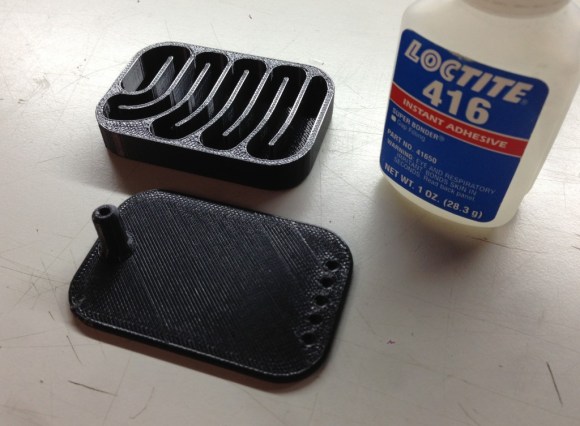
[Joel] made a brilliant improvement to his shop. If you think about it, most folks would hear a loud vacuum pump and either tolerate it or put in some ear plugs. But [Joel] heard a loud vacuum pump and thought: hey, I can fix that! His solution was to design and print his own muffler.

He did a bit of research on the topic and found that design complexity runs the gamut based on the application. For instance, you don’t want to affect the airflow of a vehicle’s exhaust too much or you will take a horsepower (and efficiency) hit for it. In this case the vacuum pump making all the noise has a relatively low airflow so that is not a concern. What he ended up doing is designing a baffle that will help cushion the vibrations in the airy by piping it through a maze of channels. The end result drops from about 92 dB to 82 dB. That might not seem like much, but decibel measurements aren’t linear so it ends up having a great effect. Hear for yourself in the video after the break.

Continue reading “Printed Vacuum Pump Muffler Quiets The Lab”

Midwest RepRap Festival

We’re a US-centric site, but aside from events in New York or California, we don’t see many hacker, maker, or 3D printer events aimed at the parts of the country filled with corn and WalMarts. The 1st annual Midwest RepRap Festival aims to change that with enough events, speakers, and activities to make Elkhart, Indiana look like the hoppingist place around.

Officially, the festival started yesterday but the schedule of events really ramps up today. [Josef Prusa] will be taking the stage talking about the state of the RepRap, and a ton of 3d printing vendors will be there showing off their wares and selling some really cool stuff. There’s also tons of experienced RepRappers available to help you tune your machine to perfection; just as well, because the festival is going for the world record for the greatest number of 3D printers printing simultaneously.

If you’re around northern Indiana, you might want to check out the festival and send us a few pics or videos.

Repairing Broken Injection Molded Parts With A 3D Printer

injection-molded-part-repair

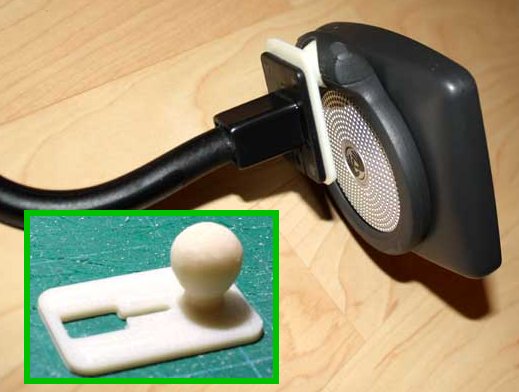
The value of a 3D printer is obvious for people who hack hardware as a hobby. But this repair project should drive home their usefulness for the commoner. [James Bruton] used a 3D printer to recreate a hopelessly broken injection molded plastic part. This is a suction cup mounting bracket for a Tom Tom GPS module. The sphere which makes it adjustable had broken off of the column holding it. For 100% of non-hacking consumers that’s the end of this item. We can’t see a fix that would restore the strength of the original part.

The replacement starts by measuring the broken part with precision calipers. [James] then grabbed a copy of 123D, which is free software. He starts by modeling the sphere, then builds up the support column and the base with a cut-out. It’s obvious he’s already very familiar with the software, but even the uninitiated should be able to get this done pretty quickly. After slicing the design for the 3D printer he finds the part will be ready in about 11 minutes. The first prototype is a bit too small (the ball requires close tolerances to work well). He spins up a second version which is a bit large and uneven. A few minutes of filing leaves him with a smooth sphere which replaces the original part beautifully!

You can see the entire design, print, and assembly process in the clip after the break.

Continue reading “Repairing Broken Injection Molded Parts With A 3D Printer”

Cloud Support For Fleets Of 3D Printers

bot

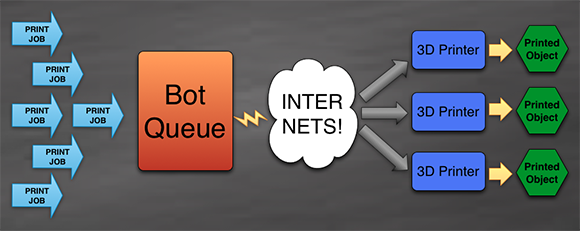
More than ever, 3D printers are being used for small prototype and production runs, and the normal way of using a 3D printer with a single desktop app is becoming more and more out of date. [Zach ‘Hoeken’ Smith] has a solution to the frustration of printing out multiples of objects: it’s called BotQueue, and allows anyone to submit print jobs to multiple 3D printers over the Internet.

The idea behind BotQueue is to allow anyone to send jobs to a 3D printer over the Internet. Queues and multiple printers are supported, meaning small-scale manufacturing just got a lot easier for anyone dealing with multiple printers.

We’ve seen a few 3D printer fleets that could benefit from an online print server for multiple 3D printers. It’s not a project meant for everyone – one 3D printer per person should be enough for just about everybody – but if you’re part of a hackerspace with a few printers, we could see this being used to great effect among your fellow makers. You’re not limited to using the official BotQueue servers, either. You can run your own BotQueue from [Zach]’s git

DEFCAD, The Island Of Misfit Objects

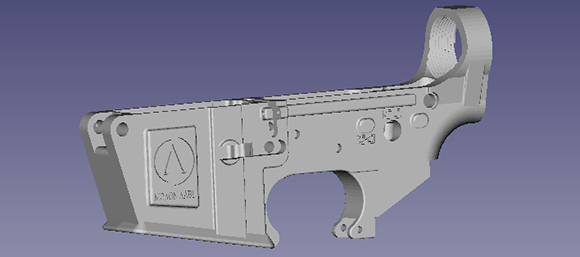
Defense Distributed, the guys working on 3D printed guns and lower receivers for an AR-15, have a storied history with makers, corporations, and our elected representatives. When the news broke they were designing a 3D printed weapon, their $25,000 leased 3D printer was taken away from them. When their designs were too controversial for Thingiverse, they were taken down. Defense Distributed keeps on firing back, though, and now they’re hosting their own 3D model repo called DEFCAD.

In another one of Defense Distributed’s well-produced promo videos, they make their case for a repository of 3D models that doesn’t respond to takedown requests. Basically, 3D printing is a disruptive technology and is too important to be beholden to copyright lawyers, talking heads of the media, and, “the collusive members of the maker community”.

DEFCAD isn’t only about guns. They plan on hosting anything those in the upper echelons of power don’t like – or at least those with a copyright, patent, or trademark gripe – and never responding to a takedown request. It’s a great idea, somewhat akin to The Pirate Bay for physical objects, but actually popular.