Win Big Prizes With Repairs You Can Print

Another month, another contest, and this time we’re looking for the best 3D printed repairs you’ve built.

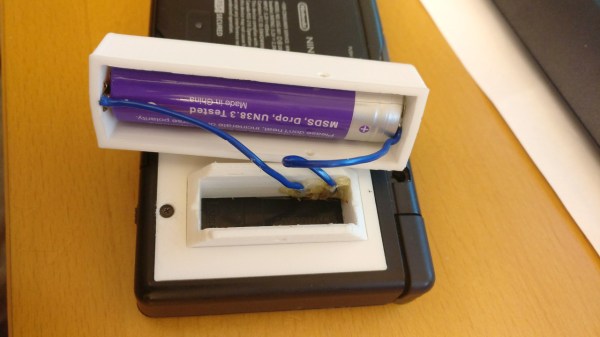
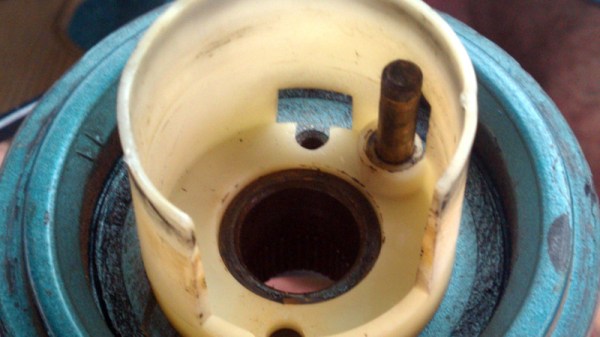
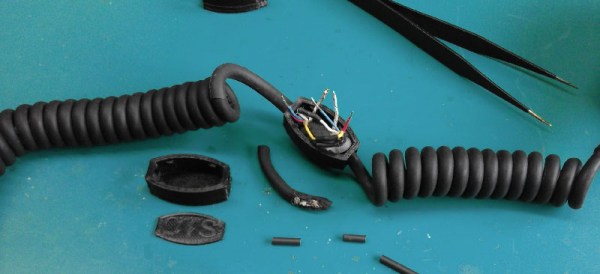
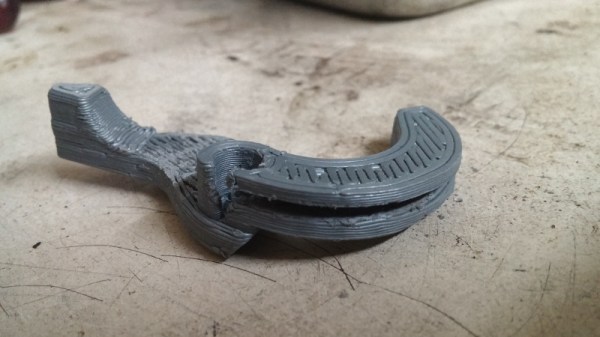
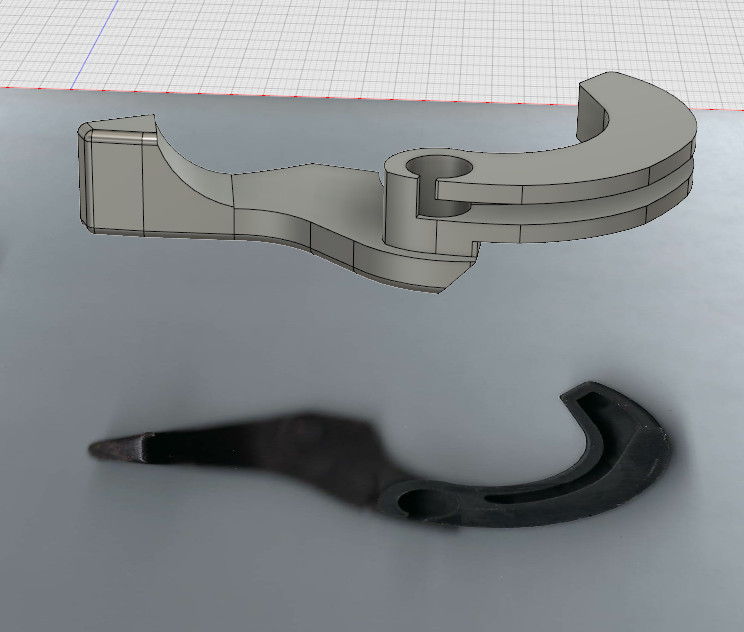
The Repairs You Can Print Contest on Hackaday.io is a challenge to show off the real reason you bought a 3D printer. We want to see replacement parts, improved functionality, or a tool or jig that made a tough repair a snap. Think of this as the opposite of printing low poly Pokemon or Fallout armor. This is a contest to demonstrate the most utilitarian uses of a 3D printer. Whether you fixed your refrigerator, luggage, jet engine, vacuum cleaner, bike headlight, or anything else, we want to see how you did it!

The top twenty projects in the Repairs You Can Print contest will be rewarded with $100 in Tindie credit. That’s a Benjamin to spend on parts, upgrades, and components to take your next project to the next level!

Students and Organizations Can Win Big

The Best Student and Best Organization will win a Prusa i3 MK3!

This contest is open to everyone, but we’re also looking for the best projects to come from students and hackerspaces. We’ll be giving away two amazing 3D printers to the best Student entry and best Organization entry. These two top projects will be awarded an Original Prusa i3 MK3 with the Quad Material upgrade kit. This is one of the finest 3D printers you can buy right now, and we’re giving these away to the best student, hackerspaces, robotics club, or tool lending library.

If you have a project in mind, head on over to Hackaday.io and create a project demonstrating your 3D printed repair!

What is This Contest All About?

This contest is all about Repairs You Can Print, but what does that actually mean? Instead of printing Pokemon or plastic baubles on your desktop CNC machine, we’re looking for replacement parts. We’re looking for commercial, off the shelf items that were broken, but repaired with the help of a 3D printer. Is your repair good enough to show off as part of the contest? Yes! That’s the point, we want to see the clever repair jobs that people often don’t spend much time talking about because they just work.

Need some examples? Sure thing.

A while back, [Elliot Williams], one of the fantastic Hackaday Editors, had a broken vacuum cleaner. The wheels were crap, but luckily they were designed as a single part that snaps into a swivel socket. Over six or so years, the original wheels in this vacuum gave out, but a replacement part was quickly printed and stuffed into the socket. The new wheels have been going strong for a year now. That’s an entire year of use for a vacuum for five cents worth of plastic and an hour’s worth of printing time.

Need another example? My suitcase was apparently dragged behind a luggage cart for miles at either ORD or PHL. When it arrived on the baggage carousel, one wheel was shredded, and the wheel mount was ground down to almost the axle. The rest of the bag was still good, and I just removed the old wheel, salvaged the bearings, and printed a new wheel out of PLA. This suitcase has now traveled 60,000 miles with a 3D printed wheel, and it’s only now looking worse for wear.

How To Get In On The Action

We’re looking for the best repairs, jigs, and tools you’ve ever printed. To get started, head on over to Hackaday.io, create a new project, and document your repair. The Repairs You Can Print contest will run from Tuesday, January 16th, 2018 through 12 PM PST Tuesday, February 20th, 2018. Here’s a handy count down timer for ‘ya.

3D Printing A Better Quadcopter Frame

Before you smash the “Post Comment” button with the fury of Zeus himself, we’re going to go ahead and say it: if you want to build a decent quadcopter, buy a commercial frame. They are usually one of the cheaper parts of the build, they’re very light for how strong they are, and replacement parts are easily available. While you could argue the cost of PLA/ABS filament is low enough now that printing it would be cheaper than buying, you aren’t going to be able to make a better quadcopter frame on a 3D printer than what’s available on the commercial market.

The frame features a surprisingly low part count.

Having said that, [Paweł Spychalski] has recently shown off his 3D printed FPV racing quadcopter frame with some surprising results. The frame ended up being surprisingly stiff, and while the weight is a bit high, it’s actually lighter than he expected. If you’re looking to build a quad with the absolute minimum of expense his design might be something to look into.

Of course, [Paweł] is hardly the first person to think about printing a quad frame. But he did give his design some extra consideration to try and overcome some of the shortcomings he noticed in existing 3D printed designs. For one, rather than have four separate arms that mount to a central chassis, his design has arms that go all the way across with a thick support that goes between the motors. The central chassis is also reassuringly thick, adding to the overall stiffness of the frame.

The key here is that [Paweł] printed all the parts with 2 mm thick walls. While that naturally equates to longer print times and greater overall weight, it’s probably more than worth it to make sure the frame doesn’t snap in half the first time it touches the ground.

Beyond the printed parts, all you need to assemble this frame are about a dozen M3 nuts and bolts. Overall, between the hardware and the plastic you’re looking at a total cost of under $5 USD. In the video below [Paweł] puts the frame through its paces doing some acrobatic maneuvers, and it looks like 5 bucks well spent to us.

If you want to go all-in on 3D printed quadcopter parts, you can pair this frame with some printed propellers. Perhaps even a printed camera gimbal while you’re at it. Continue reading “3D Printing A Better Quadcopter Frame”

Iro3d 3D Prints In Powdered Metal

Printing with plastic and even resin is getting fairly common. Metal printing, though, is still in the realm of the exotic. A company called Iro3D is aiming to change that with a steel printer that you can buy in beta for about $5000. That seems steep when you can get plastic printers for under $200, but it is sheer bargain basement for something that can print in real metal.

Of course, there’s a catch. The printer doesn’t create a solid metal object right away. What it does is prepares a crucible using sand and metal powder. You then place the crucible in a kiln and what comes out is the final product. You can see a video review of their prototype machine, below from [3D Printing Nerd]. The company’s promotional video that shows a part coming out of the kiln is also below.

Continue reading “Iro3d 3D Prints In Powdered Metal”

Vintage Logan Lathe Gets 3D Printed Gears

In December 2016, [Bruno M.] was lucky enough to score a 70+ year old Logan 825 lathe for free from Craigslist. But as you might expect for a piece of machinery older than 95% of the people reading this page, it wasn’t in the best of condition. He’s made plenty of progress so far, and recently started tackling some broken gears in the machine’s transmission. There’s only one problem: the broken gears have a retail price of about $80 USD each. Ouch.

On his blog, [Bruno] documents his attempts at replacing these expensive gears with 3D printed versions, which so far looks very promising. He notes that usually 3D printed gears wouldn’t survive in this sort of application, but the gears in question are actually in a relatively low-stress portion of the transmission. He does mention that he’s still considering repairing the broken gears by filling the gaps left by the missing teeth and filing new ones in, but the 3D printed gears should at least buy him some time.

As it turns out, there’s a plugin available for Fusion 360 that helpfully does all the work of creating gears for you. You just need to enter in basic details like the number of teeth, diametral pitch, pressure angle, thickness, etc. He loaded up the generated STL in Cura, and ran off a test gear on his delta printer.

Of course, it didn’t work. Desktop 3D printing is still a finicky endeavour, and [Bruno] found with a pair of digital calipers that the printed gear was about 10% larger than the desired dimensions. It would have been interesting to find out if the issue was something in the printer (such as over-extrusion) or in the Fusion 360 plugin. In any event, a quick tweak to the slicer scale factor was all it took to get a workable gear printed on the third try.

This isn’t the first time we’ve seen 3D printed gears stand in for more suitable replacement parts, nor the first time we’ve seen them in situations that would appear beyond their capability. As 3D printer hardware and software improves, it seems fewer and fewer of the old caveats apply.

Continue reading “Vintage Logan Lathe Gets 3D Printed Gears”

3D Print A Home Automation Switch

If you are the kind of person who won’t use cheap Sonoff modules to control AC powered devices, we don’t blame you and you should probably stop reading now. However, if you don’t mind a little exposed AC wiring and you have a 3D printer, you might be interested in the second generation of [530 Project’s] in-wall light switch.

The 3D printed switch fits a standard box and uses the guts of a Sonoff controller. These work with all the popular ecosystems such as Alexa and Google Home. And they are cheap. Like, really cheap. If you already have a 3D printer, even counting the cost of the filament these are going to be a small fraction of the cost of a commercial switch. You can see a video about the device, below.

Continue reading “3D Print A Home Automation Switch”

Warhammer 40K Model Rocket Launcher

[Daniel L]’s friend has a passion for Warhammer 40K. [Daniel] himself has a similar zeal for perfection in details. When he remembered a long-forgotten request to build a working rocket launcher for one of his friend’s Warhammer 40K models — well — the result was inevitably awesome.

The MicroMaxx motors — one of the smallest commercial rocket motors on the market — he had on hand seemed to fit the model of the Hyperios Whirlwind anti-air rocket tank. Modeling and 3D printing all the parts proved to be easier than assembling the incredibly detailed model — on top of sanding and filling gaps, a perfect paint job was no simple matter.

The launcher has two main circuit boards: a STM32F407 microcontroller brain, a low-power A20737A Bluetooth module, and a voltage regulator. The second has the constant current source and MOSFET output stages for the rocket igniters. Pitch and yaw handled by a pair of RC servo motors. [Daniel L] has also gone the extra mile by creating an accompanying iPhone app using the Anaren Atmosphere IDE — it’s simple but it works!

Continue reading “Warhammer 40K Model Rocket Launcher”

3D Printed Hovercraft Takes Flight

Last time we checked in on [Ivan Miranda] he was putting a drill press on the Internet. Lately, he has been trying to 3D print a hovercraft with some success. He made four attempts before arriving at one that works fairly well, as you can see in the video below. We will warn you, though, the screwdriver cam is a bit disconcerting and we suggest waiting at least an hour after you eat to watch.

The starboard impeller broke midway through the test, although with a single impeller it was working pretty well. [Ivan] thinks he can print the impeller frames more strongly to prevent future failures. The design is in Fusion360 and there is enough detail that you can probably duplicate his work if you have the urge. There’s a mount for a headlight and an action camera on the bow.

Continue reading “3D Printed Hovercraft Takes Flight”