Danielle Applestone And The Story Of Every Othermill

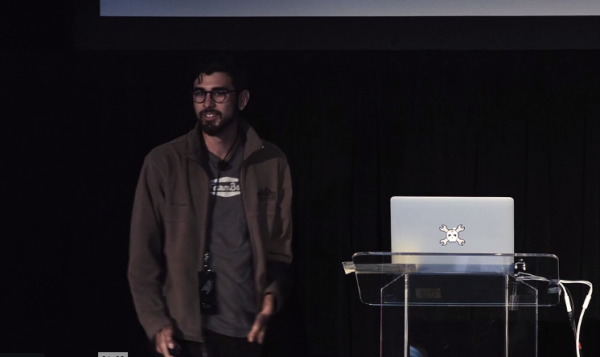
Many of us may qualify as “makers,” but how about a “maker of machines?” [Danielle Applestone] tells us what kinks to look for whilst embarking on your hardware startup adventure. Co-founder of Other Machine Co, the company that makes a PCB Mill that holds tolerances as tight as a thousandth of an inch, [Danielle] holds degrees in chemistry and materials science from MIT and UT Austin. While she may tell you that the math for running a hardware company is easy, knowing what numbers to crunch and keeping track of them has been part of her key to success. So take 20, and give yourself a moment to take in [Danielle’s] tips from her Hackaday Superconference talk on beating the hurdles ahead in the land of hardware startups.

Continue reading “Danielle Applestone And The Story Of Every Othermill” →

How Y Combinator Brings Hardware Startups To Life

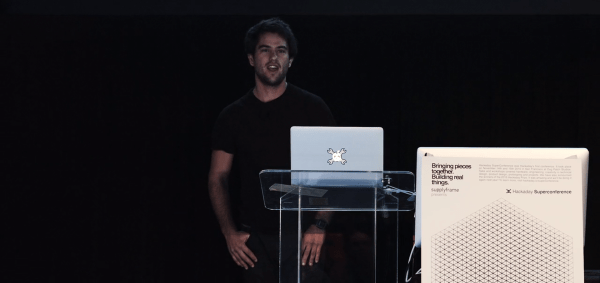
The world is more used to software startups than hardware startups. Luke Iseman is here to help. He is the Director of Hardware at Y Combinator and discusses some details that need to be kept in mind when starting up your own hardware company. Take a look at the talk he presented at the 2015 Hackaday SuperConference and then join us after the break to cover a few key points of his discussion.

Continue reading “How Y Combinator Brings Hardware Startups To Life” →

Vinduino: Full Irrigation With 25% Less Water

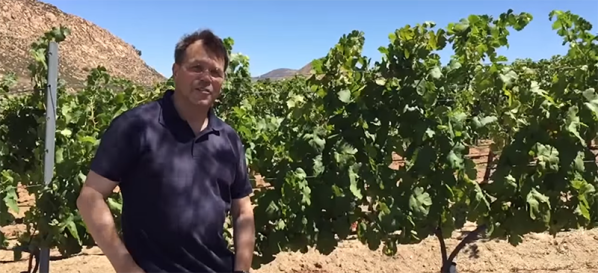
Irrigation is a fairly crude practice. Sure, there are timers, and rain sensors, but all in all we’re basically dumping water on the ground and guessing at the right amount. [Reinier van der Lee] wanted a better way to ensure the plants in his vineyard are getting the right amount of water. And this is Goldilocks’ version of “right”, not too little but also not too much. Southern California is in an extreme/exceptional drought. Water costs a lot of money, but it is also scarce and conservation has a wider impact than merely the bottom line.

His solution is the Vinduino project. It’s a set of moisture sensors that work in conjunction with a handheld device to measure the effect of irrigation. Multiple moisture sensors are buried at different depths: near the surface, at root level, and below root level. This lets you know when the water is getting to the root system, and when it has penetrated further than needed. The project was recognized as the Best Product in the 2015 Hackaday Prize, and [Reinier] presented the project during his talk at the Hackaday SuperConference. Check out the video of that talk below, and join us after the break for a look at the development of this impressive product.

Continue reading “Vinduino: Full Irrigation With 25% Less Water” →

Go From Prototype To Pilot Production With Zach Fredin

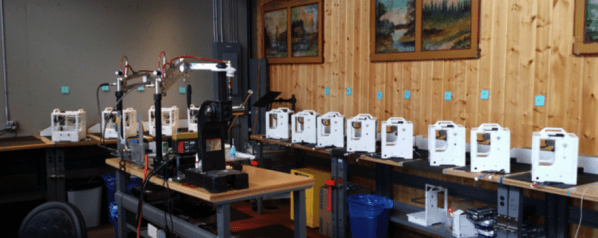
What’s it like to build a run of 100 prototypes in your basement? Get a first-hand account as [Zach Fredin] discusses his development and production of NeuroBytes. The system is a set of electronic models that represent neurons. Connecting them together into different networks helps to teach about how the human nervous system works. It’s a wonderful concept, and was recognized as a finalist for Best Product in the 2015 Hackaday Prize. More recently, [Zach] tells us it has been granted Recommended Status for a Phase I SBIR National Science Foundation grant. Looks like [Zach’s] new job is all NeuroBytes and is well funded. Congratulations!

Check out [Zach Fredin’s] talk from the 2015 Hackaday SuperConference, then join us after the break to dig further into the details of the project.

Continue reading “Go From Prototype To Pilot Production With Zach Fredin” →

Noah Feehan And The Mind Of The Maker

Too often we find ourselves featuring projects on these pages without giving much thought behind the people who made them. Nevertheless, behind the LED panels, github pages, and PCBs that make the hardware magic happen, there’s a person. And not just one person but an entire culture of people who let their conscious hours bleed late into the night over software bugs and bad solder joints. Noah Feehan is one of these veterans, and at this year’s Hackaday SuperConference, he reached out to this culture. Noah comes armed not with projects but with design tips and an infectious enthusiasm that will make you rethink how you use your time and space in the land of DIY. Armed with ten years of experience in art and engineering design, Noah delivers his best tips for fellow hackers. Spare yourself hours of confusion during future builds; kick back, and treat yourself to a few tips from a pro on keeping things together.

Continue reading “Noah Feehan And The Mind Of The Maker” →

The Best Badges Of The SuperCon

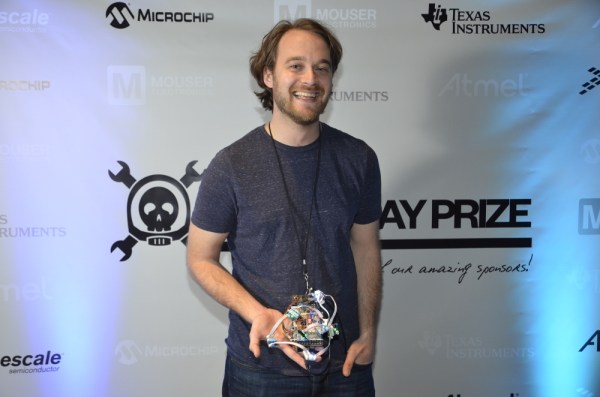
A few weeks ago, we took a look at the best badge hacks at the Hackaday Supercon. These were the best badge hacks anyone has ever seen – including what comes out of DEF CON and the SDR badge from the latest CCC. I’m ascribing this entirely to the free-form nature of the badge; give people a blank canvas and you’re sure to get a diverse field of builds. Now it’s time to take a look at the cream of the crop, hear what the jolly wrencher sounds like, and how to put 1000 Volts in a badge.

There were three categories for the badge hacking competition at the SuperCon – best deadbug, best blinky, and most over the top. A surprising number of people managed to solder, glue, and tape some components to a the piece of FR4 we used as a conference badge, but in the end, only three would win.

Continue reading “The Best Badges Of The SuperCon” →

Creating Art In A Robot That Tastes With Its Feet

[Sarah Petkus] started off her career as a visual artist with traditional mediums. She has a webcomic called Gravity Road, but somewhere along the line she wanted her creations to come alive. These characters are robots – artistically designed robots – and turning this type of art into a real object isn’t something that happens very often.

Robots usually aren’t art. A Roomba is just a vacuum cleaner that’s meant to turn on a dime, thus the circular shape. The welding robots in a car factory aren’t art, they’re only tools to assemble cars. These are just devices built for a single purpose, and art is for any or every purpose. It’s not something you can really design, but you can engineer a few interesting solutions.

Continue reading “Creating Art In A Robot That Tastes With Its Feet” →