Supercon Keynote: Dr. Megan Wachs On RISC-V

Hackaday has open-source running deep in our veins — and that goes for hardware as well as software. After all, it’s great to run open-source software, but if it’s running on black-box hardware, the system is only half open. While software has benefited mightily from all of the advantages of community development, the hardware world has been only recently catching up. And so we’ve been following the RISC-V open-source CPU development with our full attention.

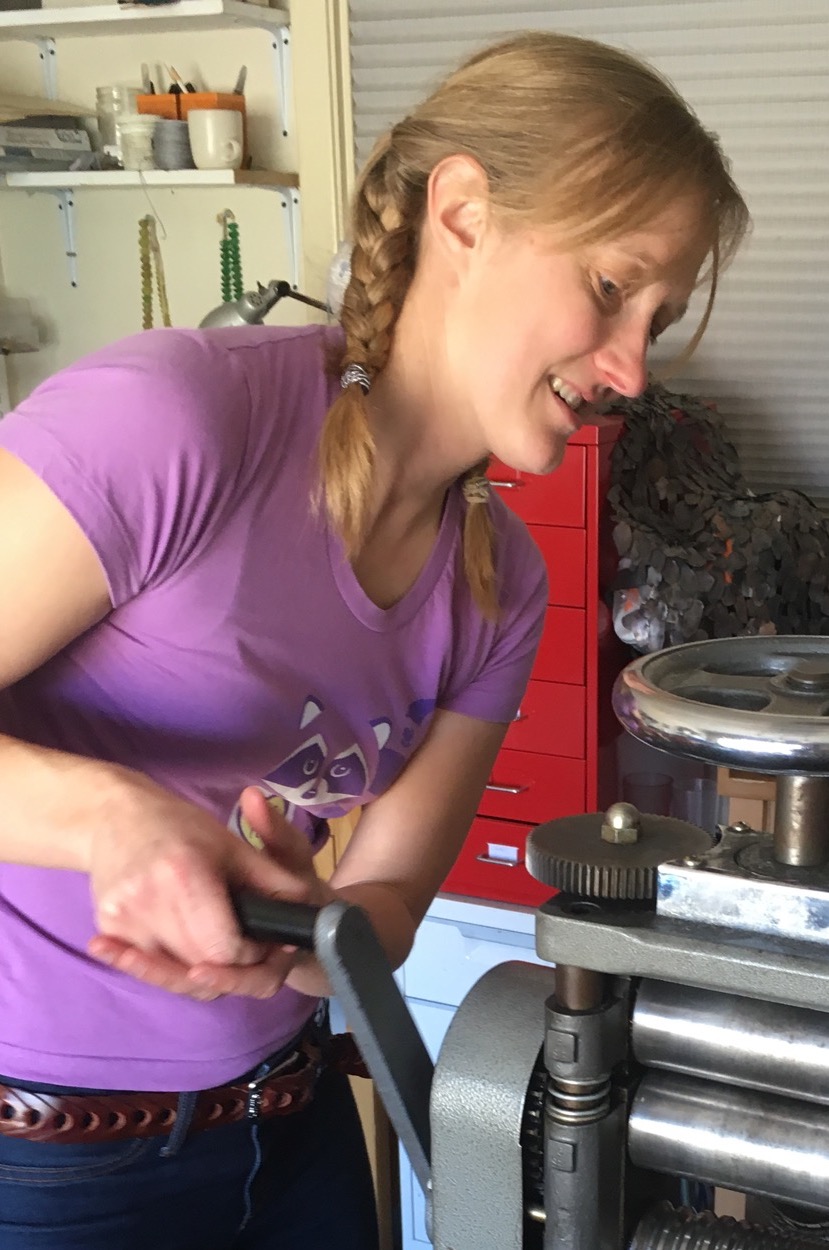
Dr. Wachs, making her own wedding ring.

Our keynote speaker for the 2019 Hackaday Superconference is Dr. Megan Wachs, the VP of Engineering at SiFive, the company founded by the creators of the RISC-V instruction-set architecture (ISA). She has also chaired the RISC-V Foundation Debug Task Group, so it’s safe to say that she knows RISC-V inside and out. If there’s one talk we’d like to hear on the past, present, and future of the architecture, this is it.

The RISC-V isn’t a particular chip, but rather it’s a design for how a CPU works, and a standard for the lowest-level language that the machine speaks. In contrast to proprietary CPUs, RISC-V CPUs from disparate vendors can all use the same software tools, unifying and opening their development. Moreover, open hardware implementations for the silicon itself mean that new players can enter the space more easily, bring their unique ideas to life faster, and we’ll all benefit. We can all work together.

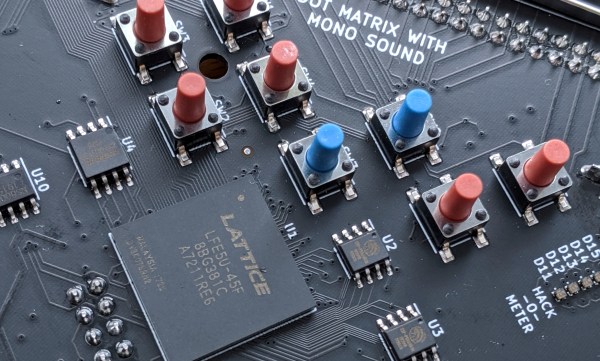
It’s no coincidence that this year’s Supercon badge has two RISC-V cores running in its FPGA fabric. When we went shopping around for an open CPU core design, we had a few complete RISC-V systems to pick from, full compiler and development toolchains to write code for them, and of course, implementations in Verilog ready to flash into the FPGA. The rich, open ecosystem around RISC-V made it a no-brainer for us, just as it does for companies making neural-network peripherals or even commodity microcontrollers. You’ll be seeing a lot more RISC-V systems in the near future, on your workbench and in your pocket.

We’re tremendously excited to hear more about the project from the inside, and absolutely looking forward to Megan’s keynote speech!

The Hackaday Superconference is completely sold out, but that doesn’t mean that you have to miss out. We’ll be live-streaming the keynote and all other talks on the Supercon main stage, so subscribe our YouTube channel and you won’t miss a thing.

Superconference Interview: Carl Bugeja

It’s an exciting time of year for us, not because Christmas is on the horizon, instead for something far more exciting than that! The Hackaday Superconference is nearly upon us, our yearly gathering of the creme de la creme of the hardware hacking world for a fascinating program of lectures and other events. We can’t wait, and we hope you’re looking forward to it as much as we are.

A particularly stimulating part of the Supercon experience comes from the people you rub shoulders with as you attend, whether or not you will have seen their work on these pages they represent a huge and fascinating breadth of experience and skill. It’s the incidental conversations at events like this that are the most fertile, because from them comes inspiration that can feed all manner of things.

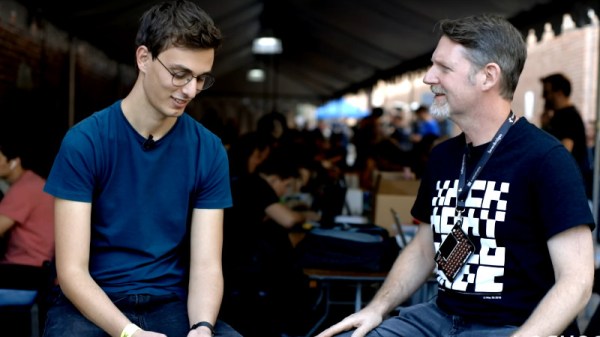
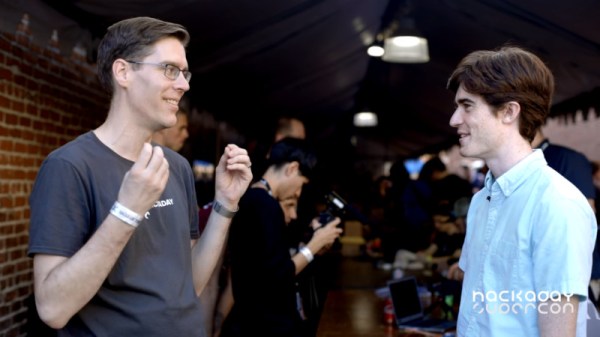
One of last year’s hits came from Carl Bugeja, when he gave a talk about his impressive work with using printed circuit boards to construct electric motors and magnetic actuators. We’ve seen the various iterations of his work evolving in these pages, and at last year’s event he also gave an interview to our own Elliot Williams, and we’re happy to bring you the resulting video after the break.

We’d love to be able to reveal a hidden stash of Supercon tickets, but sadly it’s all sold out. We can however direct you to the livestream of the event which begins at 10 am Pacific time on November 15th. Be sure to head on over to the Hackaday YouTube channel, and subscribe.

Meanwhile it’s worth pointing those lucky ticket holders to the Supercon ticketing page since we’ve added more tickets to the previously-sold-out workshops. Now, enjoy Carl’s interview, and we hope you’ll join us for Superconference whether you do so online or in person.

Continue reading “Superconference Interview: Carl Bugeja”

Gigantic FPGA In A Game Boy Form Factor, 2019 Supercon Badge Is A Hardware Siren Song

Look upon this conference badge and kiss your free time goodbye. The 2019 Hackaday Superconference badge is an ECP5 FPGA running a RISC-V core in a Game Boy form factor complete with cartridge slot that is more open than anything we’ve ever seen before: multiple open-source CPU designs were embedded in an open system, developed using the cutting-edge in open-source FPGA tools, and running (naturally) open-source software on top. It’s a 3,000-in-one activity kit for hardware people, software people, and everyone in between.

The brainchild of Jeroen Domburg (aka Sprite_TM), this design has been in the works since the beginning of this year. For more than 500 people headed to Supercon next week, this is a source of both geeky entertainment and learning for three action-packed days and well beyond. Let’s take a look at what’s on the badge, what you need to know to hack it, and how the design serves as a powerful development tool long after the badge hacking ceremonies have wrapped up.

Continue reading “Gigantic FPGA In A Game Boy Form Factor, 2019 Supercon Badge Is A Hardware Siren Song”

Eth0 Autumn 2019: Tiny Camp, Creative Badge

The Dutch organisation eth0 has run a series of informal small camps over the years, never with an attendance too far into three figures, and without pre-planned events or entertainment. What happens is at the instigation of the attendees, and the result is a weekend of much closer socialising and working together on projects than the large camps where you spend your time running around to catch everything.

The largest of hacker camps offer all the lights, robots, tschunk, and techno music you can stomach; they can be a blast but also overwhelming. I made my way eth0 over the past week weekend, enjoying the more intimate size and coming away having made friendships from spending time with great people at a large private camping hostel near Lichtenvoorde. This is in the far east of the country near the German border, to which in the company of a British hardware hacker friend I traveled in the tiny European hatchback. Netherlands roads are so easy to navigate!

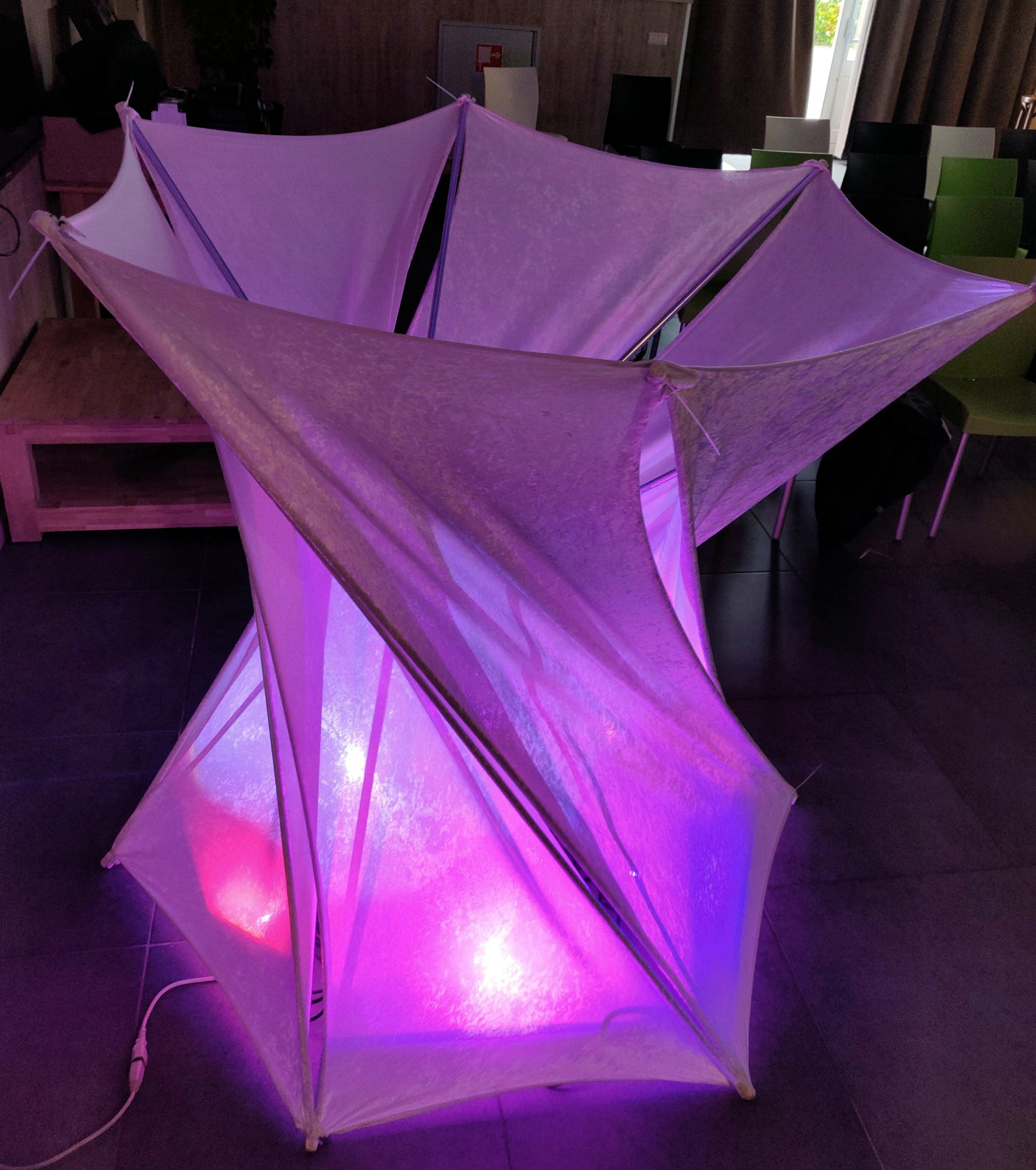
A prototype tensegrity structure. Image: Igor Nikolic.

At the event was the usual array of activities, though since it was a restricted photography affair I’m short on wider shots that would include people. This year’s hit came from surplus flipdot displays from retired German buses, with plenty of glitches as their quirks were figured out by our friends Lucy Fauth and Jana Marie Hemsing. Something tells me I’ll be seeing a lot of those fluorescent circles in the future.

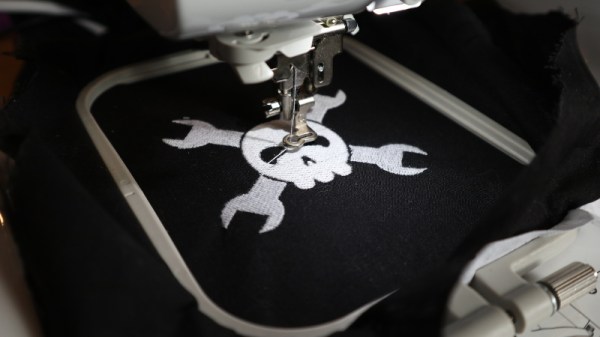
I’d brought along the nucleus of a textile village, and RevSpace in the Hague had added their embroidery machine to my overlocker and sewing machines. Its operator was Boekenwuurm from Hackalot in Eindhoven who was kind enough to embroider a Wrencher for me, and now I want one of these 600-Euro machines even if I can’t afford one. She and RevSpace’s Igor Nikolic were experimenting with inflatables and tensegrity structures, creating prototypes with an eye to more impressive installations at future camps.

An entertaining tale of a couple of days hanging out with friends in the Netherlands countryside could probably be spun into a reasonable tale, but there was something more interesting still at this camp. It had a badge, courtesy of the prolific badge.team Dutch badge crew. It didn’t come with their trademark ESP32 firmware though, instead in keeping with the budget of the event it was a prototyping board on which attendees could create their own badges. What came forth from that was extremely impressive, and continued after the event.

Continue reading “Eth0 Autumn 2019: Tiny Camp, Creative Badge”

The 3D Printers, Scanners, And Art Robots Of Maker Faire Rome

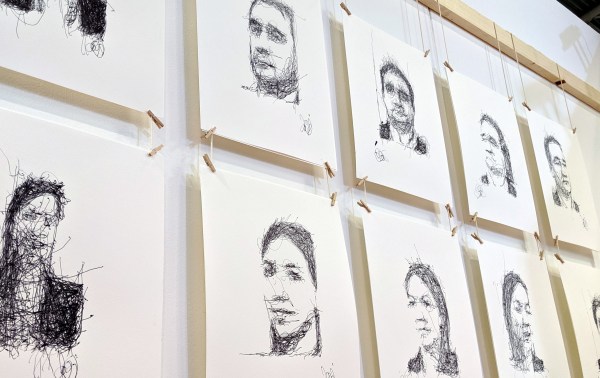
How is it possible that a robot can sketch both better and worse than I can at the same time, and yet turn out an incredible work of art? Has 3D-scanning really come so far that a simple camera and motorized jig can have insane resolution? These are the kinds of questions that were running through my mind, and being answered by the creators of these brilliant machines, at Maker Faire Rome.

There was a high concentration of robots creating art and 3D printing on display and the Faire, so I saved the best examples just for this article. But you’ll also find hacks from a few groups of clever students, and hardware that made me realize industrial controllers can be anything but boring. Let’s take a look!

Continue reading “The 3D Printers, Scanners, And Art Robots Of Maker Faire Rome”

Saintcon Badge Is An Enigma No More

Through the weekend Twitter has been a-titter with news coming out of Saintcon, the annual security conference in Provo, Utah. Now that the weekend is over we can finally get our hands on full hardware and software sources for the curvy, LED-covered badge we’ve been salivating over and a write up by its creators [compukidmike] and [bashNinja]. Let’s dive in and see what’s waiting!

Design

This year’s badge is designed to represent a single tooth on a single rotor of an Enigma machine. The full function of an Enigma machine is quite complex, but an individual device has three rotors with 26 teeth each (one for each letter) as well as a keypad for input and a character display to show each enciphered letter. For reference, the back of the badge has a handy diagram of a badge’s place in the Enigma system.

Reminiscent of the WWII device which the badge design recalls, each unit includes a full QWERTZ keyboard (with labeled keys!) and RGB “lampboard” for individual character output, but unlike the original there’s also a curved 16 x 64 RGB LED display made from those beguiling little ~1mm x 1mm LEDs. All in, the device includes 1051 LEDs! Combined with the unusually non-rectilinear shape of the badge and the Enigma-style Saintcon logo it makes for an attractive, cohesive look.

Continue reading “Saintcon Badge Is An Enigma No More”

Superconference Interview: Ted Yapo

We’re just two weeks away from the fifth annual Hackaday Superconference, the single biggest gathering of hardware enthusiasts on at least one continent. It’s gearing up to be great, and we’re super excited for the opportunity to bring you such a diverse array of talks, workshops, and more.

What makes Supercon so great? All the awesome people you meet there. One of them is [Ted Yapo], who joined the Hackaday writing crew this year after gracing our pages and winning our contests for so long. You might remember him as the guy who turned an innocent USB-to-serial adapter into an SDR transmitter, or as the guy who tried to jump-start a car with a coin cell.

At last year’s Supercon, [Ted] gave a talk about dealing with cheap spectrum analyzers, which doubled as a live look into the article he wrote for the Hackaday Journal of What You Don’t Know. [Mike Szczys] caught up with [Ted] last year for a brief interview in the hardware hacking area, which you can catch after the break.

[Ted]’s back again this year with a talk about building an open-source multi-GHz sampling ‘scope, and why that’s harder than it seems. You really should be there, you know. Oh, what? It’s sold out? Don’t worry, just kick back and watch the live stream! Subscribe to our YouTube channel and you’ll be notified when it starts, which will be around 10:00 am Pacific on November 15th.

If you do already have a Supercon ticket, but didn’t get tickets for the workshop you wanted, go check again! We released a limited amount of tickets this morning and emailed everyone about it. See you there!

Continue reading “Superconference Interview: Ted Yapo”