You could say 2020 is The Year That Didn’t Happen, or perhaps even The Year That Everything Happened Online. All the international cons and camps have been cancelled, and we’ve spent our time instead seeing our friends in Jitsi, or Zoom.
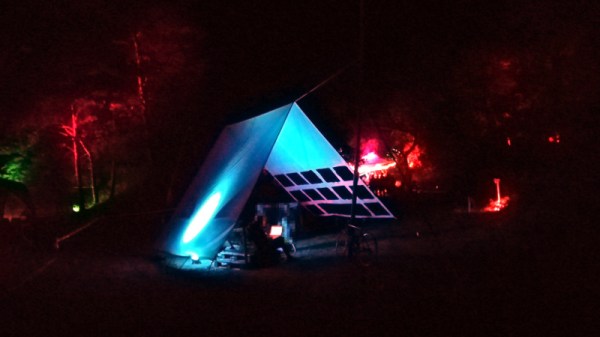
But there was one camp that wasn’t cancelled. The yearly Danish hacker camp BornHack has gone ahead this year with significantly reduced numbers and amid social distancing, turning it from what is normally one of the smaller and more intimate events into the only real-world event of 2020.
I bought my ticket early in the year and long before COVID-19 became a global pandemic, so on a sunny day in August I found myself in my car with my friend Dani from FizzPop hackerspace in Birmingham taking the ferry for the long drive through the Netherlands and Germany to Denmark.
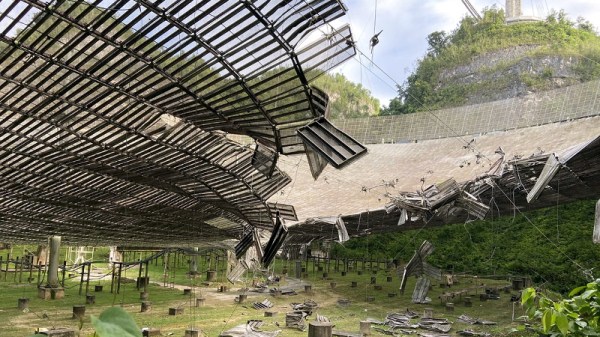
In the early morning hours of August 10th, a support cable at the Arecibo Observatory pulled lose from its mount and crashed through the face of the primary reflector below. Images taken from below the iconic 305 meter dish, made famous by films such as Contact and GoldenEye, show an incredible amount of damage. The section of thick cable, estimated to weigh in at around 6,000 kilograms (13,000 pounds), had little difficulty tearing through the reflector’s thin mesh construction.
Worse still, the cable also struck the so-called “Gregorian dome”, the structure suspended over the dish where the sensitive instruments are mounted. At the time of this writing it’s still unclear as to whether or not any of that instrumentation has been damaged, though NASA at least has said that the equipment they operate inside the dome appears to have survived unscathed. At the very least, the damage to the dome structure itself will need to be addressed before the Observatory can resume normal operations.
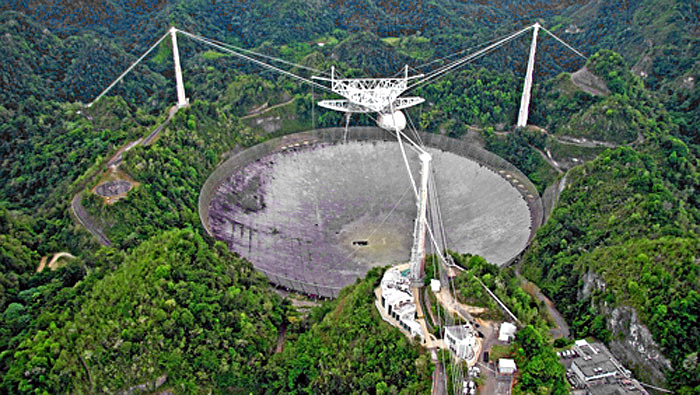
The Arecibo Observatory by JidoBG [CC-BY-SA 4.0]But how long will the repairs take, and who’s going to pay for them? It’s no secret that funding for the 60 year old telescope has been difficult to come by since at least the early 2000s. The cost of repairing the relatively minor damage to the telescope sustained during Hurricane Maria in 2017 may have been enough to shutter the installation permanently if it hadn’t been for a consortium led by the University of Central Florida. They agreed to share the burden of operating the Observatory with the National Science Foundation and put up several million dollars of additional funding.
It’s far too early to know how much time and money it will take to get Arecibo Observatory back up to operational status, but with the current world situation, it seems likely the telescope will be out of commission for at least the rest of the year. Given the fact that repairs from the 2017 damage still haven’t been completed, perhaps even longer than that. In the meantime, astronomers around the globe are left without this wholly unique resource.
Ask any airline executive what their plans were back in January 2020, and you’d probably get the expected spiel about growing market share and improving returns for shareholders. Of course, the coronovirus pandemic quickly changed all that in the space of just a few months. Borders closed, and worldwide air travel ground to a halt.
Suddenly, the world’s airlines had thousands of planes and quite literally nowhere to go. Obviously, leaving the planes just sitting around in the open wouldn’t do them any good. So what exactly is involved in mothballing a modern airliner?
Most people’s personal experience with seismographs begins and ends with simple childhood science experiments. Watching a pendulum make erratic marks on a piece of paper while your classmates banged on the table gave you an idea on how the device worked, and there’s an excellent chance that’s the last time you gave the concept much thought. Even among hackers, whose gear in general tends to be more technologically equipped than the norm, you’re unlikely to find a dedicated seismograph up and running.
But that’s not because the core technology is hard to come by or particularly expensive. In fact, one could say with almost absolute certainty that if you aren’t actively reading these words on a device with a sensitive accelerometer onboard, you have one (or perhaps several) within arm’s reach. Modern smartphones, tablets, and even some laptops, now pack in sensors that could easily be pushed into service as broad strokes seismometers; they just need the software to collect and analyze the data.
Or at least, they did. By the time you read this article, Google will have already started rolling out an update to Android devices which will allow them to use their onboard sensors to detect possible earthquakes. With literally billions of compatible devices in operation all over the planet, this will easily become the largest distributed sensor network of its type ever put into operation. But that doesn’t mean you’re going to be getting a notification on your phone to duck and cover anytime soon.
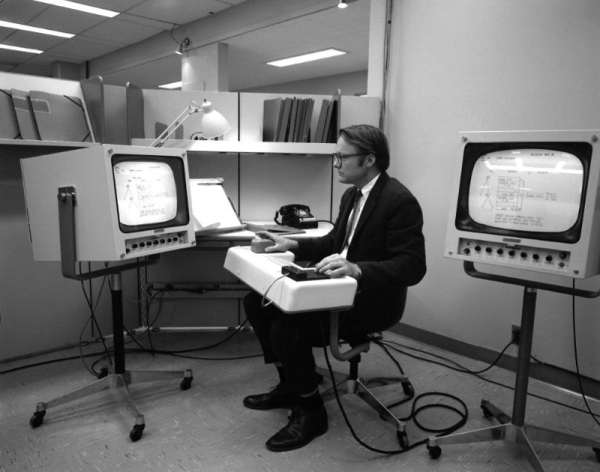
Bill at the controls at Stanford Research Institute. Image via MSN
Every piece of technology starts with a vision, a vague notion of how a thing could or should be. The computer mouse is no different. In fact, the mouse was built to be an integral part of the future of personal computing — a shift away from punch cards and mystery toward a more accessible and user-friendly system of windowed data display, hyperlinks, videoconferencing, and more. And all of it would be commanded by a dot on the screen moving in sync with the operator’s intent, using a piece of hardware controlled by the hand.
The stuff of science fiction becomes fact anytime someone has the means to make it so. Often times the means includes another human being, a intellectual complement who can conjure the same rough vision and fill in the gaps. For Douglas Engelbart’s vision of the now-ubiquitous computer mouse, that person was William English.
William English was born January 27, 1929 in Lexington, Kentucky. His father was an electrical engineer and William followed this same path after graduating from a ranch-focused boarding school in Arizona. After a stint in the Navy, he took a position at Stanford Research Institute in California, where he met Douglas Engelbart.
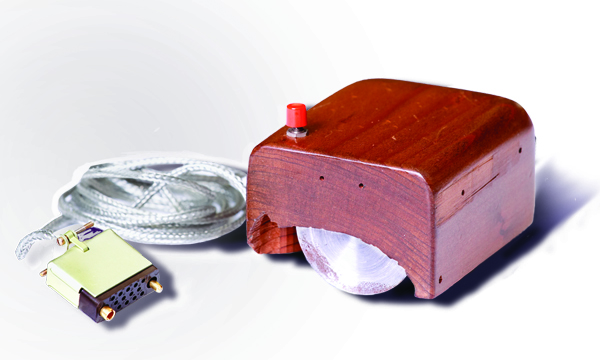
The first computer mouse, built by William English in the 1960s. Image via Wikipedia
Engelbart showed William his notes and drawings, and he built the input device that Englebart envisioned — one that could select characters and words on the screen and revolutionize text editing. The X/Y Position Indicator, soon and ever after called the mouse: a sort of rough-yet-sleek pinewood derby car of an input device headed into the future of personal computing.
William’s mouse was utilitarian: a wooden block with two perpendicular wheels on the bottom, and a pair of potentiometers inside to interpret the wheels’ X and Y positions. The analog inputs are converted to digital and represented on the screen. The first mouse had a single button, and the cord was designed to run out the bottom, not the top.
Europe has been in COVID-containment mode for the last month, in contrast to the prior three months of serious lockdown. Kids went back to school, in shifts, and people went on vacation to countries with similarly low infection rates. Legoland and the zoo opened back up, capped at 1/3 capacity. Hardware stores and post offices are running “normally” once you’ve accommodated mandatory masks and 1.5 meter separations while standing in line as “normal”. To make up for the fact that half of the tables have to be left empty, most restaurants have sprawled out onto their terraces. It’s not really normal, but it’s also no longer horrible.
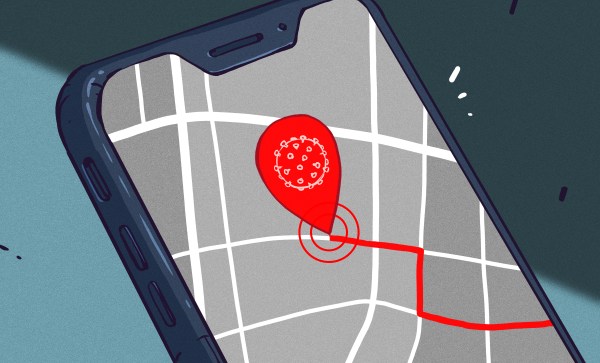
But even a country that’s doing very well like Germany, where I live, has a few hundred to a thousand new cases per day. If these are left to spread unchecked as before, the possibility of a second wave is very real, hence the mask-and-distance routine. The various European COVID-tracing apps were rolled out with this backdrop of a looming pandemic that’s tenuously under control. While nobody expects the apps to replace public distancing, they also stand to help if they can catch new and asymptomatic cases before they get passed on.
When Google and Apple introduced their frameworks for tracing apps, I took a technical look at them. My conclusion was that the infrastructure was sound, but that the implementation details would be where all of the dragons lay in wait. Not surprisingly, I was right!
Here’s an update on what’s happened in the first month of Europe’s experience with COVID-tracing apps. The good news is that the apps seem to be well written and based on the aforementioned solid foundation. Many, many people have installed at least one of the apps, and despite some quite serious growing pains, they seem to be mostly functioning as they should. The bad news is that, due to its privacy-preserving nature, nobody knows how many people have received warnings, or what effect, if any, the app is having on the infection rate. You certainly can’t see an “app effect” in the new daily cases rate. After a month of hard coding work and extreme public goodwill, it may be that cellphone apps just aren’t the panacea some had hoped.
If you’ve logged onto GitHub recently and you’re an active user, you might have noticed a new badge on your profile: “Arctic Code Vault Contributor”. Sounds pretty awesome right? But whose code got archived in this vault, how is it being stored, and what’s the point?