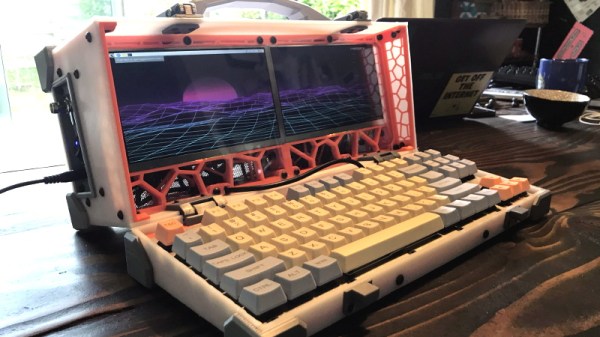
Heavyweight Cyberdeck Is In A Class Of Its Own

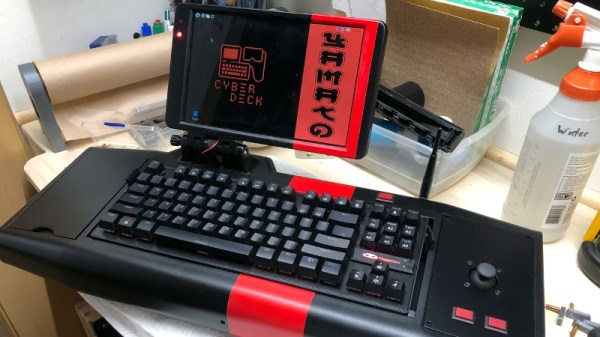
Inspired by other builds he’d seen online, [BlastoSupreme] decided to build his very own cyberdeck. There was only one problem: he’d never designed and assembled anything like this before. Wanting to avoid any problems down the line, he reasoned that the safest approach would be to make it so big that he wouldn’t struggle to fit everything inside. Some may say the resulting NX-Yamato, named for the most massive battleship ever constructed, ended up being too large. But that’s only because they are afraid.

A finish like the Yamato’s doesn’t come easy.

In his write-up on The Cyberdeck Cafe, a site dedicated to the community sprouting up around these futuristic personal computers, [BlastoSupreme] describes building this cyberdeck as something of a transformative experience. Looking at the incredible effort that went into this project, we can believe it. From the intricate CAD work to the absolutely phenomenal finish on the Yamato’s 3D printed frame, there’s not a cut corner in sight.

That’s right, nearly every component of this cyberdeck was conjured into existence by squirting out hot plastic. About two kilograms of it, to be precise. It was printed in vertical chunks which were then assembled with adhesive and screws. This modular construction technique allowed [BlastoSupreme] to build what he believes to be the largest cyberdeck ever made. Sounds a lot like a challenge to us.

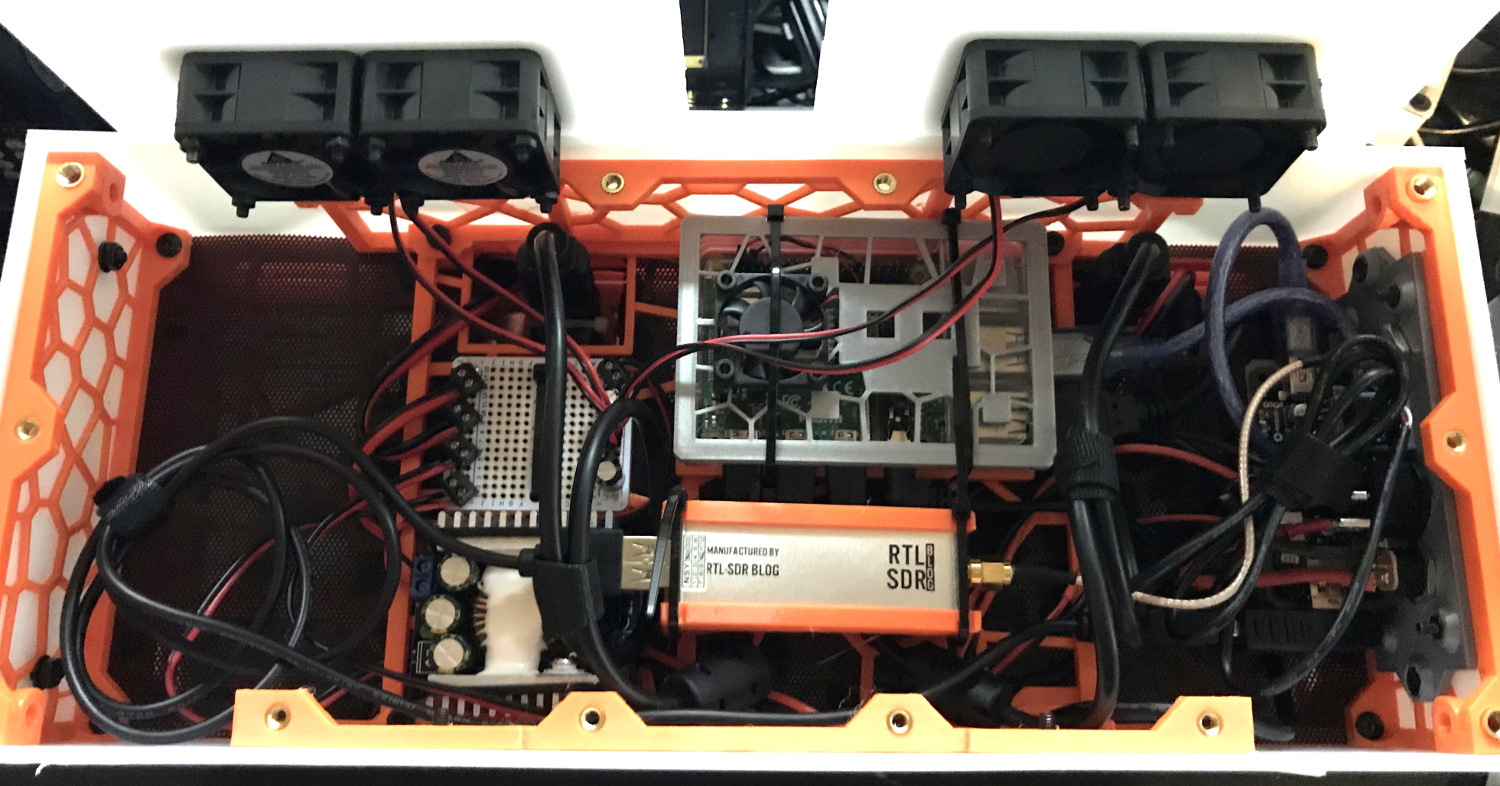
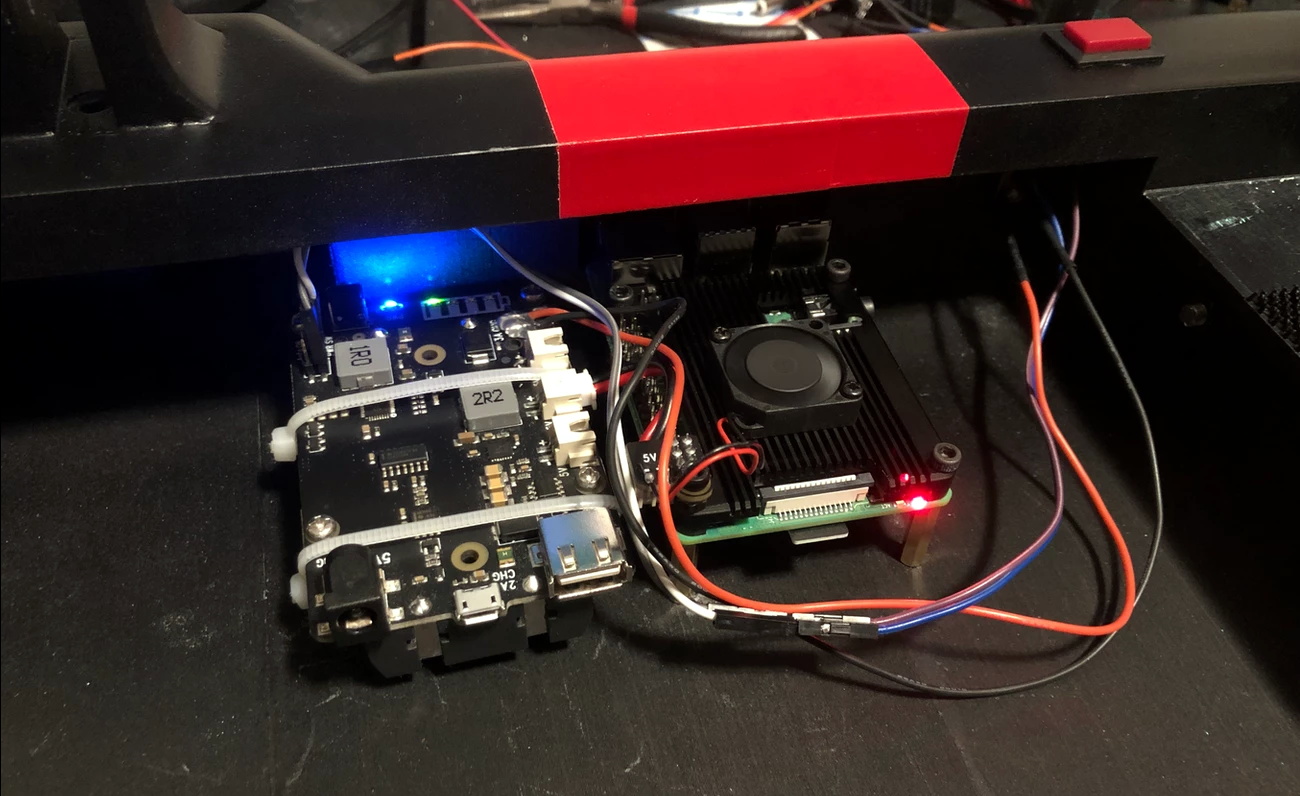
Admittedly, the massive internal volume of the Yamato is largely unused; all that’s inside it right now is a Raspberry Pi 4 and a X705 power management board that allows the deck to run off of 18650 cells. Of course, all that space could easily be put to use with additional gear or even a larger and more powerful Single Board Computer (SBC) such as the Atomic Pi. There’s even a dedicated compartment in the side for snacks, so no worries there. As [BlastoSupreme] puts it, all that empty space inside is a feature, not a bug.

Plenty of room inside for whatever hardware you want to take with you into the Sprawl.

In the nearly two years that have passed since we first came across one of these Neuromancer inspired builds, we’ve been absolutely blown away by the increasing scale and complexity of these extremely personal computers. Since it seems there’s only a fairly loose idea of what a “proper” cyberdeck should look like in the canonical sense, these builds have been free to fill in the blanks with some pretty outlandish designs. Some of which have earned William Gibson’s personal seal of approval.

A Luggable Computer For The Raspberry Pi Era

Today, computers are separated into basically two categories: desktops and laptops. But back in the early 1980s, when this ideological line in the sand was still a bit blurry, consumer’s had a third choice. Known as “portable computers” at the time, and often lovingly referred to as luggables by modern collectors, these machines were technically small enough to take with you on a plane or in the car.

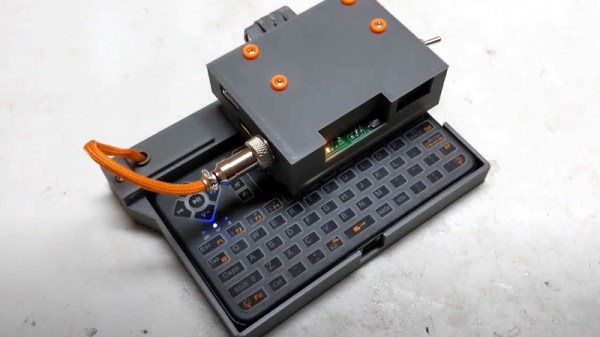
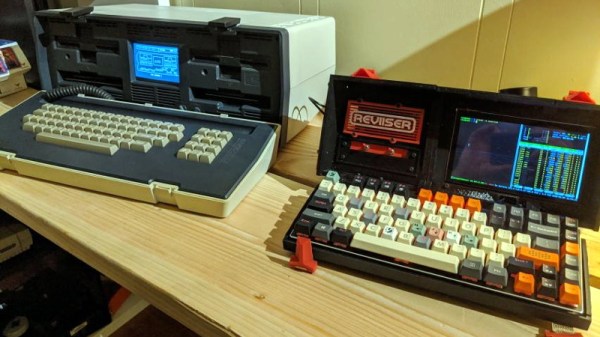
Improvements in miniaturization ultimately made the portable computer obsolete, but that doesn’t mean some people still don’t want one. [Dave Estes] has been working on his own modern take on idea that he calls Reviiser, and so far it looks like it checks off all the boxes. With the addition of a rather hefty battery pack, it even manages to be more practical than the vintage beasts that inspired it.

In the video after the break, [Dave] walks us through some of the highlights of his luggable build, such as the fold-down mechanical keyboard, gloriously clunky mechanical power switches, and the integrated touch screen. We also really like the side-mounted touch pad, which actually looks perfectly usable given the largely keyboard driven software environment [Dave] has going on the internal Raspberry Pi 4. With a removable 30,000 mAh battery pack slotted into the back of the machine, he’ll have plenty of juice for his faux-retro adventures.

[Dave] mentions that eventually he’s looking to add support for “cartridges” which will allow the user to easily slot in new hardware that connects to the Pi’s GPIO pins. This would allow for a lot of interesting expansion possibilities, and fits in perfectly with the Reviiser’s vintage aesthetic. It would also go a long way towards justifying the considerable bulk of the machine; perhaps even ushering in a revival of sorts for the luggable computer thanks to hardware hackers who want a mobile workstation with all the bells and whistles.

Right now there isn’t a lot of detail on how you can build your own Reviiser, but [Dave] says more info will be added to his site soon. In the meantime, you can check out some of the similar projects we’ve seen recently to get some inspiration for your own Luggable Pi.

Continue reading “A Luggable Computer For The Raspberry Pi Era”

Advancing The State Of Cyberdeck Technology

It’s somewhat rare to be able to witness the birth and subsequent evolution of a technology, at least on a short enough time scale to appreciate it, but right now we’re lucky enough to see it happening within the burgeoning community of cyberdeck builders. We’ve seen an absolute explosion of cyberdeck projects in the last year or so, but this latest entry from [Tinfoil_Haberdashery] truly pushes the state of the art forward. Short of actually transmitting your consciousness into the Matrix, we’re not sure how much closer you could get to William Gibson’s original vision.

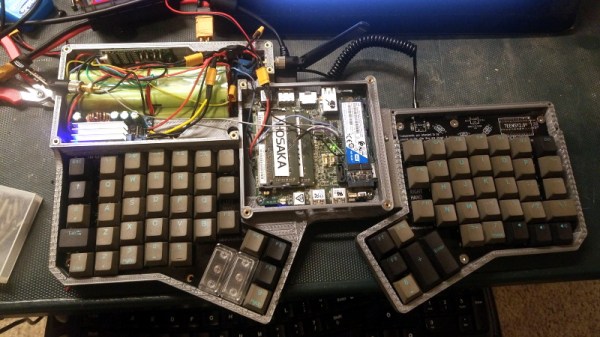
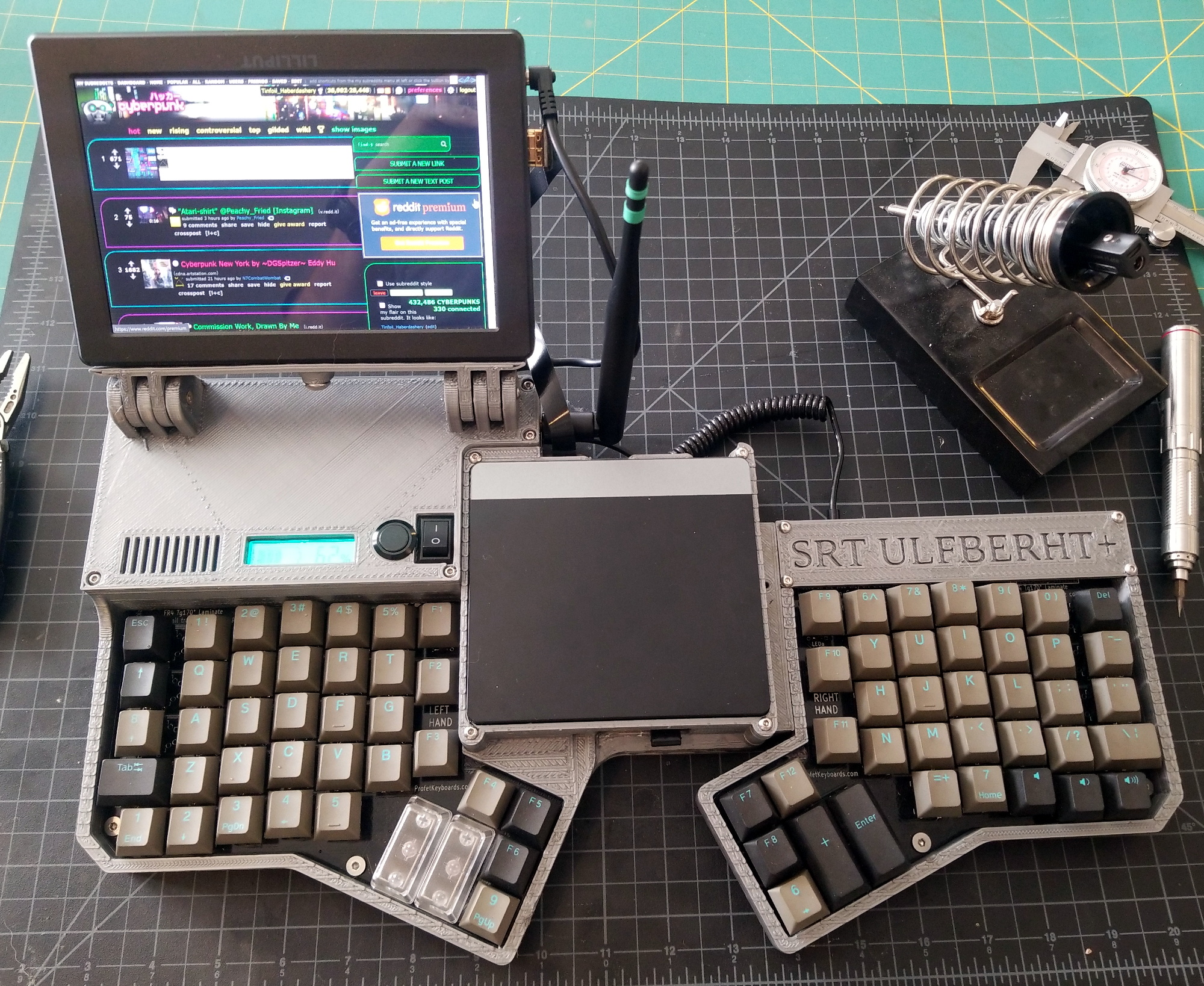
The design is based around a split ergonomic keyboard, with an Intel NUC in the center and a 1920×1200 IPS panel on a tilting mount off to one side. Since the display started its life as a DSLR monitor it doesn’t have a touch panel, but those who’ve yet to master a mouse-free workflow will be happy to know there’s a touch pad built into the lid of the NUC. Thanks to a clever dovetail joint, the deck also separates in half if you want to put some more space between your hands, or just to make the whole thing slightly less intimidating while carrying it on your back through the Sprawl.

Power is provided by a custom 18650 battery pack running at 18 V that [Tinfoil_Haberdashery] (naturally) assembled with a homemade spot welder. He’s included both buck and boost converters so the cyberdeck can be powered with a wide array of voltages should he find himself in need of some juice in the field. To maximize battery life he’s also worked in a relay to cut power to the monitor when the NUC is sleeping, and there’s a physical master switch that can completely disconnect everything for long periods of inactivity.

The very first cyberdeck featured on Hackaday was built by [Tinfoil_Haberdashery], and we’re glad to see he’s not resting on his laurels. While that first deck was certainly impressive in its own right, this build takes inspiration from the incredible work we’ve seen from other hardware hackers and raises the bar on what’s possible from this dedicated community.

Building A Faux Retro Portable Computer

The modern laptop has its origins in the mid to late 1980s, when shrinking computer hardware and improvements to battery technology finally made mobile computing practical. But before the now iconic clamshell form factor became the standard, there was a market for so-called “portable” computers. These machines often resembled pieces of luggage with keyboards attached, and even at their peak, they were nowhere near as practical as today’s ultra-thin notebook computers. But for the more nostalgic among us, these vintage portables do have a special sort of charm about them.

Looking to recapture some of that magic with modern components, [davedarko] has started working on his own Raspberry Pi portable computer. Just like those machines of yore, his build is designed to be a self-contained computing experience that you can lug around, but not exactly something you’d be popping open on the train. Its extruded aluminum frame holds the display, power supply, and audio hardware, with plenty of room to spare for additional hardware should he decide to pack in a couple hard drives or something more exotic.

The skeletal frame has plenty of room for activities.

We particularly like the 3D printed hinge and lock mechanism he designed that holds the keyboard closed against the front of the frame. Sufficiently old experienced readers will recall this particular feature being a defining characteristic of portables such as the Osborne 1 and Compaq Portable, and it’s great to see it included here. All it needs now is a leather handle on the side to complete the look.

[davedarko] still has some work ahead of him, as ultimately he’d like to completely enclose his computer’s frame with laser cut panels. But the build is certainly progressing nicely, and frankly, it’s already at the point where we’d have no problem pulling it out at the next hackerspace meetup. Between builds like this and the growing collection of cyberdecks we’ve covered recently, it looks as though 1980s design aesthetic is alive and well within the hacker community.

Continue reading “Building A Faux Retro Portable Computer”

Patrol The Sprawl With This Battle Ready Cyberdeck

The recent crop of cyberdeck builds are inspired, at least tangentially, by William Gibson’s novel Neuromancer and its subsequent sequels. In the novels, the decks are used as mobile terminals to access the virtual reality of cyberspace. In our world, they’re usually just quasi-retro boxes with Raspberry Pis in them. Artistic license and all that. But the “XMT-19 Cutlass”, a deck built by [CaptNumbNutz], attempts to hew more closely to the source material than most builds we’ve seen.

Of course it won’t be transporting you into the matrix, and ultimately it’s still just a casemod for the Raspberry Pi. But at least it does a fantastic job of fitting the Neuromancer motif. The design is supposed to look like the XMT-19 was a piece of high-tech military hardware that was later co-opted by a cyberspace cowboy operating in the urban megatropolis that Gibson called the Sprawl, with exposed wiring and a visual mish-mash of components.

If you can believe it, the build started out as a locking clipboard of all things. From there, [CaptNumbNutz] started layering on the hand-cut foam greebles and spraying on the WWII inspired color scheme. We especially like the yellow tips on the antennas that invoke the propellers of vintage airplanes, and the serial number stenciled onto the bottom. In a departure from basically every other cyberdeck we’ve seen to date, there appear to be no 3D printed elements on the XMT-19; all the parts are hand made with nothing more than an a sharp knife and a heap of patience.

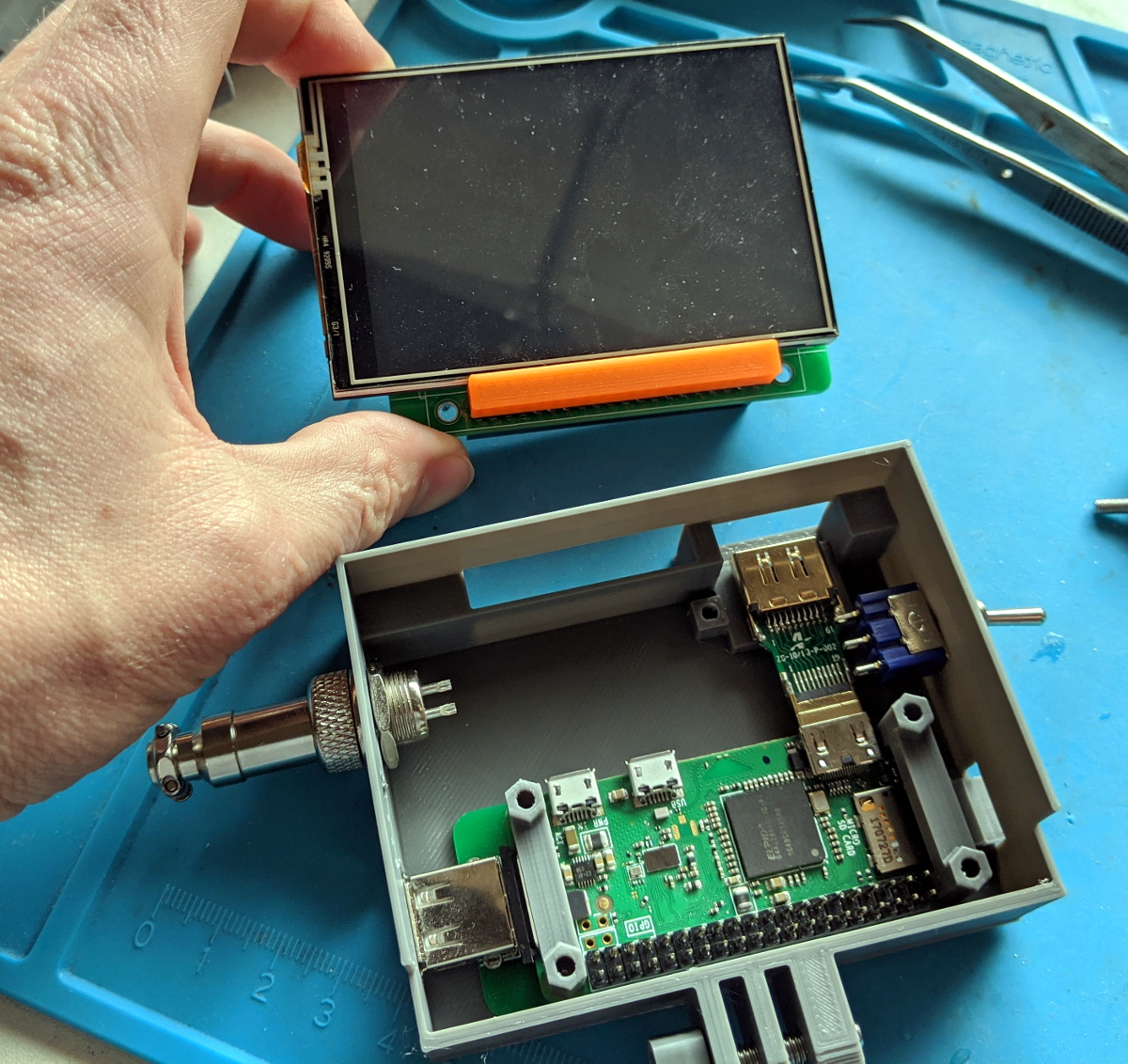
In terms of the electronics, the whole build has been greatly simplified by the use of a SmartiPi Touch case, which integrates the Pi and touch screen into a single hinged unit that just needed to get bolted to the top of the deck. Plus it gave him an excuse to put a big rainbow ribbon cable on the back of it to reach the Pi’s GPIO ports, which as you know, instantly makes everything look more retro-futuristic.

It might not be packing the raw power of the Intel NUC cyberdeck we covered last year, or have the convincingly vintage look of the VirtuScope, but we’d take the XMT-19 Cutlass into the matrix any day.

A Mobile Terminal For The End Of The World

If civilization goes sideways and you need to survive, what are the bare essentials that should go in your bunker? Food and fresh water, sure. Maybe something to barter with in case things go full on The Postman. That’s all sensible enough, but how’s that stuff going to help you get a LAN party going? If you’re anything like [Jay Doscher], you’ll make sure there’s a ruggedized Raspberry Pi system with a self-contained network with you when the bombs drop.

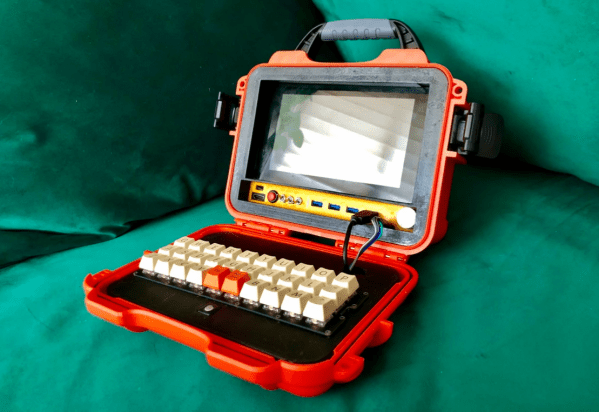
Or at least, it certainly looks the part. He’s managed to design the entire project so it doesn’t require drilling holes through the Pelican case that serves as the enclosure, meaning it’s about as well sealed up as a piece of electronics can possibly be. The whole system could be fully submerged in water and come out bone dry on the inside, and with no internal moving parts, it should be largely immune to drops and shocks.

But we imagine [Jay] won’t actually need to wait for nuclear winter before he gets some use out of this gorgeous mobile setup. With the Pi’s GPIO broken out to dual military-style panel mount connectors on the front, a real mechanical keyboard, and an integrated five port Ethernet switch, you won’t have any trouble getting legitimate work done with this machine; even if the closest you ever get to a post-apocalyptic hellscape is the garage with the heat off. We especially like the 3D printed front panel with integrated labels, which is a great tip that frankly we don’t see nearly enough of.

This is actually an evolved version of the Raspberry Pi Field Unit (RPFU) that [Jay] built back in 2015. He tells us that he wanted to update the design to demonstrate his personal growth as a hacker and maker over the last few years, and judging by the final product, we think it’s safe to say he’s on the right path.

A Cyberdeck Built With Ergonomics In Mind

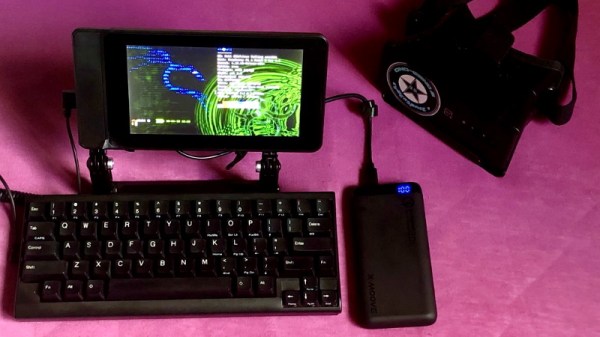
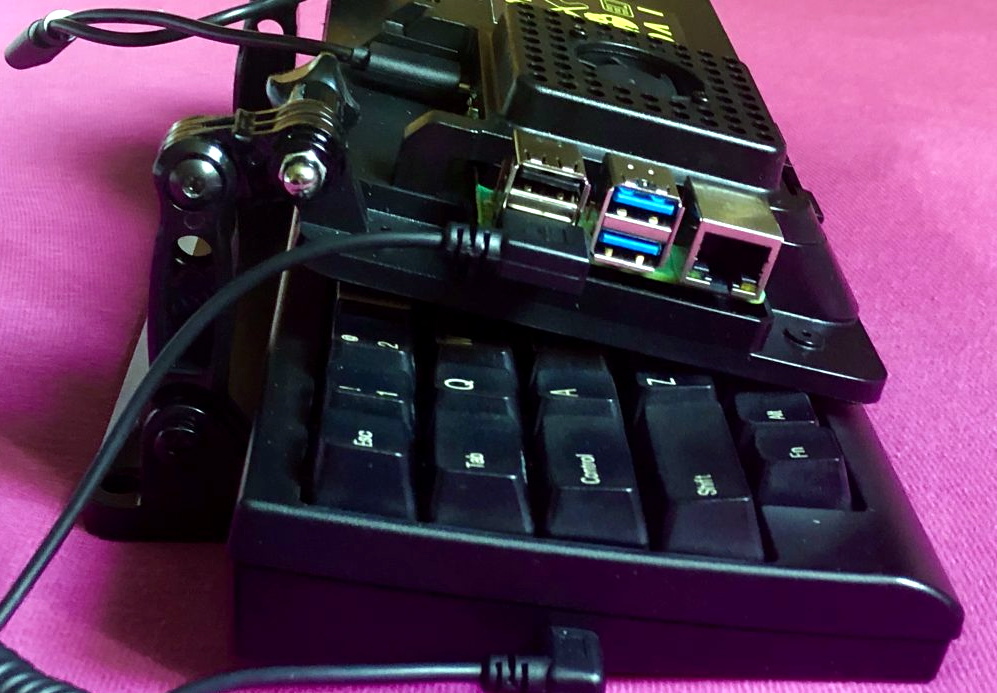
With a new decade looming over us, the hot new thing for hackers and makers everywhere is to build cyberdecks to go with the flashy black-and-neon clothing that the sci-fi films of old predicted we’d all be wearing come next year. [Phil Hagelberg] has been designing one based on his own ergonomic keyboard, prioritizing not only form but also function.

The Atreus mechanical keyboard has a split layout that foregoes the traditional typewriter-inherited staggered arrangement in favor of one that better fits the user’s hands. The reduced number of keys limits hand movement for a more comfortable writing experience, however if you use function keys often, the trade-off is that you’ll need to use an auxiliary key to access them.

The deck [Phil] documents for us here is built from the ground up around that same design and aims to be small enough for travel, yet pleasant enough for serious use. It’s gone through four revisions so far, including an interesting one where the keyboard is laid out on the sides for using while standing up. As for the brains of the machine, the past revisions have used different flavors of Raspberry Pi and even a Samsung Galaxy S4 phone, though the latest model has a Pine64 running the show. How much has changed between each finished prototype really goes to show that you don’t have to get it right the first time, and it’s always good to experiment with a new idea to see what works.

[Phil] is now moving onto a fifth prototype, and hopes to eventually sell kits for building the whole cyberdeck along with the kits already available for the standalone keyboard. We’ve been struck by the creativity shown in these cyberdeck builds, which range from reusing retro computer shells to completely printing out a whole new one for a unique look. We can’t say for sure if this custom form-factor will eventually surpass mass-produced laptops, but it sure would be hella cool if it did.