Create Your Own HDR Images


Hack-A-Day friend [Nathan] showed us some of his results creating his own High Dynamic Range images. Three normal Low Dynamic Range photos. One is under exposed, one is normal and the third is over exposed to capture the information needed. Then all three are used to create a single HDR image. Technically, the HDR image contains too much information to properly display, but even this limited version looks damn impressive.

You’ll need a tripod, a camera that allows you to adjust your exposure value and a decent CPU to do the processing. (This pic took a couple of minutes to render on a quad core cpu) You can check out the full HDR photo here and one of the original frames here. For the software side, you can use pfstools on the command line or QtpfsGUI for the graphics side – both are free and open source. [Nathan] suggests a camera with bracket mode and a remote shutter release for best results. If you’re all about theory, you can grab a white paper on the process here.

Wide Angle Lens For The ATC2K Video Camera


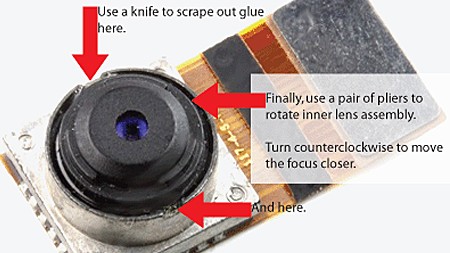
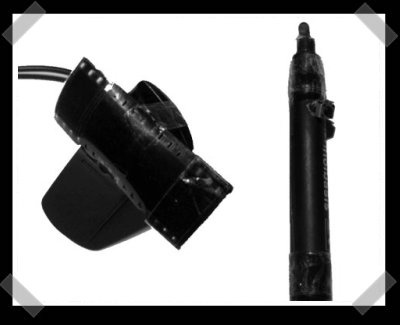
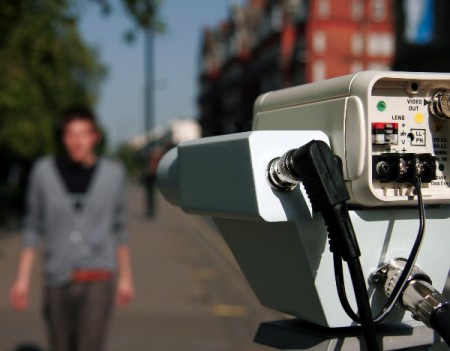
We just ordered up a new ATC3K video camera from Oregon Scientific for some, uh projects. (No, not our new porn site.) If you’ve got one of the older ATC2K cams, you can mod it a bit to avoid dropping another C-note on the new model. [Carlos] wrote up his mod to remove and replace the original narrow lens with a wide angle fisheye lens. The install requires some significant effort and some case modding – probably not a good idea if the waterproof feature is dear to you.

Arduino PhotoLab


Droplet photography (link translated from French) often produces simple and beautiful images, but timing the exposure can be tricky. Snapping the photo too early or too late can cause you to miss the action, which only lasts a fraction of a second. EquinoxeFR (the people behind the Asus WL500GP audio hack) came up with a solution to this problem using a circuit with an ATmega168 running an Arduino environment. The circuit controls a syringe that contains a liquid and is triggered remotely to release a drop into a darkened chamber. A camera with the shutter open is attached to the chamber, and before the droplet hits, it crosses an IR sensor that triggers the flash to go off a few milliseconds later, capturing the unique crown shape of the impact. No schematic is available as yet, but comments at the bottom of the post suggest one will be coming soon.

Hack Cameras With The Image Fulgurator

[Wallace] sent in this awesome project built by [Julius Von Bismarck]. The “Image Fulgurator” is the result of mating an optical slave flash with a camera body turned projector. The result is the ability to project ghost images onto a picture being taken by anyone using a camera with their flash. Check out the demo video after the break or hit the project site for more.

Continue reading “Hack Cameras With The Image Fulgurator”

On-board Focus Confirmation For The Canon Digital Rebel


We’ve seen plenty of lens hacks, but [Koray] took things in a new direction. Rather than buy lens chips for modding all of his manual lenses, he added a lens chip inside his Digital Rebel 300D (aka XT). Most of us might cringe at gutting their Rebel, but he performed this bit of soldering surgery on a unit he picked up for £40 and repaired. Excellent work!

Update: yeah yeah, the 300D is the original Digital Rebel.

Eye-Fi Explore Review

[flickr video=http://www.flickr.com/photos/pauls/2611298593/]

The WiFi uploading Eye-Fi SD card made a big splash when it was first introduced, but now Eye-Fi has a whole line of different products. The top of the line is the Eye-Fi Explore, which supports geotagging without using a GPS. Instead of GPS hardware, it uses the Skyhook Wireless Wi-Fi Postitioning System, which correlates the position of the Eye-Fi’s access point to GPS locations, creating virtual GPS functionality. This allows photos taken with the Eye-Fi to be be geotagged. Of course, the accuracy of the system is noticeably lower than true GPS and seems to be affected by a number of external factors, but it is still accurate enough to tag the photo within the immediate vicinity of where it was taken.

WiFi positioning is great feature, but certainly not limited to photography. Since the Eye-Fi is at its core SD storage media, you could probably have it geotag data saved to the card, even if it wasn’t created by a digital camera..