Scientific research is a messy business. The road to learning new things and making discoveries is paved with hard labor, tough thinking, and plenty of dead ends. It’s a time-consuming, expensive endeavor, and for every success, there are thousands upon thousands of failures.
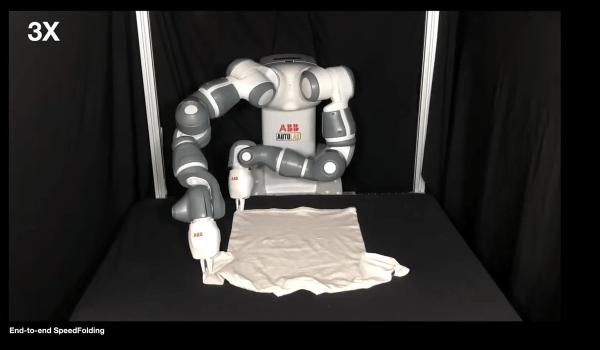
It’s a process so inefficient, you would think someone would have automated it already. The concept of the self-driving laboratory aims to do exactly that, and could revolutionize materials research in particular.
When you think of the periodic table, some elements just have a vibe to them that’s completely unscientific, but nonetheless undeniable. Precious metals like gold and silver are obvious examples, associated as they always have been with the wealth of kings. Copper and iron are sturdy working-class metals, each worthy of having entire ages of human industry named after them, with silicon now forming the backbone of our current Information Age. Carbon builds up the chemistry of life itself and fuels almost all human endeavors, and none of us would get very far without oxygen.
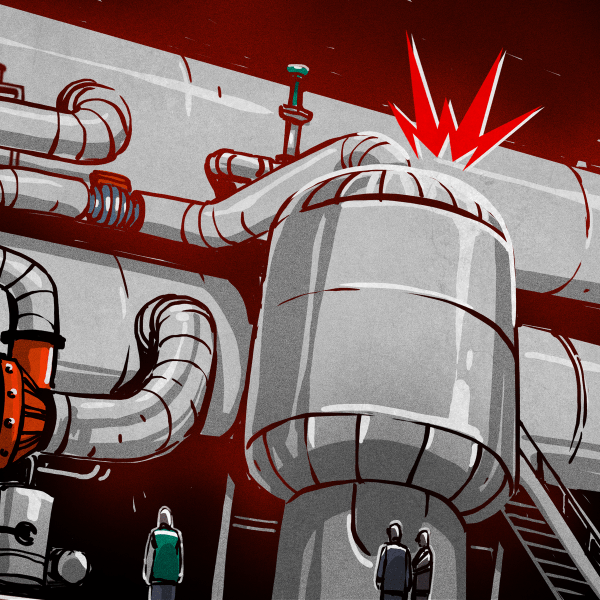
But what about sulfur? Nobody seems to think much about poor sulfur, and when they do it tends to be derogatory. Sulfur puts the stink in rotten eggs, threatens us when it spews from the mouths of volcanoes, and can become a deadly threat when used to make gunpowder. Sulfur seems like something more associated with the noxious processes and bleak factories of the early Industrial Revolution, not a component of our modern, high-technology world.
And yet despite its malodorous and low-tech reputation, there are actually few industrial processes that don’t depend on massive amounts of sulfur in some way. Sulfur is a critical ingredient in processes that form the foundation of almost all industry, so its production is usually a matter of national and economic security, which is odd considering that nearly all the sulfur we use is recovered from the waste of other industrial processes.
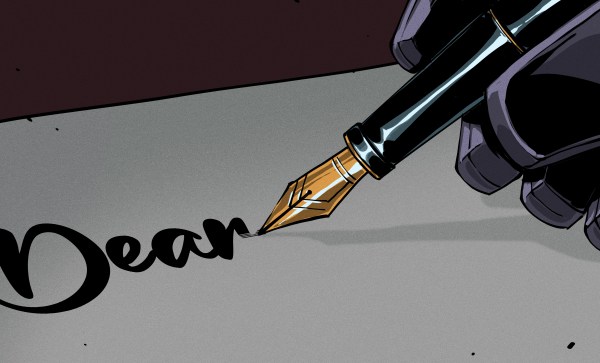
Unlike probably most people, I enjoy the act of writing by hand — but I’ve always disliked signing my name. Why is that? I think it’s because signatures are supposed to be in cursive, or else they don’t count. At least, that’s what I was taught growing up. (And I’m really not that old, I swear!)
Having the exact same name as my mother meant that it was important to adolescent me to be different, and that included making sure our signatures looked nothing alike. Whereas her gentle, looping hand spoke to her sensitive and friendly nature, my heavy-handed block print was just another way of letting out my teen angst. Sometime in the last couple of decades, my signature became K-squiggle P-squiggle, which is really just a sped-up, screw-you version of my modern handwriting, which is a combination of print and cursive.
D’Nealian print. Notice the ‘monkey tails’ on every possible lowercase letter.
D’Nealian cursive. Notice the stroke order and the ridiculous capital Q.
But let’s back up a bit. I started learning to write in kindergarten, but that of course was in script, with separate letters. Me and my fellow Xennial zeigeistians learned a specific printing method called D’Nealian, which was designed to ease the transition from printing to cursive with its curly tails on every letter.
We practiced our D’Nealian (So fancy! So grown-up!) on something called Zaner-Bloser paper, which is still used today, and by probably second grade were making that transition from easy Zorro-like lowercase Zs to the quite mature-looking double-squiggle of the cursive version. It was as though our handwriting was moving from day to night, changing and moving as fast as we were. You’d think we would have appreciated learning a way of writing that was more like us — a blur of activity, everything connected, an oddly-modular alphabet that was supposed to serve us well in adulthood. But we didn’t. We hated it. And you probably did, too.
We have many kinds of pills available these days to treat all kinds of different disorders. Of course, the problem with pills is that they don’t work if you don’t take them. Even Worse, for some medicines, missing a dose can cause all kinds of undesirable withdrawl effects and set back a patient’s treatment.
Smart pills aim to fix this problem with a simple monitoring solution that can tell when a patient has taken their medication. They’re now publicly available and authorized for use, so let’s look at how they work.
We know. The title sounds like a bad newsreel from 1942. Turns out, though, that the Nazis were really good at pouring money into military research and developing — or trying to develop — what they called “wunderwaffe” — wonder weapons. While we think of rockets and jets today as reasonably commonplace, they were state-of-the-art when Germany deployed them during WWII. While the rockets were reasonably successful, the jets were too few and too late to matter. However, those were just the tip of the iceberg. The German war industry had plenty of plans ranging from giant construction to secret weapons that seem to be out of the pages of a pulp science fiction magazine.
Size Matters
Part of the plans included huge ships including one aircraft carrier displacing 56,500 tons. Many of these were never completed and, in some cases, were never actually started. In contrast, the Essex-class USS Hornet displaces 31,300 tons and the Lexington was 37,000 tons. The H-class battleships would have had as much as 140,000 tons of displacement dwarfing the Yamato class (73,000 tons) and the Iowa class (53,000 tons).
After decades of delays and false starts, NASA is finally returning to the Moon. The world is eagerly awaiting the launch of Artemis I, the first demonstration flight of both the Space Launch System and Orion Multi-Purpose Crew Vehicle, which combined will send humans out of low Earth orbit for the first time since 1972. But it’s delayed.
While the first official Artemis mission is naturally getting all the attention, the space agency plans to do more than put a new set of boots on the surface — their long-term goals include the “Lunar Gateway” space station that will be the rallying point for the sustained exploration of our nearest celestial neighbor.
Launched aboard an Electron rocket in June, the large CubeSat will hopefully become the first spacecraft to ever enter into a NRHO. By positioning itself in such a way that the gravity from Earth and the Moon influence it equally, maintaining its orbit should require only periodic position corrections. This would not only lower the maintenance burden of adjusting the Lunar Gateway’s orbit, but reduce the station’s propellant requirement.
CAPSTONE is also set to test out an experimental navigation system that uses the Lunar Reconnaissance Orbiter (LRO) as a reference point instead of ground-based stations. In a future where spacecraft are regularly buzzing around the Moon, it will be important to establish a navigation system that doesn’t rely on Earthly input to operate.
So despite costing a relatively meager $30 million and only being about as large as a microwave oven, CAPSTONE is a very important mission for NASA’s grand lunar aspirations. Unfortunately, things haven’t gone quite to plan so far. Trouble started just days after liftoff, and as of this writing, the outcome of the mission is still very much in jeopardy.
Floppies may be big in Japan, but nostalgic and/or needful Stateside floppy enthusiasts needn’t fret — just use AOL keyword point that browser toward floppydisk.com. There, you can buy new floppies of all sizes, both new and old, recycle your disks, or send them in to get all that precious vintage stuff transferred off of them.
That delightfully Web 1.0 site is owned by Tom Persky, who fancies himself the ‘last man standing in the floppy disk business’. Who are we to argue? By the way, Tom has owned that address since approximately 1990 — evidently that’s when a cyber-squatter offered up the domain for $1,000, and although Tom scoffed at paying so much as $1 for any URL, his wife got the checkbook out, and he has had her to thank for it ever since.
My business, which used to be 90% CD and DVD duplication, is now 90% selling blank floppy disks. It’s shocking to me. — Tom Persky
Tom also owns diskduper.com, which is where he got his start with floppies — by duplicating them. In the 80s and 90s, being in this business was a bit like cranking out legal tender in the basement. As time wore on and more companies stopped selling floppies or simply went under, the focus of Tom’s company shifted away from duplication and toward sales. Whereas the business was once 90% duplication and 10% floppy sales, in 2022, those percentages have flopped places, if you will.