Could Moon Mining Spoil Its Untouched Grandeur And Science Value?

It’s 2024. NASA’s Artemis program is in full swing, and we’re hoping to get back to the surface of the Moon real soon. Astronauts haven’t walked on the beloved sky rock since 1972! A human landing was scheduled for 2025, which has now been pushed back to 2026, and we’re all getting a bit antsy about it. Last time we wanted to go, it only took 8 years!

Now, somehow, it’s harder, but NASA also has its sights set higher. It no longer wants to just toddle about the Moon for a bit to wave at the TV cameras. This time, there’s talk of establishing permanent bases on the Moon, and actually doing useful work, like mining. It’s a tantalizing thought, but what does this mean for the sanctity of one of the last pieces of real estate yet to be spoilt by humans? Researchers are already arguing that we need to move to protect this precious, unique environment.

Continue reading “Could Moon Mining Spoil Its Untouched Grandeur And Science Value?”

Human-Written Or Machine-Generated: Finding Intelligence In Language Models

What is the essential element which separates a text written by a human being from a text which has been generated by an algorithm, when said algorithm uses a massive database of human-written texts as its input? This would seem to be the fundamental struggle which society currently deals with, as the prospect of a future looms in which students can have essays auto-generated from large language models (LLMs) and authors can churn out books by the dozen without doing more than asking said algorithm to write it for them, using nothing more than a query containing the desired contents as the human inputs.

Due to the immense amount of human-generated text in such an LLM, in its output there’s a definite overlap between machine-generated text and the average prose by a human author. Statistical methods of detecting the former are also increasingly hamstrung by the human developers and other human workers behind these text-generating algorithms, creating just enough human-like randomness in the algorithm’s predictive vocabulary to convince the casual reader that it was written by a fellow human.

Perhaps the best way to detect machine-generated text may just be found in that one quality that these algorithms are often advertised with, yet which they in reality are completely devoid of: intelligence.

Continue reading “Human-Written Or Machine-Generated: Finding Intelligence In Language Models”

Could Solar-Powered Airships Offer Cleaner Travel?

The blimp, the airship, the dirigible. Whatever you call them, you probably don’t find yourself thinking about them too often. They were an easy way to get airborne, predating the invention of the airplane by decades. And yet, they suffered—they were too slow, too cumbersome, and often too dangerous to compete once conventional planes hit the scene.

And yet! Here you are reading about airships once more, because some people aren’t giving up on this most hilarious manner of air travel. Yes, it’s 2024, and airship projects continue apace even in the face of the overwhelming superiority of the airplane.

Continue reading “Could Solar-Powered Airships Offer Cleaner Travel?”

DB Cooper Case Could Close Soon Thanks To Particle Evidence

It’s one of the strangest unsolved cases, and even though the FBI closed their investigation back in 2016, this may be the year it cracks wide open. On November 24, 1971, Dan Cooper, who would become known as DB Cooper due to a mistake by the media, skyjacked a Boeing 727 — Northwest Orient Airlines Flight 305 — headed from Portland to Seattle.

During the flight, mild-mannered Cooper coolly notified a flight attendant sitting behind him via neatly-handwritten note that he had a bomb in his briefcase. His demands were a sum of $200,000 (about $1.5 M today) and four parachutes once they got to Seattle. Upon landing, Cooper released the passengers and demanded that the plane be refueled and pointed toward Mexico City with him and most of the original crew aboard. But around 30 minutes into the flight, Cooper opened the plane’s aft staircase and vanished, parachuting into the night sky.

In the investigation that followed, the FBI recovered Cooper’s clip-on tie, tie clip, and two of the four parachutes. While it’s unclear why Cooper would have left the tie behind, it has become the biggest source of evidence for identifying him. New evidence shows that a previously unidentified particle on the tie has been identified as “titanium smeared with stainless steel”.

Continue reading “DB Cooper Case Could Close Soon Thanks To Particle Evidence”

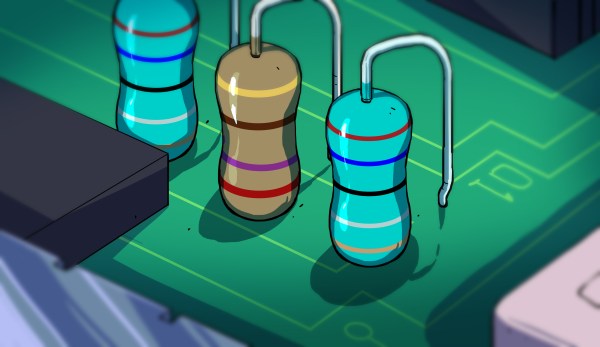
Switching Regulators For Dummies

We often use linear regulators in our designs. They are cheap and simple – you put the regulator chip itself on the board, add two capacitors, and get a voltage. Linear regulators are imperfect, of course – they can’t help but waste the voltage difference as heat, for a start, which straight up excludes them for high-current purposes, or significant voltage difference conversions, unless you have a hefty heatsink handy. They also can’t boost voltage, which means you can only go from high to low – a bit of a disappointment.

Of course, we haven’t been just throwing our hands up in the air if a linear regulator doesn’t fit our purpose. Switching regulators have none of these disadvantages, which is why your mobile phone alone has a few dozen of these. They are way more efficient and hi-tec, able to convert one voltage into another while losing hardly any power into heat. All that you need to do is switch an inductor at a somewhat high frequency!

However, for some, switching regulators might look a bit intimidating. They tend to have higher standards for board layout compared to linear regulators, and, they do need an inductor – sometimes, a few more components too. Inductors alone are somewhat intimidating components, with a fair few more parameters than we’d expect, and you might get confused when looking into adding a switching regulator to your circuit.


No more! In this article, I shall give you the switching regulator basics, remove any fog of war that might be clouding your vision, and show you just how easily you can get a good few amps at your favourite voltage whenever you need it. Continue reading “Switching Regulators For Dummies”

X-Ray Investigations Hack Chat

Join us on Wednesday, January 24 at noon Pacific for the X-Ray Investigation Hack Chat with Ahron Wayne!

It’s hard to imagine a world where we didn’t figure out how to use X-rays to peer inside things. Before Röntgen’s discovery that X-rays could penetrate living tissue, doctors had only limited (and often unpleasant) ways to get a look at what was going on inside the human body, and few of us would want to return to those days.

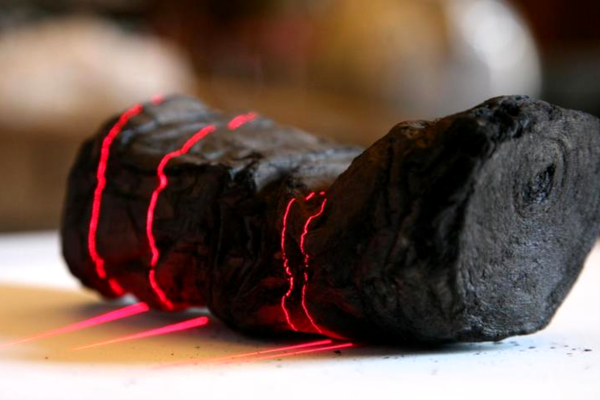
As fantastically useful as X-rays and later computed tomography (CT) became in medicine, it didn’t take too long for other uses for the technology to come along. Non-clinical applications for X-ray and CT abound, including their use in non-invasively exploring relics of immense archaeological value. One recent effort in this space that gained a lot of coverage in the press was the combination of CT imaging and machine learning to read the ink inside carbonized papyrus scrolls from the ruins of Pompeii.

join-hack-chatThe result was the “Vesuvius Challenge,” where different teams looked for techniques to virtually unwrap the roasted relics. Ahron’s contribution to the project was a little unusual — he bought a used desktop CT scanner, fixed it up, and started experimenting with reading ink from the carbonized remains of simulated papyrus scrolls. In other words, he made some scrolls, cooked them to beyond well-done in the oven, and tried to understand what happens to ink on papyrus that gets blasted by a volcano. If that’s not enough to get you to stop by the Hack Chat when Ahron joins us, we’re not sure what else would be! Suffice it to say we’re pretty excited about what Ahron has to say about DIY CT,  X-rays, collaborative open-source citizen science, and unwrapping the mysteries of Pompeii.

Our Hack Chats are live community events in the Hackaday.io Hack Chat group messaging. This week we’ll be sitting down on Wednesday, January 24 at 12:00 PM Pacific time. If time zones have you tied up, we have a handy time zone converter.

Featured image: Daderot, CC0, via Wikimedia Commons

This Week In Security: Gitlab, VMware, And PixeFAIL

There’s a Gitlab vulnerability that you should probably pay attention to. Tracked as CVE-2023-7028, this issue allows an attacker to specify a secondary email during a the password reset request. Only one email has to match the one on record, but the password reset link gets sent to both emails. Yikes!

What makes this worse is there is already a Proof of Concept (PoC) released, and it’s a trivial flaw. In an HTTP/S post containing the password reset request, just include two email addresses. Thankfully, a fix is already out. Versions 16.7.2, 16.6.4, and 16.5.6 contain this patch, as well as fixes for a flaw that allowed sneaking unauthorized changes into a previously approved merge request, and an issue with Slack and Mattermost where slash commands could be spoofed.

VMware

We don’t want to over-dramatise this vulnerability, but VMware is calling it an emergency. This one affects VMware vRealize and Aria Automation. According to the the CVSS calculator, it’s a low complexity network flaw, but does require at least some privileges. Hopefully more information will come out about this vulnerability, but for now that’s about all we know.

Continue reading “This Week In Security: Gitlab, VMware, And PixeFAIL”