I3C — No Typo — Wants To Be Your Serial Bus

Remember old hard drives with their giant ribbon cables? They went serial and now the power cables are way thicker than the data cables. We’ve seen the same thing in embedded devices. Talking between chips these days tends to use I2C or SPI or some variation of these to send and receive data over a handful of pins. But now there is I3C, a relatively new industry standard that is getting a bit of traction.

I2C and SPI are mature but they do have problems. I2C can be relatively slow and SPI usually requires extra pins for each device. Besides that, there is poor support for adding and removing devices dynamically or discovering devices automatically.

I3C, created by the MIPI Alliance, aims to fix these problems. It does use the usual two wires, SCL for the clock and SDA for data.  One device acts as a controller. Other devices can be targets or secondary controllers. It is also backward compatible with I2C target devices. Depending on how you implement it, speeds can be quite fast with a raw speed of 12.5 Mbps and using line coding techniques can go to around 33 Mbps.

Continue reading “I3C — No Typo — Wants To Be Your Serial Bus”

Space-Based Solar Power: Folly Or Stroke Of Genius?

The Sun always shines in space, unless a pesky planet gets in the way. That’s more or less the essential thought behind space-based solar power (SBSP) as newly pitched by ESA’s director general, Josef Aschbacher on Twitter. Rather than putting photovoltatic solar panels on the Earth’s surface which has this annoying property of constantly rotating said panels away from the Sun during what is commonly referred to as ‘night’, the panels would be put stationary in space, unaffected by the Earth’s rotation and weather.

Although a simple idea, it necessitates the solving of a number of problems. The obvious first question is how to get these panels up in space, hundreds of kilometers from the Earth’s surface, to create a structure many times larger than the International Space Station. The next question is how to get the power back to Earth, followed by questions about safety, maintenance, transfer losses and the inevitable economics.

With organizations ranging from NASA to China’s Academy for Space Technology (CAST), to US institutions and others involved in SBSP projects, it would seem that these problems are at the very least deemed to be solvable. This raises the question of how ESA’s most recent proposal fits into this picture. Will Europe soon be powered from orbital solar panel arrays?

Continue reading “Space-Based Solar Power: Folly Or Stroke Of Genius?”

How Resilient Is The Natural Gas Grid?

A few years ago, I managed to get myself on a mailing list from a fellow who fancied himself an expert on energy. Actually, it seemed that no area was beyond his expertise, and the fact that EVERY EMAIL FROM HIM CAME WITH A SUBJECT LINE IN CAPS WITH A LOT OF EXCLAMATION POINTS!!!! really sealed the deal on his bona fides. One of the facts he liked to tout was that natural gas was the perfect fuel. Not only is it clean-burning and relatively cheap, it’s also delivered directly to consumers using a completely self-powered grid. Even under “zombie apocalypse” conditions, he claimed that natural gas would continue to flow.

At the time, it seemed a bit overstated, but I figured that there was at least a nugget of truth to it — enough so that I converted from an electric range and water heater to gas-powered appliances a couple of years ago, and added gas fireplaces for supplemental heat. I just sort of took it for granted that the gas would flow, at least until the recent kerfuffle over the Nordstream pipeline. That’s when I got a look at pictures of the immense turbine compressors needed to run that pipeline, the size and complexity of which seem to put the lie to claims about the self-powered nature of natural gas grids.

Surely a system dependent on such equipment could not be entirely self-powered, right? This question and others swirled doubt in my mind, and so I did what I always do in these cases: I decided to write an article so I could look into the details. Here’s what I found out about how natural gas distribution works, at least in North America.

Continue reading “How Resilient Is The Natural Gas Grid?”

IBM’s Early PC Attracts Time Travelers

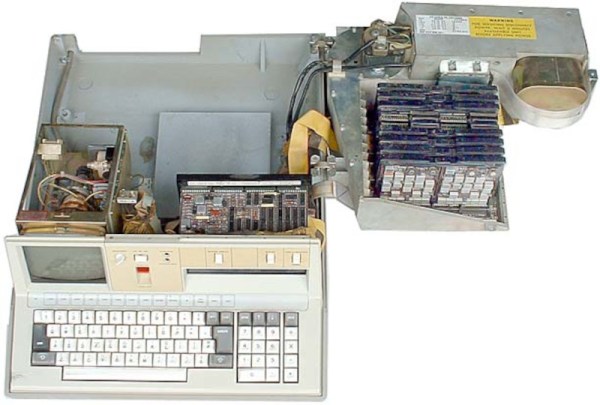
It wasn’t long ago I was nostalgic about an old computer I saw back in the 1980s from HP. It was sort of an early attempt at a PC, although price-wise it was only in reach for professionals. HP wasn’t the only one to try such a thing, and one of the more famous attempts was the company that arguably did get the PC world rolling: IBM. Sure, there were other companies that made PCs before the IBM PC, but that was the computer that cemented the idea of a computer on an office desk or at your home more than any computer before it. Even now, our giant supercomputer desktop machines boot as though they were a vintage 1981 PC for a few minutes on each startup. But the PC wasn’t the first personal machine from IBM and, in fact, the IBM 5100 was not only personal, but it was also portable. Well, portable by 1970s standards that also had very heavy video cameras and luggable computers like the Osborne 1.

The IBM 5100 had a brief three-year life from 1975 to 1978. A blistering 1.9 MHz 16-bit CPU drove a 5-inch CRT monitor and you could have between 16K and 64K of RAM along with a fair amount of ROM. In fact, the ROMs were the key feature and a giant switch on the front let you pick between an APL ROM and a BASIC ROM (assuming you had bought both).

Continue reading “IBM’s Early PC Attracts Time Travelers”

Optimizing The Mining Of Uranium From Coal Ash And Seawater

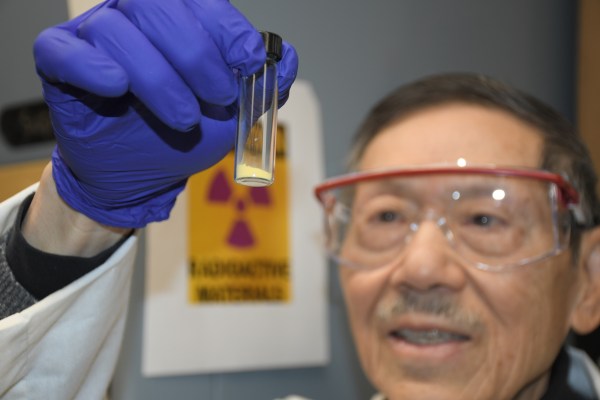
Of all the elements that make up the Earth’s crust, uranium is reasonably abundant, coming in at 49th place, ahead of elements such as tin, tungsten and silver. Ever since humankind began to exploit uranium for its fissile properties in energy production, this abundance has also translated into widespread availability for mining. As of 2019, Kazakhstan, Canada and Australia formed the world’s main producers, accounting for about 68% of output.

Considering the enormous energy density of uranium when used as fuel in a nuclear fission reactor, the demand for uranium is relatively low, especially combined with the long (two years on average) refueling cycles of commercial reactors. The effect is that even with the very inefficient once-through fuel cycle – which only uses a fraction of the uranium fuel’s potential energy – uranium market prices have remained relatively low and stable even amidst geopolitical crises.

Despite this, the gradual rise in uranium market prices ($10/lb in 2003, $49/lb in 2022), as well as the rapid construction of new reactors is driving new exploration. Here recent innovations may make uranium fuel even more accessible to all nations, by unlocking the billions of tons of uranium found in plain seawater as well as the many tons of fly ash produced by coal plants every single day.

Continue reading “Optimizing The Mining Of Uranium From Coal Ash And Seawater”

A Brief History Of Drywall Or: How Drywall Came To Dominate The World Of Construction

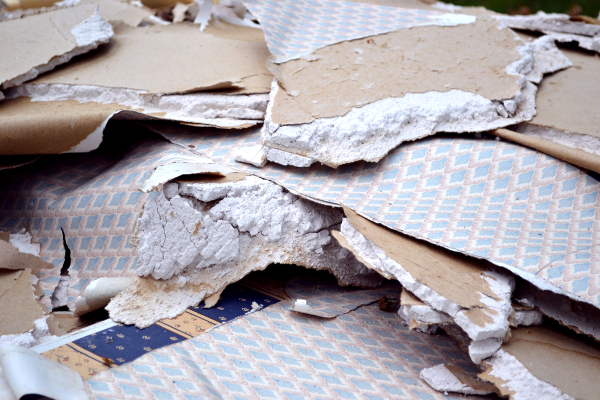
Drywall is common and ubiquitous in commercial and residential buildings today. Many of us barely think about it until we have to repair a hole smashed in it.

However, drywall has not been around forever, and actually took many years to establish itself as a popular building material. Today, we’ll look at how it came about, and why it went on to dominate the world of construction.

Continue reading “A Brief History Of Drywall Or: How Drywall Came To Dominate The World Of Construction”

Superconference 2022 Hack Chat

Join us on Wednesday, August 24 August 31 at noon Pacific for the Superconference 2022 Hack Chat!

[Sorry folks — due to a scheduling snafu, we’ve got to push this off a week. — ed]

To say that a lot of water has passed under the bridge since 2019 is something of an understatement. When last we met as a group, in Pasadena in November of that year, the Covid-19 pandemic and its fallout were ahead of us. Supercon 2019 was a smashing success, a three-day meetup that brought together the best the hacker community has to offer to exchange ideas, share their projects, and meet up IRL rather than reading about everyone’s exploits and adventures online. It was a fantastic time, but how were we to know that it would be the last meatspace meetup for a painfully long time?

join-hack-chatThankfully, that’s all behind us now, and Supercon 2022 is back, live and in person! Everyone in the hacker community is going to want to be in Pasadena, but since it’s been so long since we’ve met up in person, we thought a Hack Chat focusing on Supercon would be a good idea. We’ve invited Majenta Strongheart on to field your questions, plus hopefully we’ll have a few surprise guests too. But this will mainly be your chance to sort of “pre-network” before the con. If you’re a Supercon first-timer, this is a great way to ask questions about how it all works and whether it’s worth it to attend (answer: it is — go buy tickets now!) For vets, this is your chance to share your stories of Supercons past, or perhaps to reconnect with con-buddies you’ve lost touch with. There’ll be something for everyone, both at the Hack Chat and at Supercon, so drop by the chat and find out what all the hype is about.

Our Hack Chats are live community events in the Hackaday.io Hack Chat group messaging. This week we’ll be sitting down on Wednesday, August 31 at 12:00 PM Pacific time. If time zones have you tied up, we have a handy time zone converter.