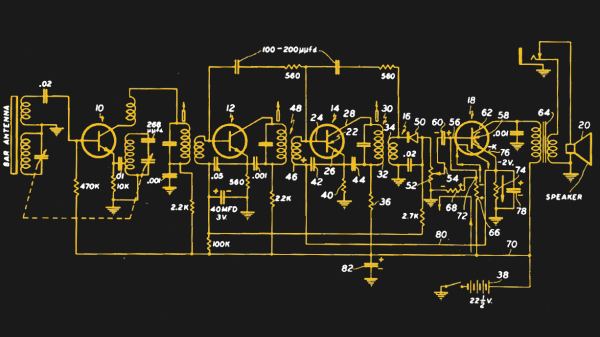
Ask Hackaday: How Do You Draw Schematics?

The lingua franca of electronic design is the schematic. I can pick up a datasheet written in Chinese (a language I do not read or speak) and usually get a half-decent idea of what the part is all about from the drawings. Unfortunately, even as my design experience has grown over the years, I haven’t quite learned to think in schematics — I need to see it on paper (or on a screen) to analyze a circuit. Whether it’s literally on the back of an envelope or sketched in the condensation on the shower stall, actually drawing a design or idea makes a huge difference in being able to understand it. And, if you’ve ever tried to explain a circuit without a schematic — in an on-line forum or over the phone, for instance — you know how difficult it is.

So, given the importance of the schematic for design and communication, you’d think choosing a tool to draw them would be an easy task. Not so. There are dozens of choices, from dedicated schematic drawing programs to using the schematic-capture facilities of simulation or PCB design tools, or even old-fashioned pencil-and-paper and its modern equivalents. Each one has its pros and cons, and may be better suited to one specific application, but you have to choose something.

So, readers of Hackaday, what do you use to convey your electronic design ideas to the world?

Continue reading “Ask Hackaday: How Do You Draw Schematics?”

The CD Is 40, The CD Is Dead

The Compact Disc is 40 years old, and for those of us who remember its introduction it still has that sparkle of a high-tech item even as it slides into oblivion at the hands of streaming music services.

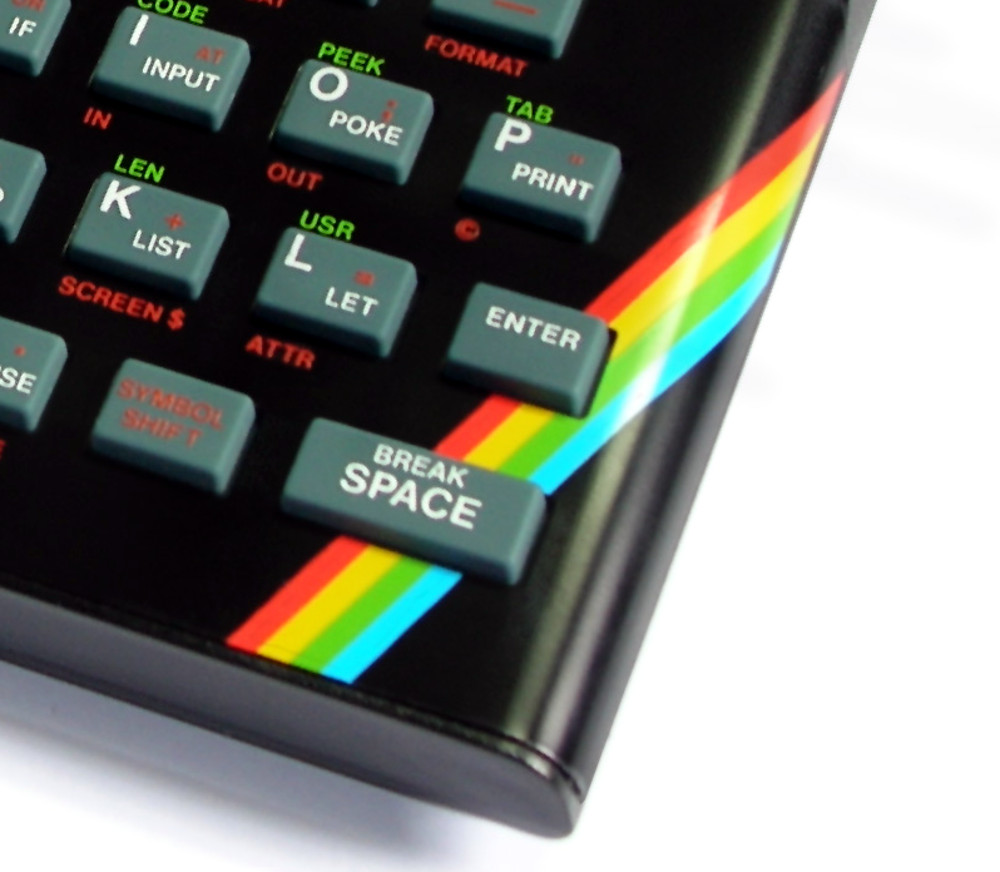
There was a time when a rainbow motif was extremely futuristic. Bill Bertram (CC BY-SA 2.5)

If we could define a moment at which consumers moved from analogue technologies to digital ones, the announcement of the CD would be a good place to start. The public’s coolest tech to own in the 1970s was probably an analogue VCR or a CB radio, yet almost overnight they switched at the start of the ’80s to a CD player and a home computer. The CD player was the first place most consumers encountered a laser of their own, which gave it an impossibly futuristic slant, and the rainbow effect of the pits on a CD became a motif that wove its way into the design language of the era. Very few new technologies since have generated this level of excitement at their mere sight, instead today’s consumers accept new developments as merely incremental to the tech they already own while simultaneously not expecting them to have longevity.
Continue reading “The CD Is 40, The CD Is Dead”

Es’hail-2: Hams Get Their First Geosynchronous Repeater

In the radio business, getting the high ground is key to covering as much territory from as few installations as possible. Anything that has a high profile, from a big municipal water tank to a roadside billboard to a remote hilltop, will likely be bristling with antennas, and different services compete for the best spots to locate their antennas. Amateur radio clubs will be there too, looking for space to locate their repeaters, which allow hams to use low-power mobile and handheld radios to make contact over a vastly greater range than they could otherwise.

Now some hams have claimed the highest of high ground for their repeater: space. For the first time, an amateur radio repeater has gone to space aboard a geosynchronous satellite, giving hams the ability to link up over a third of the globe. It’s a huge development, and while it takes some effort to use this new space-based radio, it’s a game changer in the amateur radio community.

Continue reading “Es’hail-2: Hams Get Their First Geosynchronous Repeater”

Hack Chat: The Home Machine Shop With Quinn Dunki

Join us Wednesday at noon Pacific time for the Home Machine Shop Hack Chat!

Even if you haven’t been here for very long, you’ll probably recognize Quinn Dunki as Hackaday’s resident consulting machinist. Quinn recently did a great series of articles on the “King of Machine Tools”, the lathe, covering everything from the history of precision machine tools to making your first chips. She’s documented the entire process of procuring and setting up a new lathe, pointing out all the potential pitfalls the budding home machinist may face. You can get a much deeper dive into her machining adventures on her YouTube channel, Blondihacks.

Flinging hot metal chips around is hardly all Quinn has accomplished, though. Long before her foray into machine tools, there was Veronica, a scratch-built 6502 machine Quinn created as an homage to the machines that launched her into a life of writing software. We’ve featured Veronica on our pages a couple of times, and she’s always made quite a hit.

Please join us for this Hack Chat, where we’ll discuss:

  • How developing software and machining are alike, and how they differ;
  • How social networks have changed the perception of machining;
  • Best practices for getting started in machining; and
  • Are there any new machine tool purchases in the pipeline?

You are, of course, encouraged to add your own questions to the discussion. You can do that by leaving a comment on the Home Machine Shop Hack Chat and we’ll put that in the queue for the Hack Chat discussion.

join-hack-chatOur Hack Chats are live community events on the Hackaday.io Hack Chat group messaging. This week we’ll be sitting down on Wednesday, March 20, at noon, Pacific time. If time zones have got you down, we have a handy time zone converter.

Click that speech bubble to the right, and you’ll be taken directly to the Hack Chat group on Hackaday.io. You don’t have to wait until Wednesday; join whenever you want and you can see what the community is talking about.

Hackaday Links Column Banner

Hackaday Links: March 17, 2019

There’s now an official Raspberry Pi keyboard and mouse. The mouse is a mouse clad in pink and white plastic, but the Pi keyboard has some stuff going for it. It’s small, which is what you want for a Pi keyboard, and it has a built-in USB hub. Even Apple got that idea right with the first iMac keyboard. The keyboard and mouse combo are available for £22.00

A new Raspberry Pi keyboard and a commemorative 50p coin from the Royal Mint featuring the works of Stephen Hawking? Wow, Britain is tearing up the headlines recently.

Just because, here’s a Power Wheels Barbie Jeep with a 55 HP motor. Interesting things to note here is how simple this build actually is. If you look at some of the Power Wheels Racing cars, they have actual diffs on the rear axle. This build gets a ton of points for the suspension, though. Somewhere out there on the Internet, there is the concept of the perfect Power Wheels conversion. There might be a drive shaft instead of a drive chain, there might be an electrical system, and someone might have figured out how someone over the age of 12 can fit comfortably in a Power Wheels Jeep. No one has done it yet.

AI is taking away our free speech! Free speech, as you’re all aware, applies to all speech in all forms, in all venues. Except you specifically can’t yell fire in a movie theater, that’s the one exception. Now AI researchers are treading on your right to free speech, an affront to the Gadsden flag flying over our compound and the ‘no step on snek’ patch on our tactical balaclava, with a Chrome plugin. This plugin filter’s ‘toxic’ comments with AI, but there’s an unintended consequence: people want need to read what I have to say, and this will filter it out! The good news is that it doesn’t work on Hackaday because our commenting system is terrible.

This week was the 30th anniversary of the World Wide Web, first proposed on March 11, 1989 by Tim Berners-Lee. The web, and to a greater extent, the Internet, is the single most impactful invention of the last five hundred years; your overly simplistic view of world history can trace modern western hegemony and the reconnaissance to Gutenberg’s invention of the printing press, and so it will be true with the Internet. Tim’s NeXT cube, in a case behind glass at CERN, will be viewed with the same reverence as Gutenberg’s first printing press (if it had survived, but you get where I’m going with this). Five hundred years from now, the major historical artifact from the 20th century will be a NeXT cube, that was, coincidentally, made by Steve Jobs. If you want to get your hands on a NEXT cube, be prepared to pony up, but Adafruit has a great authorial for running Openstep on a virtual machine. If you want the real experience, you can pick up a NeXT keyboard and mouse relatively cheaply.

Sometimes you need an RCL box, so here’s one on Kickstarter. Yeah, it’s kind of expensive. Have you ever bought every value of inductor?

Hackaday Podcast 010: XKCD Graphs, Turing Complete Meta Computers, False Finger Printing 3D Printers, And Jargon

Elliot Williams and Mike Szczys walk through the past week in hackerdom. There’s a new jargon quiz! Do you know what astrictive robotic prehension means? We look at the $50 Ham series, omni-wheeled pen plotting robots, a spectrum of LED hacks, LEGO CNC for chocolate rework, and grinding lenses with a CNC mill. In the “can’t miss” category are fingerprinting 3D Printers, and how NASA designs far beyond the stated life of an engineering project.

Links for all discussed on the show are found below. As always, join in the comments as we’ll be watching those as we work on next week’s episode!

Take a look at the links below if you want to follow along, and as always, tell us what you think about this episode in the comments!

Direct download (60 MB or so.)

Continue reading “Hackaday Podcast 010: XKCD Graphs, Turing Complete Meta Computers, False Finger Printing 3D Printers, And Jargon”

The $50 Ham: Entry-Level Transceivers For Technicians

Last week , I covered the ridiculously low barriers to entry to amateur radio, both in terms of financial outlay and the process of studying for and passing the FCC examination. You’ve had seven days, so I assume that you’ve taken the plunge and are a freshly minted amateur radio operator. The next big question may be: Now what?

We briefly mentioned the image that ham radio is a rich old person’s hobby, and that reputation is somewhat deserved. For ham gear, there really is no upper limit on what you can spend. Glossy brochures and slick web pages hawk transceiver bristling with knobs and switches and loaded with the latest features, all of which will probably be obsolete within a few years when the Next Big Thing comes along and manufacturers respond with new, must-have models – looking at you, ICOM IC-7300. It’s no different than any other technology market, and enough people fall for that marketing to make it a going concern.

But thankfully, while there is no apparent ceiling on what you can spend on ham gear, there certainly is a floor, and it can be very, very low. Our $50 budget can go quite a long way to getting a new Technician on the air, if you’re willing to make some compromises and can forego the latest and greatest for a while.

Continue reading “The $50 Ham: Entry-Level Transceivers For Technicians”