
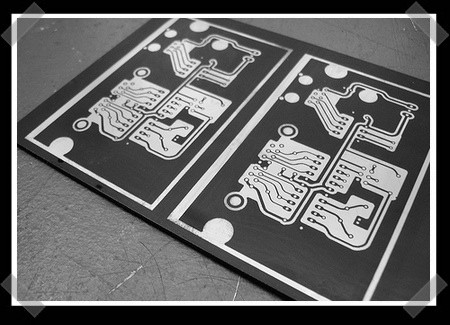
While we hope you enjoyed our How-To: Etch a printed circuit board, toner transfer certainly isn’t the only way to get the job done. [Garrett] from macetech has recently been playing around with using an Epilog laser to etch PCBs. He started by applying a thin even coat of flat black spray paint to the copper board. The laser is used to remove paint in areas that you want the copper removed. Once that’s done, you proceed with etching as usual. He eventually removed the paint mask using acetone. The result has very fine, sharp traces, but most people that have tried this agree that using spray paint is less than ideal.
Misc Hacks4030 Articles
StickDuino, USB Stick Arduino Clone
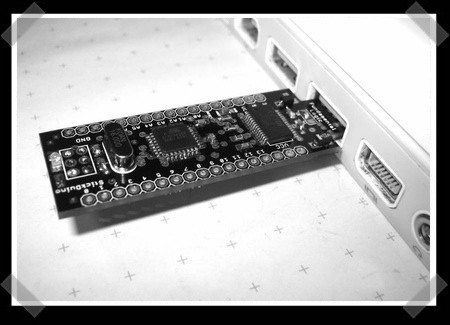
The Arduino hardware clones keep rolling in. This weeks entry into the modern dev board’s roster is the StickDuino. The board is designed to be fully hardware compatible and plugs directly into your USB port. The StickDuino uses all SMD components. The creators know that this can make assembly more difficult so they’ve space the components out, opted for larger pads, and collected some links to SMD tutorials. The board feature two more analog inputs than the Diecimila and it has a jumper so you can switch it to 3.3V. All around it looks like a great product; frankly we love anything with full board layouts.
Electric Screwdriver Robot Hand
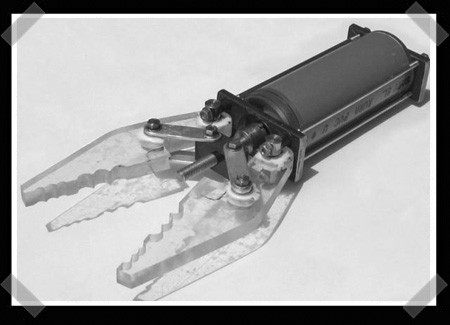
Here’s an interesting grabber hand built for use on an ROV. This grabber is a novel use of a very common and extremely cheap electric screwdriver, that is probably found in everyone’s toolbox. It is also a great way to reuse that small electric screwdriver you have kicking around that uses proprietary batteries that are not worth replacing. Many of the ROV’s covered previously could benefit from such a powerful device built from very common materials off his parts list. Because the screwdriver was extremely cheap the designer chose not to completely seal the housing.
It seems like this simple design that could be used in many robotic projects and by simply changing the jaws could yield other creative uses. The first thing that comes to mind is to upsize this hack into something bigger and stronger. Either way, you might not want to get your fingers in there.
Breakthrough In Water Based Energy Storage
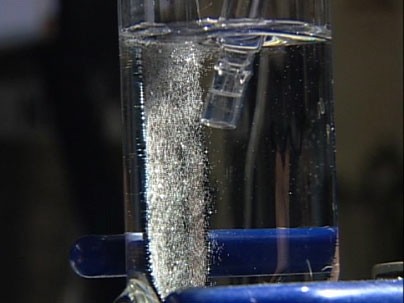
[Daniel Nocera], working with the MIT Energy Initiative, has come up with a method to easily and cheaply store energy generated from solar electricity with water. The method uses two catalysts of non-toxic and abundant metals to separate the water into both oxygen and hydrogen. These gases are then stored, and later recombined in a fuel cell to generate power. The process was inspired by photosynthesis, and helps to make sources such as solar power viable around the clock. Current storage technologies are both expensive and inefficient, so technologies like solar are only useful when the source is available. This will allow homes to cheaply and easily store power generated through solar and other technologies. While this is only part of the solution towards the current energy problem, it could go a long way towards decreasing our use of non-renewable sources. When combined with other new breakthroughs in the field, you can easily imagine more homes coming off the grid. Check out the short video after the break.
Continue reading “Breakthrough In Water Based Energy Storage”
Hacking Animatronic Elvis
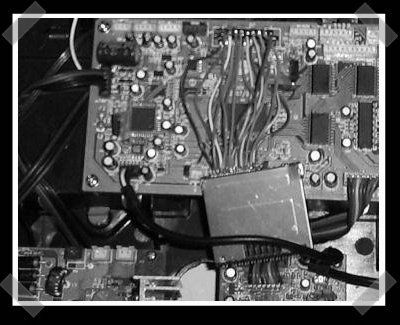
[Scott] shot us a tip about some progress on hacking those creepy [Elvis] heads produced by Wowee. The head uses a flash cartridge to store all the data used for the motion/audio control. The cartridge uses NAND flash, so a quick solder job to an XD flash card reader yielded a useful dump of the memory cartridge – which happened to be fat32 formatted. There’s still plenty of work to do, but it seems that it’ll be trivial to replace the data with custom audio and motion commands.
Nintendo Entertainment System Hacks
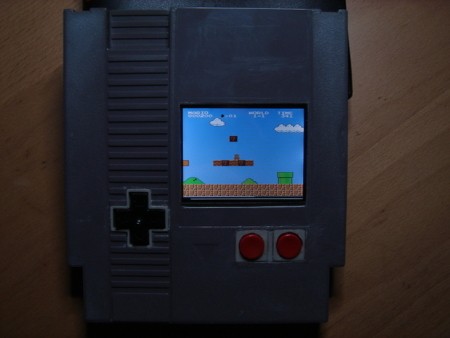
MetaFilter has a nice roundup of various NES hacks. You might have seen these before, but it’s great to see them all in one place. Our personal favorite is the NES in an NES cartridge, and who could forget the NES controller coffee table? Don’t forget to check the comments for more interesting NES hacks. We think there’s just something about the original Nintendo Entertainment System that inspires people to go all out with creativity and playfulness. We’re willing to bet that you probably have an old system at home gathering dust, just waiting to be modded and hacked. We’d love to hear what you have done, or will do to it.
Hackit: Crap Modding
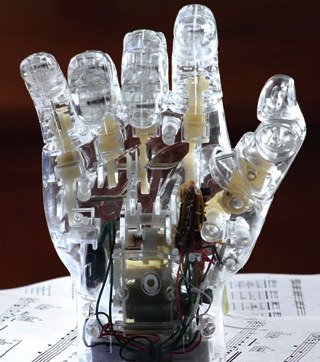
When Boing Boing Gadgets posted about this $13 robot hand music box, we immediately thought “OH EXPLOITABLE!”. Over the years, we’ve acquired quite a bit of cheap trash just operating under the assumption that we would turn it into something else. Most of our acquisitions are Woot‘s fault. Just this morning we were dismayed to find out that the purveyor of cheap electronics had already sold out of animatronic Elvis heads. Now that would have been fun. We’ve purchased things like Tony Hawk helmet cams, jumbo remotes, Bluetooth headphones, Gyration mice, IMFree chatpads, and many other items of questionable use thinking that some day we’d use it. How about you? What sort of irrational purchases have you made and what would you do with a $13 mechanized hand?
[Just as we were wrapping this up, Woot posted a $49 HMD; you better believe we bought that.]








