Graphene Refractions

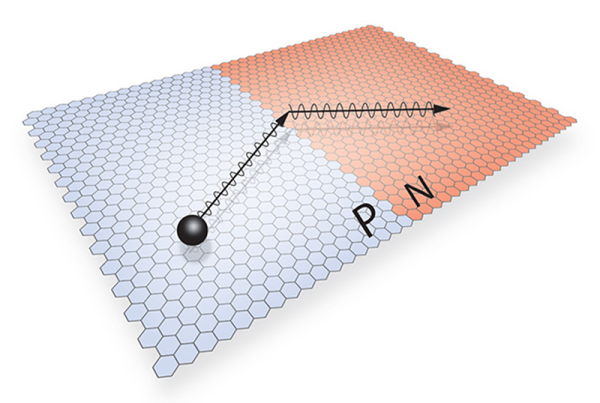
Researchers recently observed negative refraction of electrons in graphene PN junctions. The creation of PN junctions in graphene is quite interesting, itself. Negative refraction isn’t a new idea. It was first proposed in 1968 and occurs when a wave bends–or refracts–the opposite way at an interface compared to what you would usually expect. In optics, for example, this can allow for refocusing divergent waves and has been the basis for some proposed invisibility cloaking devices.

In theory, negative refraction for electrons should be easy to observe at PN junctions, but in practice, the band gap voltage causes most electrons to reflect at the junction instead of refract. However, a graphene PN junction has no band gap voltage, so it should be ideal. However, previous attempts to find negative refraction in graphene were not successful.

Continue reading “Graphene Refractions”

Li-Ion Tech Staring Into The Abyss With Note 7 Failure

Unless you’ve been living under a high voltage transformer, you’ve heard about the potential for Samsung’s latest phone, the Note7, to turn into a little pocket grenade without warning. With over 2.5 million devices in existence, it’s creating quite a headache for the company and its consumers.

They quickly tied the problem to faulty Li-ion batteries and started replacing them, while issuing a firmware update to stop charging at 60 percent capacity. But after 5 of the replacement phones caught fire, Samsung killed the Note7 completely. There is now a Total Recall on all Note7 phones and they are no longer for sale.  If you have one, you are to turn it off immediately. And don’t even think about strapping it into a VR headset — Oculus no longer supports it. If needed, Samsung will even send you a fireproof box and safety gloves to return it.

note_01
Every airline has been broadcasting warnings not to power on or charge a Note 7 on a plane. Image Source: CNET

It should be noted that the problem only affects 0.01% of the phones out there, so they’re not exactly going to set the world on fire. However, it has generated yet another discussion about the safety of Li-ion battery technology.

It was just a few months ago we all heard about those hoverboards that would catch fire. Those questionably-engineered (and poorly-named) toys used Li-ion batteries as well, and they were the source of the fire problem. In the wake of this you would think all companies manufacturing products with Li-ion batteries in them would be extra careful. And Samsung is no upstart in the electronics industry — this should be a solved problem for them.

Why has this happened? What is the deal with Li-ion batteries? Join me after the break to answer these questions.

Continue reading “Li-Ion Tech Staring Into The Abyss With Note 7 Failure”

Honey, They Shrunk The Transistor

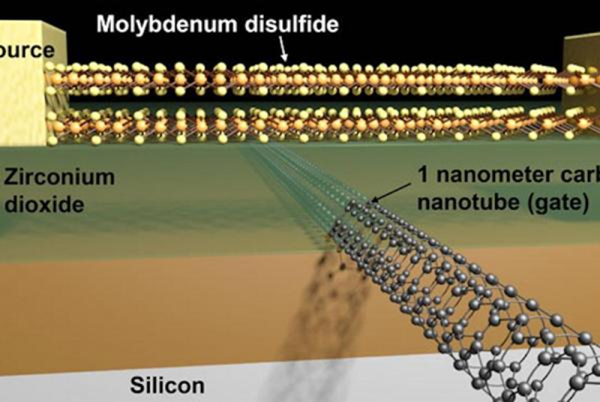
Silicon transistors keep shrinking (current state of the art is about 20 nanometers). However–in theory–once the gate goes to 5 nanometers, the electrons tunnel through the channel making it impossible to turn the transistor off. Berkeley researchers have used a different material to produce a transistor with a 1-nanometer gate. For point of reference, a human hair is about 50,000 nanometers thick.

The secret is to switch away from silicon in favor of another semiconductor. The team’s choice? Molybdenum disulfide. Never heard of it? You can buy it at any auto parts store since it is a common lubricant. Electrons have more effective mass as they travel through molybdenum disulfide than silicon. For a larger transistor, that’s not a good thing, but for a small transistor, it prevents the electron tunneling problem.

Continue reading “Honey, They Shrunk The Transistor”

NextThingCo Introduces C.H.I.P. Pro, GR8 System On Module

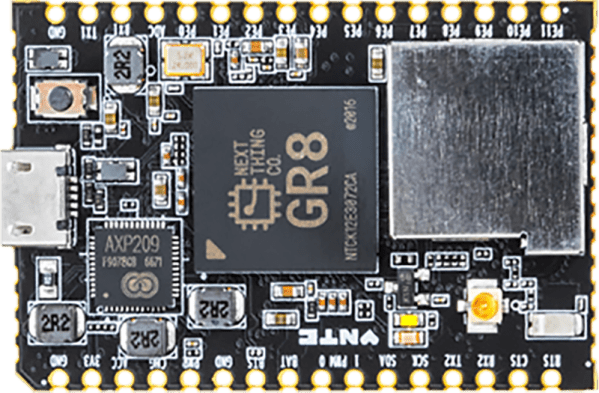
NextThingCo, makers of the very popular C.H.I.P. single board Linux computer, have released the latest iteration of their hardware. It’s the C.H.I.P. Pro, an SBC designed to be the embedded brains of your next great project, product, or Internet of Things thing.

The C.H.I.P. Pro features an Allwinner R8 ARMv7 Cortex-A8 running at 1 GHz, a MALI-400 GPU, and either 256 MB or 512 MB of NAND Flash. The Pro also features 802.11 b/g/n WiFi, Bluetooth 4.2, and is fully certified by the FCC. This board will be available in December at supposedly any quantity for $16.

The design of the C.H.I.P. Pro is a mix between a module designed to be installed in a product and a single board computer designed for a breadboard. It features castellated edges like hundreds of other modules, but the design means that assembly won’t be as simple as throwing down some paste and reflowing everything. The C.H.I.P. Pro features parts on two sides, making reflow questionable and either 0.1″ headers or a cutout on a PCB necessary. As a single board computer, this thing is small, powerful, and a worthy competitor to the Raspberry Pi Zero. A C.H.I.P. Pro development kit, consisting of two C.H.I.P. Pro units, a ‘debug’ board, and headers for breadboarding, is available for $49, with an estimated ship date in December.

A $16 Linux module with WiFi, Bluetooth, and no NDA is neat, but perhaps a more interesting announcement is that NextThingCo will also be selling the module that powers the C.H.I.P. Pro.

The GR8 module includes an Allwinner R8 ARMv7 Cortex-A8 running at 1 GHz, a MALI-400 GPU, and 256 MB of DDR3 SDRAM. Peripherals include TWI, two UARTS, SPI (SD cards support is hacked onto this), two PWM outputs, a single 6-bit ADC, I2S audio, S/PDIF, one USB 2.0 Host and one USB 2.0 OTG, and a parallel camera interface. This isn’t really a chip meant for video out, but it does support TV out and a parallel LCD interface. A limited datasheet for the GR8 is available on the NextThingCo GitHub.

Putting an entire Linux system on a single BGA module must draw comparisons to the recent release of the Octavo Systems OSD355X family, best known to the Hackaday audiences as the Beaglebone on a chip. Mechanically, the Octavo chip will be a bit easier to solder. Even though it has almost twice as many balls as the GR8, 400 on the Octavo and 252 on the GR8, the Octavo has a much wider pitch between the balls, making escape routing much easier.

Comparing peripherals between the OSD355X and GR8, it’s a bit of a wash, with the OSD coming out slightly ahead with Ethernet, more RAM and fancy TI PRUs. Concerning pricing, the GR8 wins hands down at $6 per chip in any quantity. That’s significantly less than the OSD355X.

The original C.H.I.P. has been exceptionally well received by the community NextThingCo is marketing to, despite the community’s distaste for Allwinner CPUs, cringeworthy PR, and questions concerning the true price of the C.H.I.P.. The C.H.I.P. Pro will surely see more than a few uses, but the GR8 is the real story here. A jellybean part that contains an entire Linux system has been the fevered dream of a madman for years now. The GR8 makes putting the power of open software into any project much easier, and we can’t wait to see the applications it allows.

These 20 Projects Won $1000 For Assistive Technologies

For the last seven months, Hackaday has been hosting the greatest hardware competition on Earth. The Hackaday Prize is a challenge to Build Something That Matters, asking hardware creators around the world to focus their skills to change the world.

The results have been spectacular. In five rounds of design challenges, we’ve seen more than 1000 entries and so far eighty of them have won $1000 and a chance to win the Grand Prize: $150,000 and a residency at the Supplyframe DesignLab in Pasadena.

Last week, we wrapped up the last challenge for the Hackaday Prize: Assistive Technologies. We’re now happy to announce twenty of those entries that have been selected to move to the final round and have been awarded a $1000 cash prize. Congratulations to the winners for the Assistive Technologies portion of the Hackaday Prize:


Who Will win the 2016 Hackaday Prize?

The finalists from each round are now being sent to our fantastic panel of judges. One of them will be awarded the Hackaday Prize. In addition to the prestige, they will win $150,000 and a residency at the Supplyframe DesignLab in Pasadena. Four more of the finalists will receive the other cash prizes of $25k, $10k, $10k, and $5.

Find out who will win live at the Hackaday Superconference on November 5th. The greatest hardware conference on the planet — the two-day hardware spectacular with an awesome speaker lineup, great workshops, and a fantastic community — includes the Hackaday Prize part. There’s still time to get a ticket to participate in this hardware spectacular and witness the crowning of the winner of The Hackaday Prize.

Certification For Open Source Hardware Announced

Today at the Open Hardware Summit in Portland, Alicia Gibb and Michael Weinberg of the Open Source Hardware Association (OSHWA) launched the Open Source Hardware Certification program. It’s live, and you can certify your own hardware as Open Hardware right now.

What Is Open Source Hardware?

Open Source Hardware can’t be defined without first discussing open source software. At its very core, open source software is just a copyright hack, enabled by a worldwide universal computer network. The rise of open source software is tied to the increasing ease of distributing said software, either through BBSes, Usenet, and the web. Likewise, Open Source Hardware is tied to the ease of distributing, modifying, and building hardware.

In the 1980s, there were no services that could deliver a custom circuit board to anywhere on the planet for a dollar per square inch. When open software began, CNC machines were expensive tools, now you can build a very good machine for just a week’s wages. We are currently living at the dawn of Open Source Hardware, enabled by the creation of Open Source design tools that have themselves been used to create physical tools. Inexpensive 3D printers, open source oscilloscopes, circuit board plotters, and the entire hackerspace movement are as revolutionary as the Internet. These devices and the Internet are the foundations for Open Hardware and software, respectively.  The objections to why hardware is incompatible with Open Source no longer apply and small-scale manufacturing techniques are only going to get better.

Continue reading “Certification For Open Source Hardware Announced”

Blue LED Streetlights Keeping You Awake?

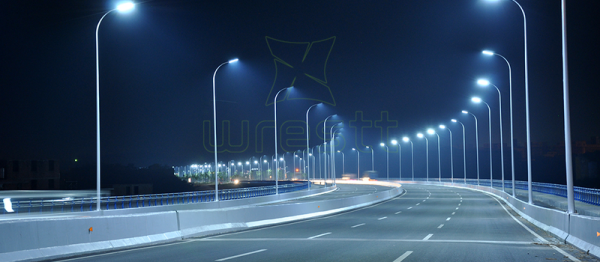
If you’ve played around with “white” LEDs, you already know that there’s no such thing. There’s warm white and cool white and any numbers of whites in-between. And when white LEDs were new, the bluer “cool white” variety were significantly more prevalent.

Enough US states have swapped out their old street lights with LEDs that it may be having a measurable effect on people and on the animals around us. This is the claim in a recent position paper by the American Medical Association’s Council on Science and Public Health. (Report as PDF.)

Science strongly suggests that heavy doses of light can keep people from falling asleep, and that brighter LED streetlamps may be making the problem worse. The AMA report goes a step further, and pins extra blame on the color of the light. Blue light apparently suppresses the production of melatonin which helps you sleep at night. And it’s not just humans whose circadian rhythms are getting messed up — the effects are seen throughout the animal kingdom.

Continue reading “Blue LED Streetlights Keeping You Awake?”