Philips Says: No Internet Of Things For You!

The 900-pound gorilla in the corner of the Internet of Things (IoT) hype that everyone is trying to ignore is interoperability. In the Internet of Internets (IoI) everything works on a few standards that are widely accepted: IP and HTML. The discrepancies are in the details and the standards wars are in the past. Websites are largely interoperable. Not so in the wild-west ethos of the IoT.

Philips makes a line of ZigBee-enabled RGB lightbulbs that took the enthusiast community by storm. And initially, Philips was very friendly to other devices — it makes a ZigBee-to-WiFi bridge that would let you control all of your ZigBee-based lights, regardless of their manufacturer, from your phone. Until now.

Philips has just rolled out a “Friends of Hue” certification process, and has since pushed out a firmware update where their Hue bridges stop interoperating with non-certified devices. You can read Philips’ version of the story here.

Philips Locks Out 3rd Party ZigBee Hardware
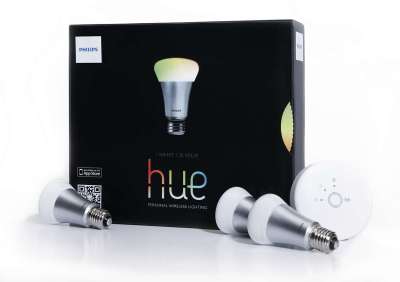
The hub shown on the right is what's being locked down.
The hub shown on the right is what’s being locked down.

The short version is that, ZigBee standards be damned, your future non-Philips lights won’t be allowed to associate with the Philips bridge. Your GE and Osram bulbs aren’t Friends of Hue. DIY RGB strips in your lighting mix? Not Friends of Hue. In fact, you won’t be surprised to know who the “Friends of Hue” are: other Philips products, and Apple. That’s it. If you were used to running a mixed lighting system, those days are over. If you’re not on the friends list, you are an Enemy of Hue.

Their claim is that third party products may display buggy behavior on a Philips network, and that this loads up their customer-response hotlines and makes people think that Philips is responsible. Of course, they could simply tell people to disable the “other” devices and see how it works, putting the blame where it belongs. Or they could open up a “developer mode” that made it clear that the user was doing something “innovative”. But neither of these strategies prevent consumers from buying other firms’ bulbs, which cost only 30-50% of Philips’ Hue line.

While Philips is very careful to not couch it as such, the Friends of Hue program really looks like an attempt to shut out their competitors; Philips got an early lead in the RGB LED game and has a large share of the market. As they say themselves in their own press release “Today these 3rd party bulbs represent a minimal fraction of the total product connected to our bridges so the percentage of our users affected is minimal.” And they’d like to keep it that way, even though the people they’re hurting are probably their most vocal and dedicated customers.

Who owns the IoT?

This Techdirt response to the situation is positively apoplectic, and there’s been the predictable flood of tirades in the comments on Slashdot. [Joel Ward], who in January was celebrating the ability to afford enough colored lights to appease his son is not so happy anymore.

And while we, with our manual light switches, laugh comfortably at the first-world problems of Hue consumers, we have to ask ourselves whether we’re next. Today they come for our RGB lightbulbs, but tomorrow it might be our networked toasters. A chilling thought!

Snark aside, the IoT brings two of the saddest realities of the software world into your home appliances: Where there’s code, there’s vulnerabilities, and when you can’t control the code yourself you aren’t really in control. You may own the lightbulb, but you’re merely licensing the firmware that runs it. The manufacturer can change the rules of the game, or go out of the product line entirely, and you’re high and dry. What can you do? Pull out your JTAG debugger.

Of course it’s insane to suggest that everyone needs to become an embedded-device firmware hacker just to keep their fridge running. As we’ve written before, we need to come up with some solution that puts a little more control in the hands of the ostensible owners of the devices, while at the same time keeping the baddies out. We suggest a press-to-revert-firmware button, for instance. When Philips pushes a non-consumer-friendly upgrade, you could vote with your fingertips — but then you’d miss out on bug fixes as well. Maybe it’s better to just give in an learn to love Windows 10.

There are no easy solutions and no perfect software. The industry is still young and we’ll see a lot of companies staking out their turf as with any new technology. It seems to us that IoT devices leave consumers with even less choice and control than in the past, because they are driven by firmware that’s supposed to be invisible. It’s just a lightbulb, right?

What do you think? Any ideas about how to put the power back in the hands of the “owner” of the device without everyone’s refrigerators becoming botnet zombies? Let us know in the comments.

Thanks [djxfade] for the tip!

Edit: Shortly after we ran this piece, Philips backed down:

“We underestimated the impact this would have upon the small number of our customers who currently use uncertified lights from other brands in the Philips Hue system. We have decided to continue to enable our customers who wish to integrate these uncertified products within their Philips Hue system.”

Alleged Hit-and-Run Driver Arrested After Her Car Rats Her Out

We had to giggle at this one when it came down the tips line. Last week, a woman involved in a hit-and-run fled the scene — only to have her car call 911 for her.

The woman hit two vehicles and then attempted to drive home when her Ford vehicle called 911 using the Sync Emergency Assistance Technology. When asked by the dispatcher if everything was okay she lied about being in the accident — but the dispatcher did not believe her. After all, the sync feature only calls if the car has seen significant damage, and in this case, the air bag had been deployed. Continue reading “Alleged Hit-and-Run Driver Arrested After Her Car Rats Her Out”

FAA Releases Rules Governing Unmanned Aerial Systems

The US Department of Transportation and the FAA have just released their guidelines that require registration of Unmanned Aerial Systems. This is the regulation that covers model aircraft, drones, quadcopters, and flying toys of all kinds. These rules have been anticipated since last month to be in place for the holiday season.

As expected, the FAA is requiring registration for all aircraft, regardless of being ‘model’ aircraft or not, weighing more than 250 grams (0.55 pounds) and less than 55 pounds. The maximum weight is a holdover from previous regulations; model aircraft weighing more than 55 pounds were never really legal without a permit. It should be noted that anyone can build a quadcopter with cameras and video transmitters weighing less than 250 grams. These quadcopters are not ‘toys’ by any means, but are not required to be marked with a registration number and the pilot is not required to actually register. As expected, most rules governing the actual flight of these aircraft remain in place – don’t fly above 400 feet, don’t fly within five miles of an airport.

Registration is by pilot, not aircraft, and costs $5. A registration number must be put on every aircraft the pilot owns, and penalties for not registering can include up to $27,500 in civil penalties and up to $250,000/3 years imprisonment in criminal penalties. The full rules are available in this 200-page PDF. As with most government regulations, there will be a 30-day RFQ period beginning December 21st on regulations.gov. The docket number is FAA-2015-7396.

First Plasma In The World’s Largest Stellerator

If you’re looking for the future of humanity, look no further than the first plasma generated in the Wendelstein 7-X Stellerator at the Max Planck Institute for Plasma Physics. It turned on for the first time yesterday, and while this isn’t the first fusion power plant, nor will it ever be, it is a preview of what may become the invention that will save humanity.

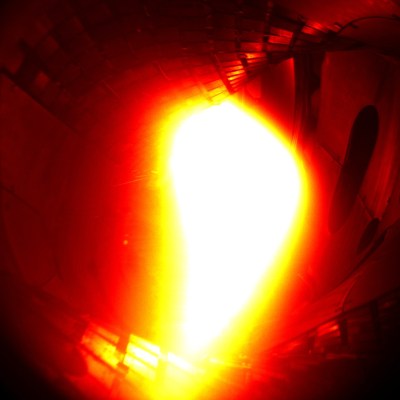
A glimpse of plasma in side the Stellerator

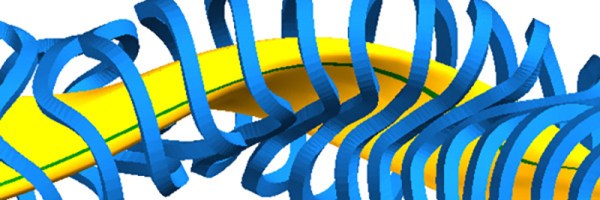
For a very long time, it was believed the only way to turn isotopes of hydrogen into helium for the efficient recovery of power was the Tokamak. This device, basically a hollow torus lined with coils of wire, compresses plasma into a thin circular string. With the right pressures and temperatures, this plasma will transmute the elements and produce power.

Tokamaks have not seen much success, though, and this is a consequence of two key problems with the Tokamak design. First, we’ve been building them too small, although the ITER reactor currently being built in southern France may be an exception. ITER should be able to produce more energy than is used to initiate fusion after it comes online in the 2020s. Tokamaks also have another problem: they cannot operate continuously without a lot of extraneous equipment. While the Wendelstein 7-X Stellerator is too small to produce a net excess of power, it will demonstrate continuous operation of a fusion device. [Elliot Williams] wrote a great explanation of this Stellerator last month which is well worth a look.

While this Stellerator is just a testbed and will never be used to generate power, it is by no means the only other possible means of creating a sun on Earth. The Polywell – a device that fuses hydrogen inside a containment vessel made of electromagnets arranged like the faces of a cube – is getting funding from the US Navy. Additionally, Lockheed Martin’s Skunk Works claims they can put a 100 Megawatt fusion reactor on the back of a truck within a few years.

The creation of a fusion power plant will be the most important invention of all time, and will earn the researchers behind it the Nobel prize in physics and peace. While the Wendelstein 7-X Stellarator is not the first fusion power plant, it might be a step in the right direction.

More ESP32 Info Dribbles Out

In case you’ve been hiding under a virtual rock over the last two years, you might have missed it when Espressif turned the IoT game on its head by releasing a chip with WiFi and a decent embedded processor for under $1 in bulk, and costing not much more than that in a module.

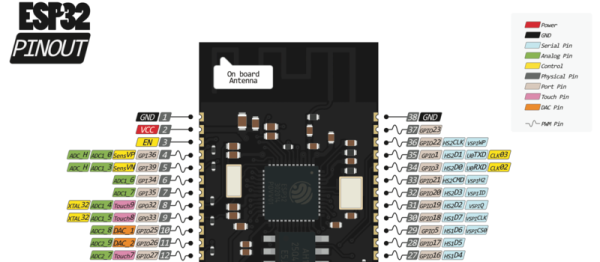
They’re looking to repeat the success of the ESP8266 with the ESP32, that should be coming out any time now. As we get closer to the release date, details start to dribble out. [Alberto], who makes very nice-looking pinout diagrams for a number of our favorite chips and modules, has already made us an ESP32 module pinout diagram.

And [Rudi] has been digging up nearly every crumb of info on the ESP32 that’s publicly available. For instance, it was through his website that we learned that the new RTOS SDK source is already up on GitHub.

There’s also a source of official information in the ESP32 forum, but there’s not much news there just yet. We expect this to change as more beta units make it out into the wild.

We covered the announcement of the forthcoming ESP32 last month, and we have to say that we’re looking forward to getting a module or two in our hands. Twin cores, BTLE support, and better DMA are tops on our list of neat features.

Paper Thin Conductors

Swedish scientists have created something they call power paper by using nanocellulose and a conductive polymer. The paper is highly conductive and has applications in supercapacitor technology and printed electronics.

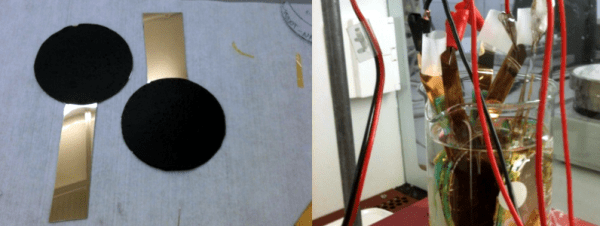
The paper, technically called NFC-PEDOT paper, combines high conductivity and compatibility with conventional paper handling machines that could lead to less expensive manufacturing. The team used the material to create supercapacitors (up to 2F) as well as FET-like transistors known as OECTs (Organic Electrochemical Transistors).

Admittedly, the supercapacitor prototype didn’t look very practical (as they dunked it in a beaker full of potassium chloride). The black-colored paper is relatively conductive (42,000 S/m at 20 degrees C), at least for a paper. As a point of reference, silicon is about 1,000 S/m and iron conducts at about 10,000,000 S/m.

What can we do with NFC-PEDOT? Time will tell. We couldn’t help but wonder, however, if paper-based 3D printing couldn’t be adapted to use paper as an insulator or dielectric, foil as a conductor, and something like this material to build resistive elements. After all, we’ve seen something similar using foil and paper before.

AirAsia Crash Analysis: Who Or What Failed?

Just a few days after Christmas last year AirAsia Flight 8051 traveling to Singapore tragically plummeted into the sea. Indonesia completed its investigation of the crash and just released the final report. Media coverage, especially in Asia is big. The stories are headlined by pilot error but,as technologists, there are lessons to be learned deeper in the report.

The Airbus A320 is a fly-by-wire system meaning there are no mechanical linkages between the pilots and the control surfaces. Everything is electronic and most of a flight is under automatic control. Unfortunately, this also means pilots don’t spend much time actually flying a plane, possibly less than a minute, according to one report.

Here’s the scenario laid out by the Indonesian report: A rudder travel limit computer system alarmed four times. The pilots cleared the alarms following normal procedures. After the fifth alarm, the plane rolled beyond 45 degrees, climbed rapidly, stalled, and fell.

Continue reading “AirAsia Crash Analysis: Who Or What Failed?”