Makerbot, Occupy Thingiverse, And The Reality Of Selling Open Hardware

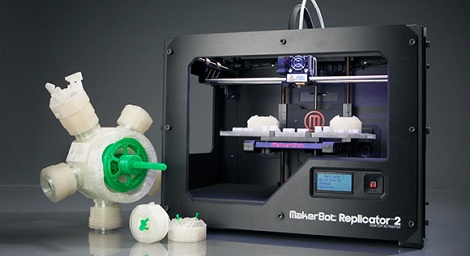
Yesterday, Makerbot Industries introduced the Replicator 2, a very good-looking 3D printer that will is probably the closest thing we’ll see to a proper ‘consumer’ 3D printer for a year or so. There’s only one problem. The new Replicator 2 is rumored to be closed source. If that’s not enough, [Bre Pettis], co-founder and CEO of Makerbot Industries will be speaking at the Open Source Hardware Association conference next week with the suitably titled talk, “Challenges of Open Source Consumer Products.”

Of course, the Replicator 2 being closed source is hearesay, and we can’t blame them for closing up parts their product; they have investors to worry about and people are blatantly copying their work. There was another change in Makerbot’s operation at the press conference yesterday: Makerbot now owns everything you’ve put up on Thingiverse.

This news comes from [Josef Prusa], creator of what is probably the most widely used 3D printer in the world.

[Prusa] begins his rant with the history of the RepRap. The project began with a team of core developers headed by [Adrian Bowyer], and supported by [Zach Smith], [Adam Mayer], and [Bre Pettis]. [Boyer] gave the guys a bit of money to start Makerbot, and it’s something the guys at Makerbot have never been ashamed of. Makerbot went on to create Thingiverse, became the darlings of the Open Hardware movement, and acquired $10 million from investors.

All things change, of course, and Makerbot is no exception. Along with the (again, rumored) closed-source Replicator 2, [Prusa] pointed out the Terms of Use for Thingiverse say that Thingiverse – and thus Makerbot Industries – owns everything submitted by Thingiverse users. [Prusa] started an Occupy Thingiverse movement in response to this discovery.

Honestly, we hope [Josef Prusa] is wrong on this one. We hope the specific clauses in Thingiverse’s Terms of Use granting itself a license to do whatever it wants with uploaded Things is just a bunch of legal mumbo jumbo added in by lawyers to protect Thingiverse from being sued by crazy people. Still, if rumors are true, it may be a portent of things to come.

In any event, [Prusa] will be taking his Thingiverse things down. He plans on posting his stuff on GitHub, probably the most Open Source-friendly community in existence. You can do the same with this GitHub template for 3D printed objects.

So, learned reader of Hackaday, what do you make of this? Is Makerbot right to close up their projects? Are we finally becoming disillusioned with Open Hardware? What say you?

Introducing The Makerbot Replicator 2

A few short hours ago at press conference, Makerbot announced the release of their Replicator 2 3D printer.

The original Makerbot Replicator was released earlier this year at CES and regaled by the press as a quantum leap in home manufacturing (a quanta is actually very small, guys) with and option for dual extruders and a rather large build volume. The Replicator 2 takes the same formula and adds a powder coated steel frame, larger build volume (11.2″ x 6.0″ x 6.1″ or 28.5 x 15.3 x 15.5 cm) and a resolution so fine as to approach the realm of uber expensive 3D printers (100 microns or 0.004 inches).

Base price is $2200 USD for the single extruder model with no Makercare service plan. A dual-extruder Replicator 2X is slated to be released after the beginning of next year. This model will also handle ABS filament, although we can’t find anything that says the single-extruder Replicator 2 is only able to use PLA.

Even though the new Replicator 2 is rumored to be closed source, we’d really struggle to come up with a better 3D printer for a high school shop class, college CS and/or engineering department, or even a hackerspace.

Preserve History And Dispose Of Asbestos

If you’ve ever visited Gettysburg, the turning point of the American Civil War, you’ve probably seen this illuminated topographical map. For years, it was housed in one of the many visitor centers in Gettysburg and demonstrated the progress of the 3-day battle with an amazing 1960s-era visualization using a 30 foot by 30 foot topographical map and many, many light bulbs. Even the coolest museum exhibits are eventually made obsolete, so this masterpiece of battlefield education is now up for sale. The starting price for this auction? Five dollars.

We’re going to be honest. We talked about using Hackaday’s influence (and funding to buy toys such as an AR Drone and the Oculus Rift) to put a project together to save this gigantic map. It’s got everything we love in a large-scale project: giant things weighing several tons, cool representations of data, and vintage electronics. Really, restoring this map is the perfect project for any (very) ambitious hacker. It also helps I live a half hour away from Gettysburg.

There’s a problem, though: the map is literally covered in asbestos. Also, it takes up four shipping containers and weighs 12 and a half tons. Basically, you’re bidding on a GSA auction to be responsible for a hazardous waste disposal project.

Now that our dreams of doing something really cool with five dollars have come crashing down, we’re turning it over to Hackaday readers. If you run an asbestos disposal company and are around South Central PA or Maryland, there may be some people who want to get in touch with you. Drop a note in the comments.

Really, we’d really just like someone to scan this 30-foot square map with a Kinect and a high-resolution camera, and maybe get our hands on a video of the hourly show when this map was still in operation. It should be possible to dig up some topographical data and replicate this map fairly easily… maybe someone should start a Kickstarter to build a smaller, non-asbestos laden copy?

Kalman Filter Keeps Your Bot Balanced

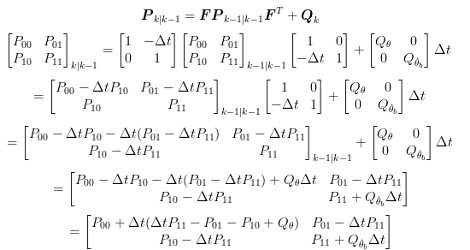
If you’re looking to improve the stability of your self balancing robot you might use a simple horrifying equation like this one. It’s part of the journey [Lauszus] took when developing a sensor filtering algorithm for his balancing robot. He’s not breaking ground on new mathematical ideas, but trying to make it a bit easier for the next guy to use a Kalman filter. It’s one method of suppressing noise and averaging data from the sensors commonly used in robotic applications.

His robot uses a gyroscope and accelerometer to keep itself upright on just two wheels. The combination of these sensors presents an interesting problem in that accelerometer input is most accurate when sampled over longer periods, and a gyroscope is the opposite. This filter takes those quirks into account, while also factoring out sensor noise. Despite the daunting diagram above, [Lauszus] did a pretty go job of breaking down the larger function and showing us where to get the data and how to use it in microcontroller code.

Tindie Is Growing Up

Tindie, the etsy for electronics and DIY projects is growing up. After growing 300% in August, the creator of Tindie,  [emile], is now working full-time as the head of Tindie, LLC.

Intended to be a place to connect makers with homebrew project connoisseurs, Tindie is seeing new projects and builds added every day. [emile] figures since some Tindie contributors are using the platform as the source of their livelihood, the least he could do would be to focus his energies into turning Tindie into a profitable and sustainable enterprise.

From the humble beginnings of an empty storefront, Tindie has grown large enough to feature some very cool projects such as a GoPro time lapse control board, a CNC router control board, a LiPo charger the size of a USB plug, a Raspi case milled out of a billet of aluminum, and a gag gift we wouldn’t want to take through airport security. Not bad for a web site that only launched a few months ago.

Turning A MIDI Sequencer Display Into A Tetris Clone

led-midi-display-tetris

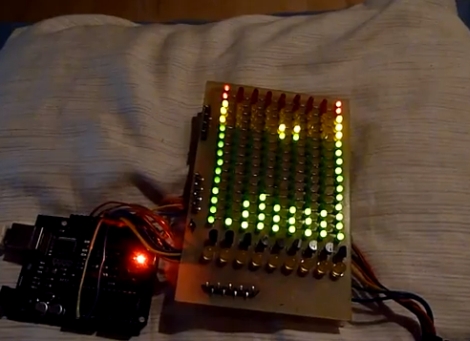
Tetris is unquestionably a game for the ages. Despite its simplicity, someone, somewhere will always find a way to port the game (Translation) to just about any electronic device that can handle it.

Earlier this year we showed you a slick MIDI sequencer project that was constructed using an Arduino Mega, which also happened to drive an incredibly detailed touch screen display. [Christian] must have gotten bored with his awesome creation one day, because he pulled the drum level display out of his Arduino Sequencer 808, and turned the LED array into a mini Tetris game.

As you can see in the video below, the game runs pretty well, though from what we can see it lacks any sort of score keeping. We dig it because we never really tire of Tetris clones, and we think it’s great that he kept his 808 sequencer design modular enough that he can pluck different components out for reuse in other projects.

Continue reading “Turning A MIDI Sequencer Display Into A Tetris Clone”

Hackaday Links August 31, 2012

Landing a fixed-wing through hotel balcony french doors

As you can see, launching an RC airplane off of a hotel balcony is easy. But watch the video and you’ll find out trying to fly through the french doors for a landing is another story. [Team BlackSheep] hits (har, har) Thailand in this collection of breathtaking flights.

Quieting rack-mount switch for home use

[VictorB] got his hands on this switch to beef up his home network. Since the three fans on the back sound like a jet engine he did some cutting to use a larger, quieter fan.

Component package alphabet

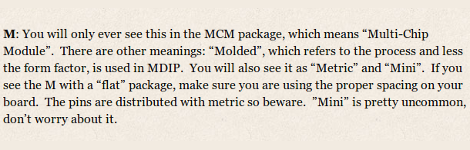
Sure, you probably know what SOIC stands for, but what is a CSP? You can clear things up a bit by studying your IC Alphabet.

ZX Spectrum audio card

For those still looking to squeeze everything they can out of a classic ZX Spectrum, here’s a way to improve the audio with a custom sound card (translated).

AVR programmer reprogrammed as an NES controller interface

[Slack] modified his USBasp programmer to uses as an NES controller interface. The hardware can be had on eBay for under $10, and he was already using one as a dev board. After seeing this USB to NES dongle post it didn’t take long to make the programmer into a gaming tool.