Controlling The Power Of A Flash With A Tv Remote

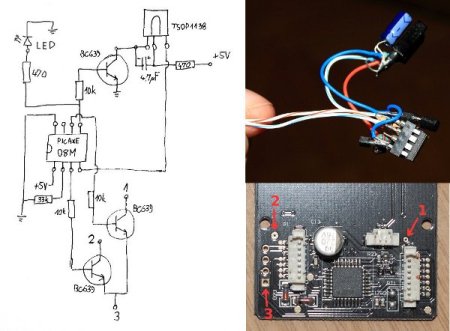
For those who do fancy photography, setting up the lighting ends up being one of the larger tasks of each session. There are flashes out there that can be controlled via a remote control to help ease the process, but they can cost a considerable amount more. [Dsvilko] shares with us a fairly simple circuit that allows you to use a tv remote to control your flash. He’s using a picaxe 08m and he states that before this project, he had never messed with microcontrollers. We say great job on your first microcontroller project. You can catch a video of it in action after the break.

Continue reading “Controlling The Power Of A Flash With A Tv Remote”
How To Fix AVR-SIZE On Ubuntu 10.04

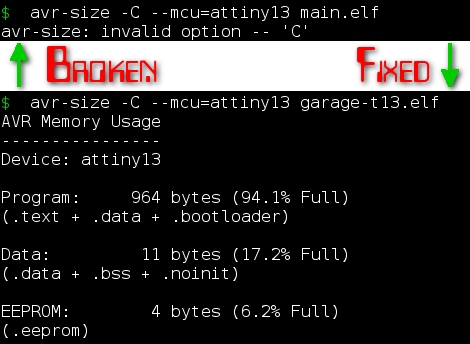
The program avr-size is part of the AVR-GCC toolchain used to develop programs for that line of microprocessors. The program tells you how much space the code will take up on the chip, important information if you’re trying to cram a program into a small program memory. Perhaps more importantly, it shows you how much ram is being used. This is the “Data:” portion of the image above and if you overflow the memory this will be the only thing that lets you know that has happened (except for unstable behavior once the program is running).

For quite some time the avr-size package in Ubuntu has been missing a key feature that makes the information more human readable. [Jeff] over at mightyohm tracked down the solution to the problem on the bug tracker and posted the directions on how to bring your copy up to date. Basically, download the package from Debian (an upstream copy that has already been patched) and install it. [Jeff’s] guide is based on the AMD64 version so we’ve copied his procedure in a more generalized fashion after the break.

Continue reading “How To Fix AVR-SIZE On Ubuntu 10.04”

In-dash Motorcycle Display

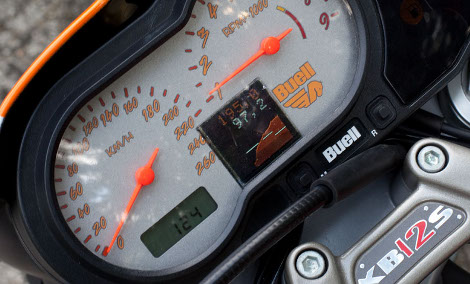
[Muth] added an auxiliary display to his motorcycle instrument panel. He started out prototyping with a PIC 16F877A which he used to access information through the ECM diagnostic connection. Once he had that working he found this tiny display which fits perfectly between the speedometer and tachometer. There’s a short demo after the break where you can see a past-30-minute history of the Adaptive Fuel Value and the engine temperature as well as a secondary information screen.

This is another nice addition to our collection of vehicle displays, scooter controllers, gear indicators, and motorcycle computers.

Continue reading “In-dash Motorcycle Display”

Profit-less Space Program Launches In One Week

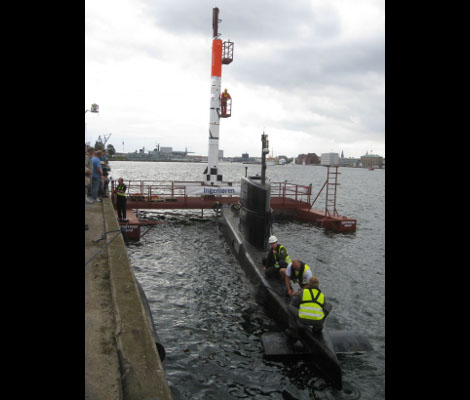
The Copenhagen Suborbitals are now within one week of their first launch. We looked in on the non-profit and non-secretive space program back in March but we had no idea the group had a frickin’ submarine at their disposal. What you see above is the rocket on its floating launch platform. The submarine will haul it out into the Baltic Sea for launch. There’s not much room in the craft for an astronaut but it will be a horrifying an exhilarating flight. According to the spacecraft page the human payload will be in a half-sitting, half-standing position looking up through an acrylic nose dome. This first launch will not be manned, but once they get through the tests this will be one crazy ride.

DroidX Gets A Custom Recovery Image

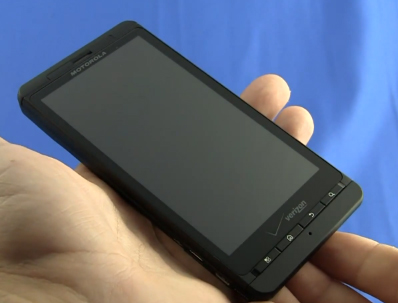
[Birdman] has managed to push a custom recovery image to the DroidX. This previously impossible action opens the doors to all kinds of fun hacking. While you can’t just drop a custom Rom on the phone right now, this is the first step in making that happen. You can find the directions in the post, but they’ve got a while to go before they become as easy as something like a jailbreak.

[via phandroid]

TxtBomber

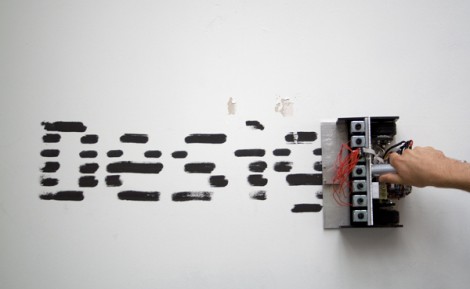
The txtBomber is a high-tech graffiti printer developed by [Felix Vorreiter]. Details are a bit scarce but the video clip after the break proves that this works quite well. [Felix] admits this is Arduino powered but we’re going to have to guess at the rest of the setup from the pictures. He says there are built-in-pens so we’d bet there’s a felt-tip type of thing going on and those look like seven solenoids that actuate them. He posted a picture of the handle side of the device and we can make out two wheels that are connected to LEGO gears. This tracks movement of the txtBomber across a surface in order to synchronize the printing process. There’s no sign of an LCD so it looks like you have to pre-program the messages before you go out into the field.

This is akin to the Chalkbot, but the messages that leaves wash away with the rain. This one seems like it might get you into some trouble if you get caught leaving permanent tags around the neighborhood.

Continue reading “TxtBomber”

Android Controlling Mindstorms NXT

[youtube=http://www.youtube.com/watch?v=bEEVwf6E10M]

Here’s an Android device controlling a LEGO Mindstorms robot. [Josh] and a couple of his colleagues developed software to get both Android 2.1 (video above) and Android 1.6 (video) to work as Bluetooth control devices. The NXT cube is running leJOS, a Java virtual machine, allowing you to program Mindstorms using Java. Although their code is at an early Alpha stage, this shows that it works and is a very welcomed tool for NXT development once they get to a more stable point and release it to the masses.