Every robotics project out there, it seems, needs a way to detect if it’s smashing into a wall repeatedly, acting like the brainless automaton it actually is. The Roomba has wall sensors, just about every robot kit has some way of detecting obstacles its running into, and for ‘wall-following robots’, detecting objects is all they do.
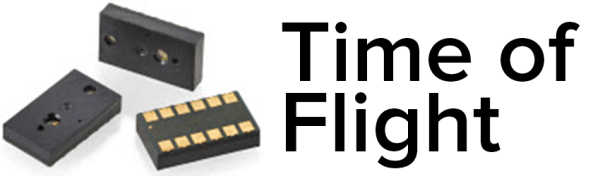
While the earliest of these robots used a piece of wire and a metal contact to act like a switch for these object detectors, ultrasonic sensors – the kind you can buy on eBay for a few bucks – have replaced this clever wire spring switch. Now there’s a new sensor for the same job – the VL6180 – and it measures the speed of light.
The sensors that are used for object and collision detection now use either ultrasonic or infrared light. They’re susceptible to noise, and if you’re doing anything automated, you really don’t want rogue measurements. A time of flight sensor clocks out photons and records how long it takes them to return at 299,792,458 meters per second. It’s less sensitive to noise, and if you can believe this SparkFun demo of this sensor, extremely accurate
This is not the first Time of Flight distance sensor on the market; earlier this week we saw a project use a sensor called the TeraRanger One. This sensor costs €150.00. The VL6180 sensor costs about $6 in quantity one from the usual suspects, and breakout boards with the proper level converters and regulators can be found for about $25. More expensive sensors have a greater range, naturally; the VL6180 is limited to somewhere between 10cm (on paper) and 25cm (in practice). But this is cheap, and it measures the time of flight of pulses of light. That’s just cool.
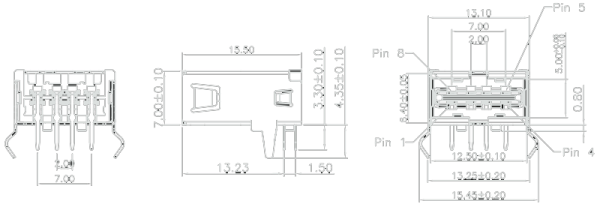
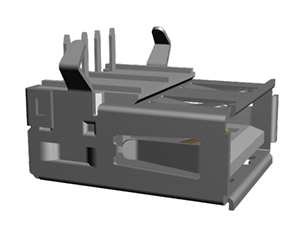 The connector isn’t the brand new USB 3.1 Type C connector that will eventually find its way into phones, laptops, wearables of all types. This is your standard Type A USB plug you’ve known and loved for the past eighteen years. The difference here is that the chunky block of plastic that has made the common USB cable non-reversible for so many years is gone. In its place is a tiny strip of plastic that has contacts on both sides. Yes, it took nearly two decades for someone to figure out this would be a marketable idea.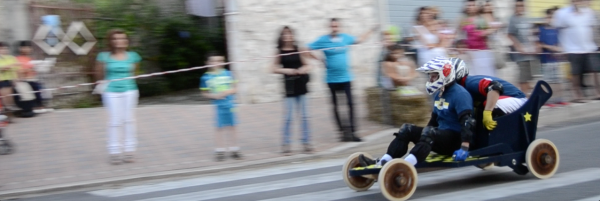
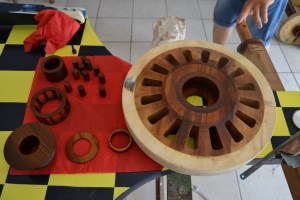 The course also includes full-width obstacles like hay bales. Teams are divided by community or “contrada”, and it was [Alessio]’s team captain who came to him with the special request of roller bearings. Unable to find evidence of other wooden bearings, [Alessio] knew he would have to invent them himself – so he did.