Ham Radio SSB Transceiver Fits In Pocket

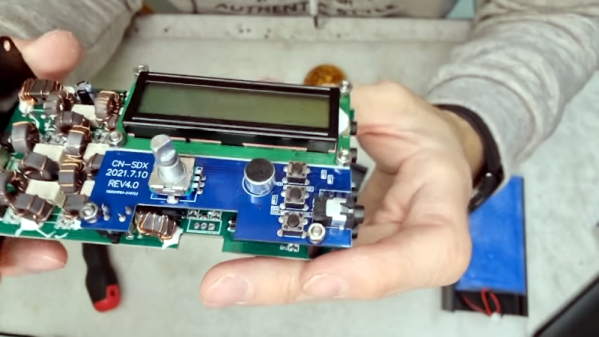
Talking about this Chinese ham radio transceiver requires a veritable flurry of acronyms: HF, SSB, QRP, and SDR to start with. [Paul] does a nice job of unboxing the rig and checking it out. The radio is a clone of a German project and provides a low-power radio with a rechargeable battery. You can see his video about the gear below.

SSB is an odd choice for low power operation, although we wonder if you couldn’t feed digital data in using a mode like PSK31 that has good performance at low power. There are several variations of the radio available and they cost generally less than $200 — sometimes quite a bit less.

There isn’t much on the front of the radio. There are a few buttons, a rotary encoder, and an LCD along with a speaker and microphone built-in. There are ports for power to run the radio if you want to not use the battery and a separate port for battery charging. There are also ports for a key, external microphone and speakers, and audio connections that look like they’d work for digital modes. According to commenters, the radio doesn’t have an internal charging circuit, so you have to be careful what you plug into the charging port.

Looking inside, the radio looks surprisingly well made. Towards the end of the video, you can see the radio make some contacts, too. Looks like fun. This is a bit pricey for [Dan Maloney’s] $50 Ham series, but not by much. You might borrow an antenna idea from him, at least. If you prefer something more analog, grab seven transistors and build this SSB transceiver.
Continue reading “Ham Radio SSB Transceiver Fits In Pocket” →

Four Band Digital HF SDR Transceiver Offers High Performance For Only $60

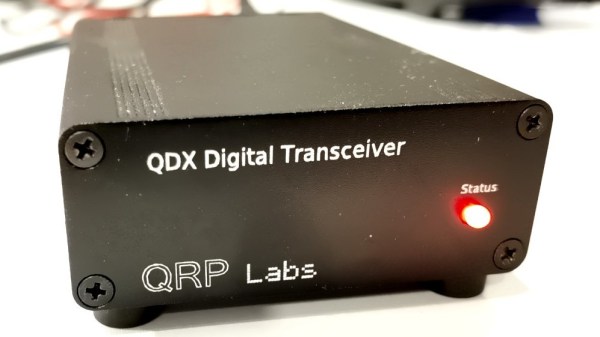
Amateur radio is a hobby that is often thought of as being exclusive to those with a healthy expendable income. In recent years however, the tides have turned. Cheap microcontrollers and signal generators have helped turned things around, and the $60 USD QDX from QRP Labs goes even further by sending the performance/price ratio through the roof. You can see more details in the video below the break.

The QDX is the creation of [Hans Summers] who is well known for producing affordable high performance amateur radio kits that are focused on low power transmission, called “QRP” in ham radio parlance. What is it? It’s a pocket sized four band (80, 40, 30, 20 Meters) software defined radio (SDR) that is designed to be used with some of the most popular digital radio modes: FT8 and JS8Call, as well as any other FSK based mode such as RTTY. It’s also been tested to work well (and within spec) on 60 Meters.

While classic radios have to be connected to a computer through a special hardware interface, the QDX is designed to connect directly to a computer through a standard USB A>B cable. CAT control, PTT, and Audio are all handled directly by the QDX, and no special interface is needed. While the radio is essentially plug and play, configuration, testing, and troubleshooting can be done by connecting to the QDX’s unique serial console, which among other things contains a text based waterfall. For those who want to run their own SDR receiver, I/Q output can be sent directly through the sound card.

Now for the bad news: due to global chip shortages, the QDX is out of stock at the moment, and there’s no telling when they might start shipping again. QRP Labs is looking to source parts wherever they can to get more of the units made, but of course, so is everyone else right now. Continue reading “Four Band Digital HF SDR Transceiver Offers High Performance For Only $60” →

Is The Game Up For Baofeng In Europe?

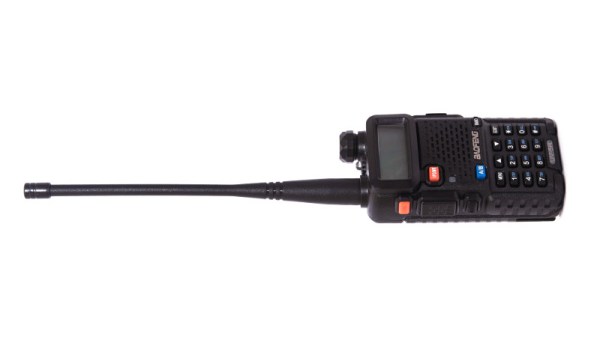
For radio enthusiasts worldwide, the inexpensive Chinese handheld radios produced by the likes of Baofeng and other brands have been a welcome addition to their arsenal. They make an ideal first transceiver for a new licensee, a handy portable for any radio amateur, and an inexpensive basis for UHF or VHF experimentation. Unfortunately with the low cost comes something of a reputation for not having the cleanest spectral output, and it seems that this has caught the attention of regulators in Germany and Poland. In Germany this has resulted in the announcement of a sales prohibition (PDF in German) which seems likely to be repeated across the rest of the EU.

It seems what has happened is that the quality of the Baofeng radios on sale doesn’t match that claimed in their conformity documents, which should honestly come as a surprise to nobody. It is interesting that the paperwork mentions the Baofeng UV-5R specifically, as it seems likely to us that an inevitable game of whack-a-mole will ensue with the same radios appearing under ever more brand names and part numbers. The basic UV-5R already appears under a number of variants, for example the one where this is being written is a near-identical but slightly more powerful BF-F8, so this should again come as no surprise.

If you live in Europe should you panic buy a Baofeng while you still can? Probably not, unless you really need one. Something tells us they will remain readily available from the usual overseas sources for years to come. Meanwhile this isn’t the first time a regulator has raised questions about this type of radio.

Thanks [2ftg] for the tip.

Header image: Варвара Каминская, CC BY-SA 4.0.

This Ham Radio Is Unsafe At Any Frequency

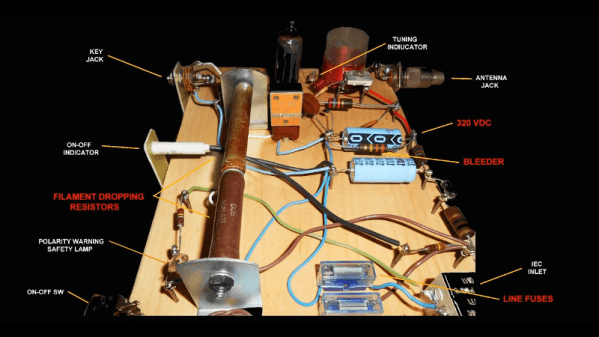
When we were kids we rode bicycles without pads and helmets. We drank sugary drinks. We played with chemistry sets and power tools. We also built things that directly used AC line current. [Mike] remembers and built one, presumably more to discuss the safety precautions around things that can shock you and not entice you to duplicate it. He calls it The Retro QRP Widowmaker, if that’s any kind of a hint. (Video of this unsafe transmitter also embedded below.)

The design showed up from time to time in old electronic magazines. Built on an open board and with no ground wire, the radio didn’t need a complex power supply. This wasn’t limited to transmitters, either. Some TVs and radios had a “hot chassis.” That’s why we were taught to touch an unknown chassis with the back of your hand first. A shock will contract your muscles and that will pull your arm away instead of making you grab the electrically active part.

Continue reading “This Ham Radio Is Unsafe At Any Frequency” →

Moon Bouncing And Radar Imaging With LoRa

The LoRa radio protocol is well known to hardware hackers because of its Long Range (hence the name) but also its extremely low power use, making it a go-to for battery powered devices with tiny antennae. But what if the power wasn’t low, and the antenna not tiny? You might just bounce a LoRa message off the moon. But that’s not all.

The team that pulled off the LoRa Moonbounce consisted of folks from the European Space Agency, Lacuna Space, and the CA Muller Radio Astronomy Station Foundation which operates the Dwingeloo Radio Telescope. The Dwingeloo Radio Telescope is no stranger to Amateur Radio experiments, but this one was unique.

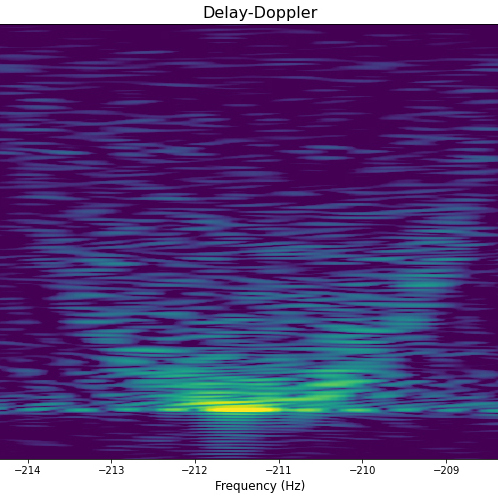
LoRa Moonbounce plotted for doppler shift by frequency
A radar image of the moon generated from LoRa Moonbounce

Operating in the 70 cm Amateur Radio band (430 MHz) meant that the LoRa signal was not limited to the low power signals allowed in the ISM bands. The team amplified the signal to 350 Watts, and then used the radio telescope’s 25 Meter dish to direct the transmission toward the moon.

The result? Not only were they able to receive the reflected transmission using the same transceiver they modulated it with — an off the shelf IOT LoRa radio — but they also recorded the transmission with an SDR. By plotting frequency and doppler delay, the LoRa transmission was able to be used to get a radar image of the moon- a great dual purpose use that is noteworthy in and of itself.

LoRa is a versatile technology, and can even be used for tracking your High Altitude Balloon that’s returned to Terra Firma.

Detect Starlink Satellites Passing By

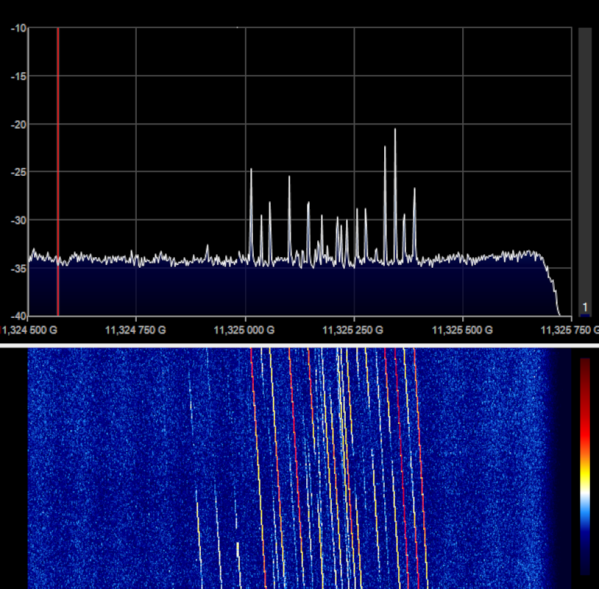
The Starlink beta has semi-officially ended, but it seems as though the global chip shortage is still limiting how many satellites are flying around the world for broadband internet access for those that might not be served by traditional ISPs. Not every location around the world has coverage even if you can get signed up, so to check that status the hard way you can always build a special antenna that tracks the Starlink beacons as they pass overhead.

[Derek] is using this project to show of some of his software-defined radio skills, so this will require an SDR that can receive in the 1600 MHz range. It also requires a power injector to power the satellite receiver, but these are common enough since they are used to power TV antennas. The signals coming from the Starlink satellites have a very high signal-to-noise ratio so [Derek] didn’t even need a dish to focus the signals. This also helped because the antenna he is using was able to see a much wider area as a result. Once everything was set up and the computer was monitoring the correct location in the spectrum, he was able to see very clearly how often a satellite passed him by.

Of course, [Derek] lives in an area with excellent coverage so this might be a little more difficult for those in rural areas, but possibly not for long as the goal of Starlink is to bring broadband to people who otherwise wouldn’t have access to it. There is some issue with how much these satellites might interfere with other astronomical activities though, so take that with a grain of salt.

Thanks to [Spritle] for the tip!

Ham Radio Gets Brain Transplant

Old radios didn’t have much in the way of smarts. But as digital synthesis became more common, radios often had as much digital electronics in them as RF circuits. The problem is that digital electronics get better and better every year, so what looked like high-tech one year is quaint the next. [IMSAI Guy] had an Icom IC-245 and decided to replace the digital electronics inside with — among other things — an Arduino.

He spends a good bit of the first part of the video that you can see below explaining what the design needs to do. An Arduino Nano fits and he uses a few additional parts to get shift registers, a 0-1V digital to analog converter, and an interface to an OLED display.

Unless you have this exact radio, you probably won’t be able to directly apply this project. Still, it is great to look over someone’s shoulder while they design something like this, especially when they explain their reasoning as they go.

The PCB, of course, has to be exactly the same size as the board it replaces, including mounting holes and interface connectors. It looks like he got it right the first time which isn’t always easy. Does it work? We don’t know by the end of the first video. You’ll have to watch the next one (also below) where he actually populates the PCB and tests everything out.

Continue reading “Ham Radio Gets Brain Transplant” →