Mapping The Human Brain And Where This May Lead Us

In order to understand something, it helps to observe it up close and study its inner workings. This is no less true for the brain, whether it is the brain of a mouse, that of a whale, or the squishy brain inside our own skulls. It defines after all us as a person; containing our personality and all our desires and dreams. There are also many injuries, disorders and illnesses that affect the brain, many of which we understand as poorly as the basics of how memories are stored and thoughts are formed. Much of this is due to how complicated the brain is to study in a controlled fashion.

Recently a breakthrough was made in the form of a detailed map of the cells and synapses in a segment of a human brain sample. This collaboration between Harvard and Google resulted in the most detailed look at human brain tissue so far, contained in a mere 1.4 petabytes of data. Far from a full brain map, this particular effort involved only a cubic millimeter of the human temporal cortex, containing 57,000 cells, 230 millimeters of blood vessels and 150 million synapses.

Ultimately the goal is to create a full map of a human brain like this, with each synapse and other structures detailed. If we can pull it off, the implications could be mind-bending.

Continue reading “Mapping The Human Brain And Where This May Lead Us”

Nuclear Fusion R&D In 2024: Getting Down To The Gritty Details

To those who have kept tabs on nuclear fusion research the past decades beyond the articles and soundbites in news outlets, it’s probably clear just how much progress has been made, and how many challenges still remain. Yet since not that many people are into plasma physics, every measure of progress, such as most recently by the South Korean KSTAR (Korea Superconducting Tokamak Advanced Research) tokamak, is met generally by dismissive statements about nuclear fusion always being a certain number of decades away. Looking beyond this in coverage such as the article by Science Alert about this achievement by KSTAR we can however see quite a few of these remaining challenges being touched upon.

Recently KSTAR managed to generate 100 million degrees C plasma and maintain this for 48 seconds, a significant boost over its previous record from 2021 of 30 seconds, partially due to the new divertors that were installed. These divertors are essential for removing impurities from the plasma, yet much like the inner wall of the reactor vessel, these plasma-facing materials (PFM) bear the brunt of the super-hot plasma and any plasma instabilities, as well as the constant neutron flux from the fusion products. KSTAR now features tungsten divertors, which has become a popular material choice for this component.

Researching the optimal PFMs, as well as plasma containment modes and methods to suppress plasma instabilities are just some of the challenges that form the road still ahead before commercial fusion can commence.

Continue reading “Nuclear Fusion R&D In 2024: Getting Down To The Gritty Details”

Filming The Eclipse From 80,000 Feet

Watching an eclipse from the ground is pretty fun. Depending on where you live, you might even get a decent view. But what if you wanted a truly unique vantage point? You could replicate the work of [Tarik Agcayazi] and [kemfic], who set about filming the recent eclipse from an altitude of 80,000 feet.

That’s what the eclipse looks like from 80,000 feet.

The duo didn’t rent a high-performance aircraft from the US military. Instead, they relied on a high-altitude balloon carrying a glider with a camera payload. The idea was for the balloon to go up, and have the camera capture the eclipse. Then, it would be released so that it could glide back home in controlled flight. However, time constraints made that too hard. Instead, they simplified to a parachute recovery method.

The project video covers the development process, the balloon launch itself, and of course, the filming of the eclipse. High altitude balloon launches are stressful enough, but having a short eclipse as a target made everything even more difficult. But that just makes things more exciting!

The project builds on earlier work from the duo that we discussed back in 2017.

Continue reading “Filming The Eclipse From 80,000 Feet”

Peeking Underground With Giant Flying Antennas

Helicopters are perhaps at their coolest when they’re being used as flying cranes — from a long dangling cable, they can carry everything from cars, to crates, to giant hanging saws.

What you might find altogether more curious are the helicopters that fly around carrying gigantic flat antenna arrays. When you spot one in the field, it’s not exactly intuitive to figure out what they’re doing, but these helicopters are tasked with important geological work!

Continue reading “Peeking Underground With Giant Flying Antennas”

Möbius String Robot Goes Round And Round

While it doesn’t look like a traditional robot, the hydrogel robot from [Zi Liang Wu] forms a möbius strip and can be activated by light. They also experimented with shaping the hydrogels as a Seifert ribbon.

The key is that the hydrogels contain gold nanoparticles. Light heats the gold particles and this causes the hydrogels to move. The connections between the strips of hydrogels causes them to move in predictable ways. You can see a video about the experiments below.

These robots aren’t going to be for warehouse or factory work. But they can do tasks like collecting plastic beads, something difficult for conventional robots to do. They also hope to demonstrate that these soft robots could work in the body for taking samples or delivering a drug, although it isn’t apparent how light would get to them inside your body.

The dark side of the material tends to turn towards the light. The continuous loop structure means it never runs to the end of its travel. Watching it move on a string is pretty impressive.

Crawling and slithering robots may be the answer for certain specialized applications. After all, it works well in nature.

Continue reading “Möbius String Robot Goes Round And Round”

Nature Vs Nurture In Beethoven’s Genome

When it comes to famous musicians, Beethoven is likely to hit most top ten charts. Researchers recently peered into his genome to see if they could predict his talent by DNA alone.

Using a previously-identified polygenetic index (PGI) for musical talent, which finds the propensity of certain genes to influence a given trait after a genome-wide association study (GWAS), the researchers were able to compare samples of Beethoven’s DNA to that of two separate population studies with known musical achievement data.

Much to the relief of those who saw Gattaca as a cautionary tale, the scientists found that Beethoven scored only around the tenth percentile for the ability to keep a beat according to his genetic markers. According to the researchers, using genetic markers to predict abilities of an individual can lead to incorrect conclusions, despite their usefulness for group level analyses.

Curious about more musical science? How about reconstructing “Another Brick in The Wall (Part I)” from brainwaves or building a Square Laser Harp?

Is The Frequency Domain A Real Place?

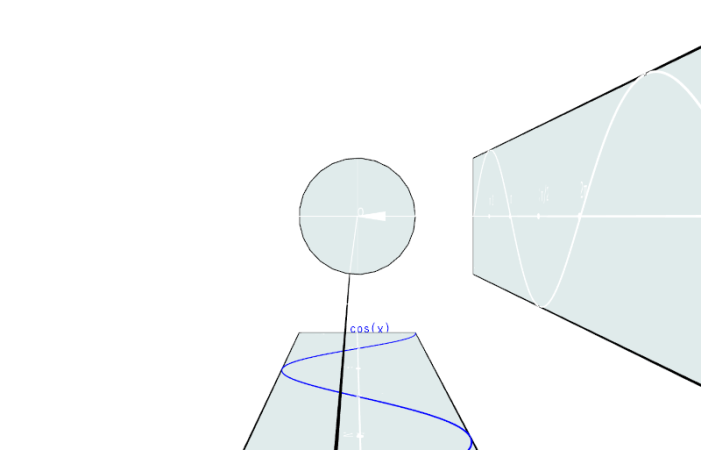
When analyzing data, one can use a variety of transformations on the data to massage it into a form that works better to tease out the information one is interested in. One such example is the application of the Fourier transform, which transforms a data set from the time domain into the frequency domain. Yet what is this frequency domain really? After enticing us to follow the white rabbit down a sudden plummet into the intangible question of what is and what is not, [lcamtuf] shows us around aspects of the frequency domain and kin.

One thing about the (discrete) Fourier transform is that it is excellent at analyzing data that consists out of sinewaves, such as audio signals. Yet when using the Fourier transform for square waves, the resulting output is less than useful, almost as if square waves are not real. Similarly, other transforms exist which work great for square waves, but turn everything else into meaningless harmonics. Starting with the discrete cosine transform (DCT), this gets us into Walsh and Hadamard matrices and the Walsh-Hadamard Transform (WHT), and their usage with transforming data from the time into the frequency domain.

Ultimately it would seem that the frequency domain is as real as it needs to be, albeit that its appearance is wholly dependent on the algorithm used to create it, whether this the DFT, DCT, WHT or something else entirely.