Just How Is Voyager 2 Going To Sort Out Its Dish Then?

Anybody who has set up a satellite TV antenna will tell you that alignment is critical when picking up a signal from space. With a satellite dish it’s a straightforward task to tweak the position, but what happens if the dish in question is out beyond the edge of the Solar System?

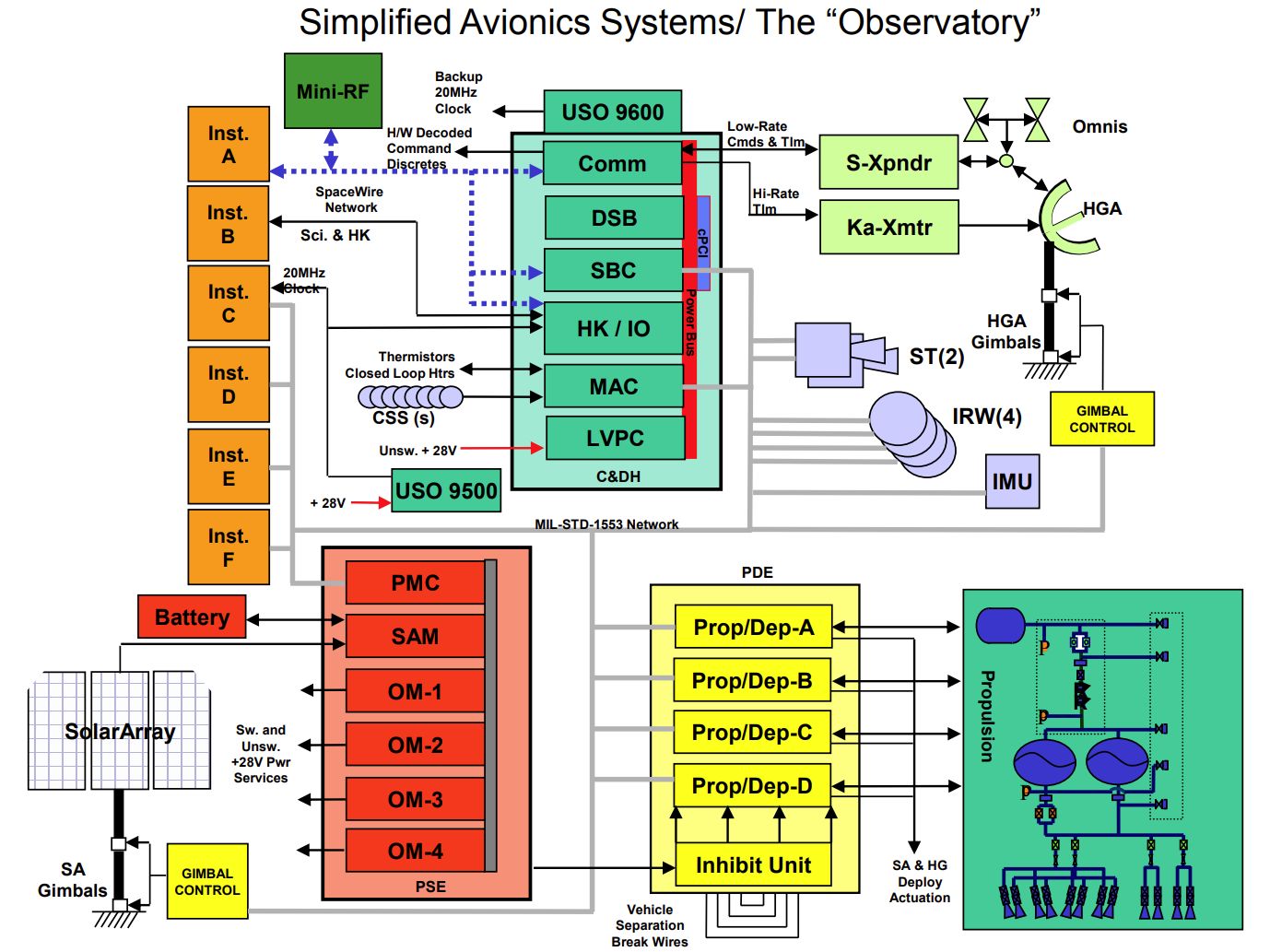
We told you a few days ago about this exact issue currently facing Voyager 2, but we’re guessing Hackaday readers will want to know a little bit more about how a 50+ year old spacecraft so far from home can still sort out its antenna. The answer lies in NASA Technical Report 32-1559, Digital Canopus Tracker from 1972, which describes the instrument that notes the position of the star Canopus, which along with that of the Sun it can use to calculate the antenna bearing to reach Earth. The report makes for fascinating reading, as it describes how early-1970s technology was used to spot the star by its specific intensity and then keep it in its sights. It’s an extremely accessible design, as even the part numbers are an older version of the familiar 74 logic.

So somewhere out there in interstellar space beyond the boundary of the Solar System is a card frame full of 74 logic that’s been quietly keeping an eye on a star since the early 1970s, and the engineers from those far-off days at JPL are about to save the bacon of the current generation at NASA with their work. We hope that there are some old guys in Pasadena right now with a spring in their step.

Read our coverage of the story here.

Timeline of the universe. A representation of the evolution of the universe over 13.77 billion years. The far left depicts the earliest moment we can now probe, when a period of "inflation" produced a burst of exponential growth in the universe. (Size is depicted by the vertical extent of the grid in this graphic.) For the next several billion years, the expansion of the universe gradually slowed down as the matter in the universe pulled on itself via gravity. More recently, the expansion has begun to speed up again as the repulsive effects of dark energy have come to dominate the expansion of the universe. The afterglow light seen by WMAP was emitted about 375,000 years after inflation and has traversed the universe largely unimpeded since then. The conditions of earlier times are imprinted on this light; it also forms a backlight for later developments of the universe. (Credit: NASA)

ESA’s Euclid Space Telescope And The Quest For Dark Energy

Most of what humankind and other mammalian species on Earth experience of the Universe is primarily restricted to the part of the electromagnetic spectrum which our optical organs can register. Despite these limitations, we have found ways over the centuries which enable us to perceive the rest of the EM spectrum, to see both what is incredibly far away, and what is incredibly small, to constantly get a little bit closer to understanding what makes the Universe into what we can observe today, and what it may look like in the future.

An essential element of this effort are space telescopes, which gaze into the depths of the Universe with no limitations imposed by the Earth’s atmosphere, or human activity. Among the many uses of space telescopes, the investigation of the expansion of the Universe is perhaps the most fascinating, as this brings us ever closer to the answers to the most fundamental questions about not only its shape, but also to its future, which may include hitherto unknown types of matter and energy.

With the recently launched Euclid space telescope, another chapter is being opened in the saga on dark energy and matter, and their nature and effects on the Universe, as well as whether they exist at all. Yet how exactly do you use a space telescope to ferret out the potential effects of dark energy?

Continue reading “ESA’s Euclid Space Telescope And The Quest For Dark Energy”

Voyager Command Glitch Causes Unplanned Pause In Communications

Important safety tip: When you’re sending commands to the second-most-distant space probe ever launched, make really, really sure that what you send isn’t going to cause any problems.

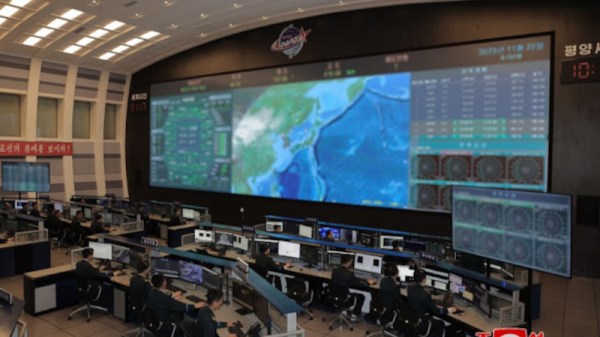
According to NASA, that’s just what happened to Voyager 2 last week, when uplinked commands unexpectedly shifted the 46-year-old spacecraft’s orientation by just a couple of degrees. Of course, at a distance of nearly 20 billion kilometers, even fractions of a degree can make a huge difference, especially since the spacecraft’s high-gain antenna (HGA) is set up for very narrow beamwidths; 2.3° on the S-band channel, and a razor-thin 0.5° on the X-band side. That means that communications between the spacecraft and the Canberra Deep Space Communication Complex — the only station capable of talking to Voyager 2 now that it has dipped so far below the plane of the ecliptic — are on pause until the spacecraft is reoriented.

Luckily, NASA considered this as a possibility and built safety routines into Voyager‘s program that will hopefully get it back on track. The program uses the onboard star tracker to get a fix on the bright star Canopus, and from there figures out which way the spacecraft needs to move to get pointed back at Earth. The contingency program runs automatically several times a year, just in case something like this happens.

That’s the good news; the bad news is that the program won’t run again until October 15. While that’s really not that far away, mission controllers will no doubt find it an agonizingly long time to be incommunicado. And while NASA is outwardly confident that communications will be restored, there’s no way to be sure until we actually get to October and see what happens. Fingers crossed.

Would We Recognize Extraterrestrial Technology If We Saw It?

There’s a common critique in science fiction series like Star Trek about the extraterrestrial species not looking ‘alien’ enough, as well as about their technology being strangely similar to our own, not to mention compatible to the point where their widgets can be integrated into terrestrial systems by any plucky engineer. Is this critique justified, or perhaps more succinctly put: if we came across real extraterrestrial life with real extraterrestrial technology, would we even notice? Would an alien widget borrowed of an alien spacecraft even work with our own terrestrial spacecraft’s system?

Within the domain of exobiology there are still plenty of discussions on the possible formation and evolutionary paths conceivable within the Universe, but the overarching consensus seems to be that it’s hard to escape the herding effect of fundamental physics. For lifeforms, carbon-based chemistry is the only reasonable option, and when it comes to technology, it’s hard to not end up at technology using the same physical principles which we presume to exist across the Universe, which would practically guarantee some level of interoperability.

What’s notable here is that over the past years, a number of people have claimed to have observed potential alien technology in our Solar System, in particular the ʻOumuamua asteroid in 2017 and a more recent claim by astrophysicist Abraham Loeb regarding an interstellar meteor that impacted Earth in 2019, which he says could be proof of ‘alien technology’. This raises the question of whether we are literally being pummeled by extraterrestrial spacecraft these days.

Continue reading “Would We Recognize Extraterrestrial Technology If We Saw It?”

Discussing The Finer Points Of Space-Worthy Software

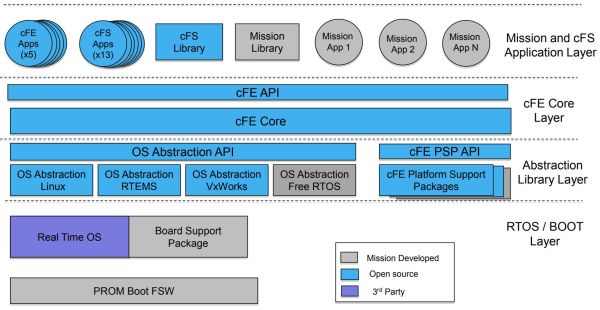
At the dawn of the Space Race, when computers were something that took up whole rooms, satellites and probes had to rely on analog electronics to read from their various sensors and transmit the resulting data to the ground. But it wasn’t long before humanity’s space ambitions outgrew these early systems, which lead to vast advancements in space-bound digital computers in support of NASA’s Gemini and Apollo programs. Today, building a spacecraft without an onboard computer (or even multiple redundant computers) is unheard of. Even the smallest of CubeSats is likely running Linux on a multi-core system.

Jacob Killelea

As such, software development has now become part an integral part of spacecraft design — from low-level code that’s responsible for firing off emergency systems to the 3D graphical touchscreen interfaces used by the crew to navigate the craft. But as you might expect, the stakes here are higher than any normal programming assignment. If your code locks up here on Earth, it’s an annoyance. If it locks up on a lunar lander seconds before it touches down on the surface, it could be the end of the mission.

To get a bit more insight into this fascinating corner of software development, we invited Jacob Killelea to host last week’s
Software for Satellites Hack Chat. Jacob is an engineer with a background in both aero and thermodynamics, control systems, and life support. He’s written code for spacecraft destined for the Moon, and perhaps most importantly, is an avid reader of Hackaday.

Continue reading “Discussing The Finer Points Of Space-Worthy Software”

Gravity Wave Detector Is Galactic Sized

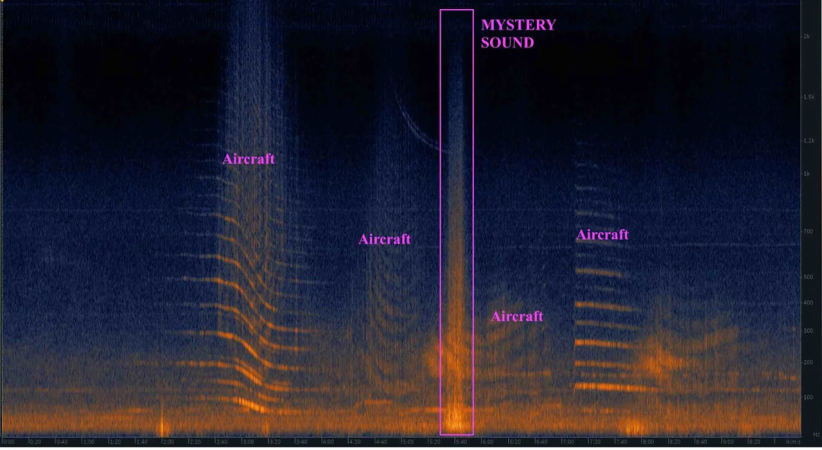
Detecting gravity waves isn’t easy. But what if you had a really big detector for a long time? That’s what researchers did when they crunched 15 years’ worth of data from the NANOGrav data set. The data was collected from over 170 radio astronomers measuring millisecond pulsars as a way to potentially detect low-frequency gravity waves.

Millisecond pulsars spin fast and make them ideal for the detection of low-frequency gravity waves, which are difficult to detect. The bulk of the paper is about the high-powered data analysis for a very large data set.

Continue reading “Gravity Wave Detector Is Galactic Sized”

Listening In On A Deep-Space Satellite As It Returns Home

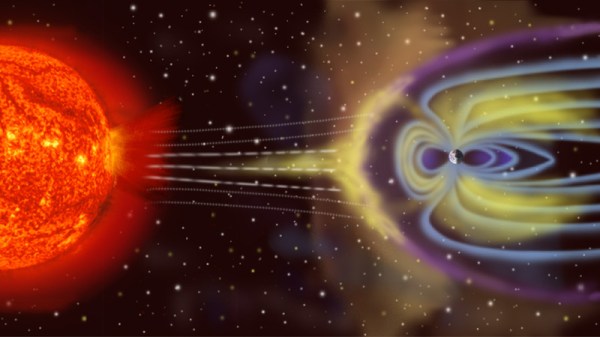
We’ve covered dozens of projects about getting images of Earth’s weather straight from the source. It’s not too much of a trick to download images straight from our constellation of weather satellites, but what about space weather? We’ve got satellites for that too, of course, but to get a good look at the Sun, they’re out of reach of most homebrew ground stations.

That’s about to change, though, as STEREO-A returns to our neighborhood after a 17-year absence, making citizen science a reasonable proposition. The STEREO mission — Solar Terrestrial Relations Observatory — was launched in 2006 with a pair of satellites in heliocentric orbits. STEREO-B was lost in 2014 due to a navigational glitch, but STEREO-A has spent a lot of the intervening years watching the backside of the Sun relative to the Earth. As [Scott Tilley] explains, the satellite is now approaching inferior conjunction, where it will pass between the Earth and the Sun.

This close pass makes STEREO-A’s X-band deep-space beacon readily available to hobbyist-scale equipment, like [Scott]’s 66-cm dish antenna. The dish is mounted on an alt-az telescope mount for tracking, and sports a host of gear at the focus, like LNAs, filters, mixers, and an Ettus B200 SDR. It’s not a cheap setup, but compared to what’s usually needed to listen to STEREO-A, it’s a bargain. The process of demodulating and decoding the signals was a bit more involved, though, requiring not only SatDump and some custom code but also a lot of patience. The images are worth the wait, though; [Scott] shares some amazing shots of our increasingly active Sun as well as animations of recent sunspot activity.

If you’re interested in getting in on the STEREO-A action, you’d better get hopping — the satellite will only be in the neighborhood for a few more months before heading off for another pass around the back of the Sun.