A scale model of the International Space Station

This Model Mimics The International Space Station

It’s not an overstatement to say that the International Space Station (ISS for short) is an amazing feat of engineering, especially considering that it has been going for over two decades. The international collaboration isn’t just for the governments, either, as many images, collected data and even some telemetry have been made available to the public. This telemetry inspired [Bryan Murphy] and his team to create the ISS MIMIC, a 1:100 scale model of the ISS that reflects its space counterpart.

The model, covered by [3D Printing Nerd] after the break, receives telemetry from the real ISS and actually reflects the orientation of the solar panels accordingly! It also uses this entirely public information to show other things like battery charge level, power production, position above the earth and more on a display. An extra detail we appreciated is the LEDs near the solar panels, which are red, blue or white to indicate using battery, charging battery and full battery respectively. The ISS orbits the earth once every 90 minutes, which can be seen by the LEDs changing color as the ISS enters the shadow of the earth, or exits it.

What could you do to make this better you might ask? Make the it open-source of course! The ISS MIMIC is fully open-source and uses common tools like 3D printing with PLA, Raspberry Pis and Arduinos to make it as accessible as possible for education (and hackers). Naturally, the goal of this project is to educate, which is why it’s open-source and aims to teach programming, electronics, mechatronics and problem solving.

Video after the break.
Continue reading “This Model Mimics The International Space Station”

Rocket Range Australia, 1950s Style

The Film and Sound Archive (NFSA) of Australia just released a digitized version of a 1957 film documentary on Australia’s rocket research back in the day ( see video below the break ). The Woomera test range is an isolated place about 500 km northwest of Adelaide ( 2021 population 132 ) and hosts a small village, an airstrip, and launch facilities. In the Salisbury suburb of Adelaide, a former WW2 munitions factory complex was repurposed as a research center for rockets and long range weapons.

The documentary showcases a wide variety of state-of-the-art technologies from the late 1950s. As ancient as those appear today, a lot of the basic concepts haven’t changed — careful choreography of the launch countdown sequence of events, the antenna and radio systems to receive and store rocket telemetry, photographic records of the rocket in flight, and post-flight analyses of everything to fix problems and improve your designs. They tried to do as much as possible at the Salisbury campus, because as the narrator notes, it’s expensive to work at the distant test range, a concept which is still a consideration today. There’s even a glimpse of the residents’ leisure life in the barren village. It was a different time, to say the least. Continue reading “Rocket Range Australia, 1950s Style”

India Makes History With Chandrayaan-3 Landing

Yesterday, the Indian Space Research Organization’s (ISRO) Chandrayaan-3 spacecraft performed a powered soft-landing on the Moon, officially making India the fourth country to achieve a controlled descent to the lunar surface. Up to this point, only the United States, China, and the Soviet Union could boast successful landings on our nearest celestial neighbor.

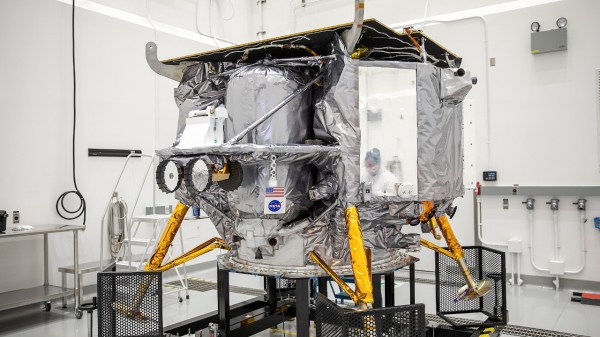
Chandrayaan-3 Packed for Launch

What’s more, Chandrayaan-3 has positioned itself closer to the Moon’s south pole than any other mission in history. This area is of great interest to scientists, as there is evidence that deep craters in the polar region contain considerable deposits of frozen water. At the same time, the polar highlands receive almost constant sunlight, making it the perfect location to install solar arrays. These factors make the Moon’s south pole an ideal candidate for a future human outpost, and Chandrayaan-3 is just one of several robotic craft that will explore this area in the coming years.

But as is usually the case with space exploration, the success of Chandrayaan-3 didn’t come easy, or quickly. The ISRO started the Chandrayaan program in 2003, and launched the Chandrayaan-1 mission in 2008. The craft successfully entered lunar orbit and surveyed the surface using a wide array of instruments, many of which were provided by foreign space agencies such as NASA and the ESA. In 2019 the far more ambitious Chandrayaan-2 mission was launched, which included a lander and small rover. While the orbiter component of Chandrayaan-2 was a complete success, the lander crashed into the Moon’s surface and was destroyed.

With Chandrayaan-3 now safely on the surface of the Moon, there’s much work to be done in the coming days. The planned mission lifetime for both the lander and rover is a single lunar day, which equals just about two weeks here on Earth. After that, the vehicles will be plunged into a long stretch of frigid darkness which they likely won’t survive.

Continue reading “India Makes History With Chandrayaan-3 Landing”

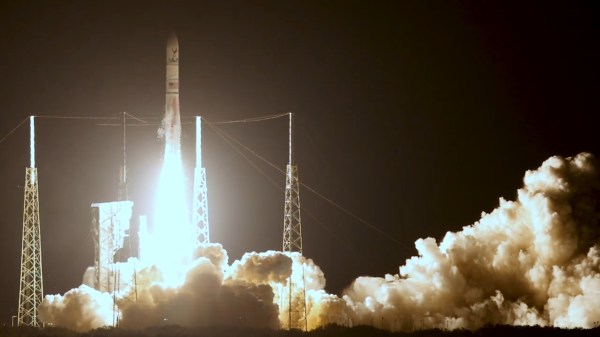
A Soyuz-2.1b rocket booster with a Fregat upper stage and the Luna 25 lunar lander blasts off from a launchpad at the Vostochny Cosmodrome in Amur Oblast, Russia.

Luna 25’s Demise: Raising Fundamental Questions About Russia’s Space Program

The recent news that Russia’s Luna 25 Moon lander had made an unexpected lithobraking detour into the Moon’s surface, rather than the expected soft touchdown was met by a variety of responses, ranging from dismay to outright glee, much of it on account of current geopolitical considerations. Yet politics aside, the failure of this mission casts another shadow on the prospects of Russia’s attempts to revive the Soviet space program after a string of failures, including its ill-fated Mars 96 and Fobos-Grunt Mars missions, the latter of which also destroyed China’s first Mars orbiter (Yinghuo-1) and ignited China’s independent Mars program.

To this day, only three nations have managed to land on the Moon in a controlled fashion: the US, China, and the Soviet Union. India may soon join this illustrious list if its Chandrayaan-3 mission’s Vikram lander dodges the many pitfalls of soft touchdowns on the Moon’s surface. While Roscosmos has already started internal investigation, it does cast significant doubt on the viability of the Russian Luna-Glob (‘Lunar Sphere’) lunar exploration program.

Will Russia manage to pick up where the Soviet Union left off in 1976 with the Luna 24 lunar sample return mission?

Continue reading “Luna 25’s Demise: Raising Fundamental Questions About Russia’s Space Program”

Humanity’s Return To The Moon And The Prospect Of South Pole Moon Bases

The last time that a human set foot on the Moon, it was December 1972 — when the crew of the Apollo 17 mission spent a few days on the surface before returning to Earth. Since then only unmanned probes have either touched down on the lunar surface or entered orbit to take snapshots and perform measurements.

But after years of false starts, there are finally new plans on the table which would see humans return to the Moon. Not just to visit, but with the goal of establishing a permanent presence on the lunar surface. What exactly has changed that the world went from space fever in the 1960s to tepid interest in anything beyond LEO for the past fifty years, to the renewed interest today?

Part of the reason at least appears to be an increasing interest in mineable resources on the Moon, along with the potential of manufacturing in a low gravity environment, and as a jumping-off point for missions to planets beyond Earth, such as Mars and Venus. Even with 1960s technology, the Moon is after all only a few days away from launch to landing, and we know that the lunar surface is rich in silicon dioxide, aluminium oxide as well as other metals and significant amounts of helium-3, enabling in-situ resource utilization.

Current and upcoming Moon missions focus on exploring the lunar south pole in particular, with frozen water presumed to exist in deep craters at both poles. All of which raises the question of we may truly see lunar-based colonies and factories pop up on the Moon this time, or are we merely seeing a repeat of last century?

Continue reading “Humanity’s Return To The Moon And The Prospect Of South Pole Moon Bases”

When The Sojourner Mars Rover Nearly Ran LISP

During the late 1980s NASA’s Jet Propulsion Laboratory (JPL) was busy developing the first ever wheeled robot that would roam the surface of Mars. Due to the long round-trip times of any signals between Mars and Earth, development of the firmware that would control the rover was a major point, with the two teams occupied with the task each picking different levels of autonomy for the rover. In a retrospective, [Ron Garrett] who worked at JPL on the ‘more autonomy’ team describes his recollections.

Whereas [Ron]’s team focused on creating a rover that could be provided with high-level instructions which the sophisticated LISP-based firmware would use as guidelines to navigate and operate by, the other team pursued a more limited autonomy approach whereby a human driver would use explicitly plan out the route which the rover would follow before awaiting new instructions.

Perhaps unsurprisingly, the system requirements for running LISP and the additional uncertainties and complexities with the autonomous approach, as well as testing and validating the firmware, resulted in the Sojourner Mars rover featuring the latter approach, with straightforward C-based firmware. Most of Sojourner’s autonomy was limited to a home return function if communication with the lander was lost, which limited both its range and operations during its 85-day extended mission.

As [Ron] covers with examples from later missions, one advantage of LISP is that it allows you to send instructions which can be interpreted (e.g. to debug the system) without having to program in such functionality explicitly. With later Mars rover missions much more of this autonomy that [Ron]’s team pioneered was implemented, although C remained the language of choice for these later rovers.

Heading image: Ron Garrett standing in front of the Robbie prototype. Rocky III can be see in the lower left, and above him are Rajiv Desai and Robert Ivlev, two other members of the team. (Credit: Ron Garret)

Voyager 2: Communication Reestablished With One Big Shout

You could practically hear the collective “PHEW!” as NASA announced that they had reestablished full two-way communications with Voyager 2 on Friday afternoon! Details are few at this point — hopefully we’ll get more information on how this was pulled off, since we suspect there was some interesting wizardry involved. If you haven’t been following along, here’s a quick recap of the situation.

As we previously reported, a wayward command that was sent to Voyager 2, currently almost 19 light-hours distant from Earth, reoriented the spacecraft by a mere two degrees. It doesn’t sound like much, but the very narrow beamwidth on Voyager‘s high-gain antenna and the vast distance put it out of touch with the Canberra Deep Space Network station, currently the only ground station with line-of-sight to the spacecraft. While this was certainly a problem, NASA controllers seemed to take it in stride thanks to a contingency program which would automatically force the spacecraft to realign itself to point at Earth using its Canopus star tracker. The only catch was, that system wasn’t set to engage until October.

With this latest development, it appears that mission controllers weren’t willing to wait that long. Instead, based on what was universally referred to in the non-tech media as a “heartbeat” from Voyager on August 1– it appears that what they were really talking about was the use of multiple antennas at the Canberra site to pick up a weak carrier signal from the probe — they decided to send an “interstellar shout” and attempt to reorient the antenna. The 70-m DSS-43 dish blasted out the message early in the morning of August 2, and 37 hours later, science and engineering data started streaming into the antenna again, indicating that Voyager 2 was pointing back at Earth and operating fine.

Hats off to everyone involved in making this fix and getting humanity’s most remote outpost back online. If you want to follow the heroics in nearly real-time, or just like watching what goes on at the intersection of Big Engineering and Big Science, make sure you check out the Canberra DSN Twitter feed.