Microcontroller-powered Missile Launch Controller

[Josef Jahn] has posted a detailed guide on building a microcontroller-based launch box. Constructed from an Atmel ATMega168 and powered by a 12V rechargable lead gel battery, the launch box is fully portable and includes a number of safety features. Going the extra mile on what could essentially be a simple push button launcher, he added three safety switches, a sixty second after-launch timer and a beautiful (not to mention rare) PLED display complete with dramatic status messages. Check out a video of the launcher in action after the break.

Continue reading “Microcontroller-powered Missile Launch Controller”

Gas Powered Vacuum Sucks Hard Anywhere

[mdavis19] found himself in the middle of nowhere, with no electricity, needing a strong vacuum. That happens to us all right? His solution was to hack together a gas powered monster vacuum. He found a shop vac at a yard sale and promptly discarded the motor and filter. Some minor modifications to a leaf blower and a plywood mount finished the job. He now has absolute sucking power as long as he has fuel. He describes how this is going to be used for gold prospecting, though it would probably work just as well on pet hair. If you’re going to use one around the house though, you may want to find a way to mount a filter in it, and wear ear plugs.

Solder Paste Fridge


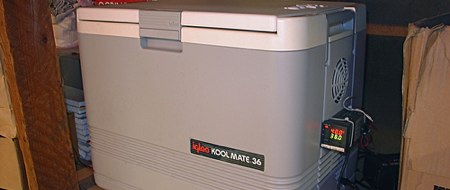
MightyOhm’s laboratories have recently decided to start tackling more surface mount work. As part of this upgrade to SMD hot air reflow stations, they’re handling a lot of solder paste. Solder paste is happy at less than 50degF and above freezing, and [Jeff] didn’t want to chance that lead infiltrating his Manwich, so he built this solder paste fridge. The main unit is a standard 12V peltier based travel cooler. He attached a surplus PID controller with a K-type thermocouple to maintain the temperature while preventing the cooler from being always on. The only adjustment he really had to make was adding a bleed resistor to force the MOSFET to turn off. You can find more pictures of his project on Flickr.

Home Made PCB Drill Press


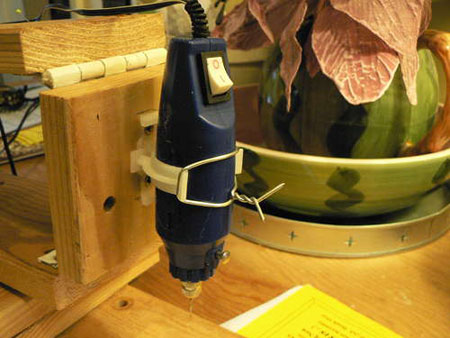
[yellowduck] took some fantastic initiative with this home made PCB drill press. Many people have a rotary tool already. Just add some scrap wood and four hinges. The drill press isn’t perfect; it pivots a little as it lowers. This shouldn’t be a problem for drilling printed circuit boards though. The PCB should be thin enough for the pivot to have little effect. After some test runs, he added a lamp for better lighting and intends to add a return spring and foot switch. It’s definitely a better solution than drilling multiple holes with a hand drill.

Refillable Canned Air


While not very technical, [3eff_Jeff] posted an interesting modification to an empty air canister that makes it refillable. He was tired of drilling holes in the ozone, so he carefully drilled a hole into the top of the can instead. In the name of caution, he made sure the can was completely empty first by tying the trigger down with a rubber band. After waiting a while he carefully drilled the hole using an oil lubricant, and then epoxied in a Schrader valve from a leftover bike tire tube.

Due to compression of the air as it is pumped into the can, it becomes quite warm. He found that if the can is allowed to cool to room temperature, the air would become very cold once leaving the canister, which would cause condensation problems. So he uses it right after filling, and then empties it out when not in use.

We do not recommend anyone trying this, but it is a unique way to make a commonly used disposable resource in the computer field reusable. If we can use something more than once, we’re definitely for it. That’s why we support recycling components that would otherwise make their way to the landfill.