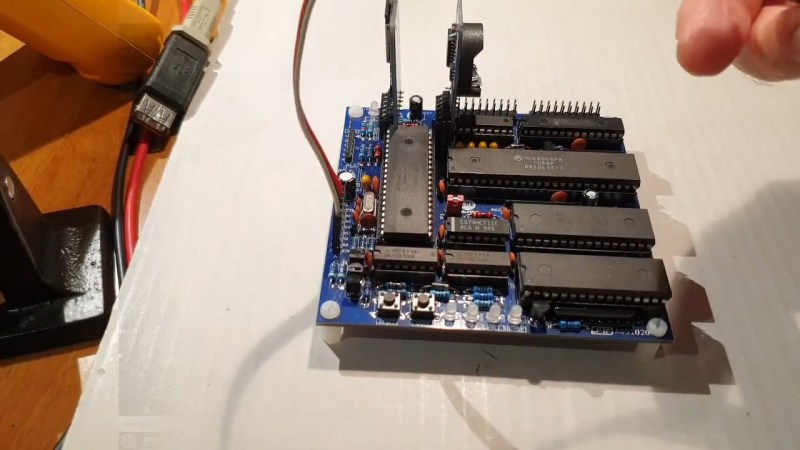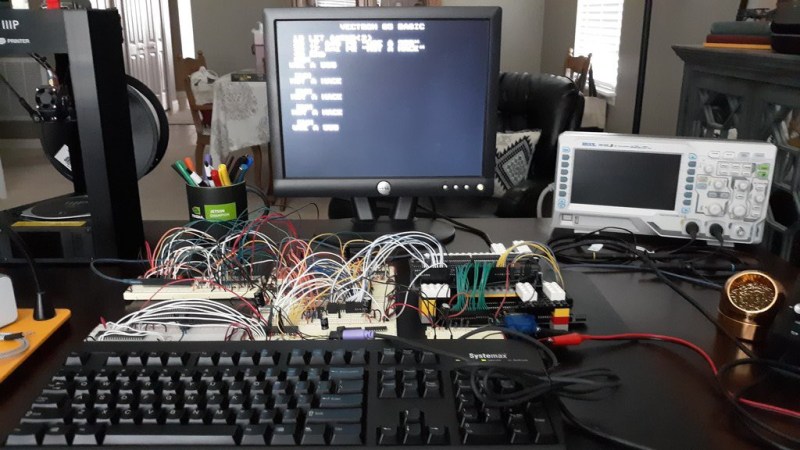
The prototype Vectron65 on breadboard with the VGA Plus v2 and VGA Text Mode cards

2026 Retrocomputer Challenge: Vectron65 Plus Puts The Emphasis On Plus

[Nick Bild] evidently has a soft spot for the 6502, given that his Vectron65 Plus home computer project uses at least one of them, depending on the add-ons. You see, he hasn’t just made a homebrew computer, he’s also produced multiple expansions. One of which, the VGA Plus Text Mode, has its own 6502 co-processor. He’s also produced two versions of a VGA graphics card capable of 640×480 output. We’re still not 100% sure how many entries we are going to count [Nick]’s work as for the contest, since the graphics cards can be used with just about anything, not just the Vectron65, but we do know they’re strong contenders every one.
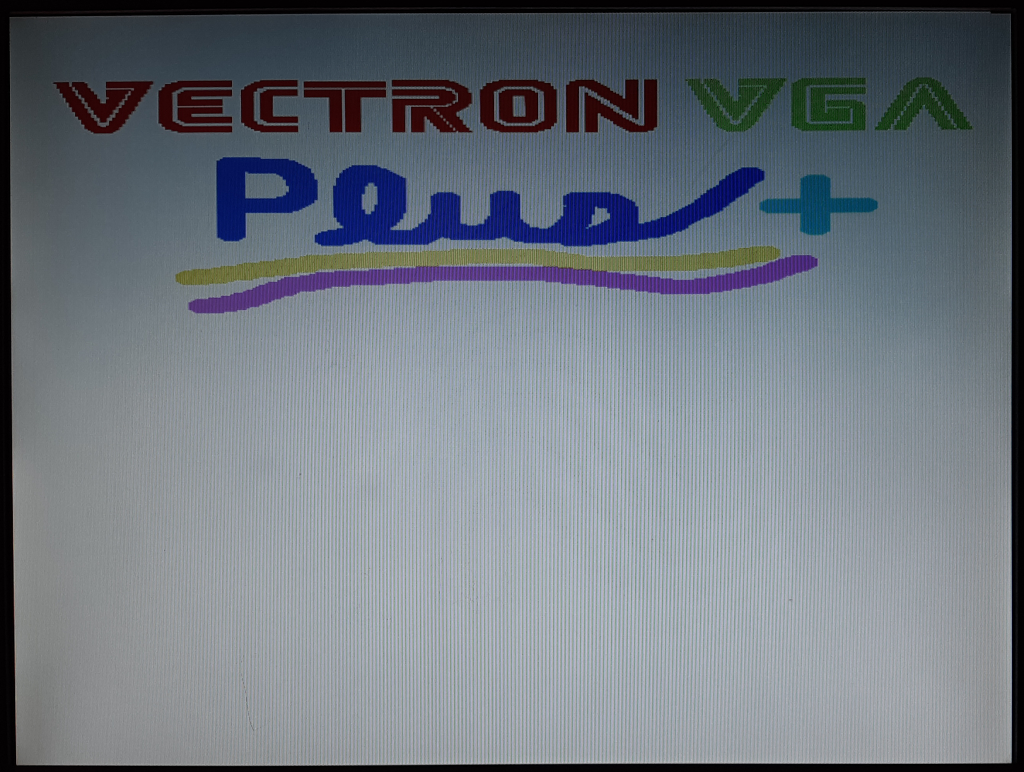
The video doesn’t really show the graphics, so here’s an example.

We covered the start of the Vectron65 project back in 2019, and it’s only gotten more practical as it has moved off breadboard onto PCB, and into a new version as the 65 Plus with more RAM and GPIO ports. Considering that the original let you game in VR using an add-on we covered, we might have to drop the “nearly” from “nearly practical” when talking about the Plus. Especially when you consider the graphics — we covered first version of 7400-series based VGA graphics card, while the newer V2 differs mostly in doubling the RAM and producing a more stable output. The V2 VGA card can work in tandem with the Text Mode card to write 40-column text to the screen without using up all the 6502 CPU’s cycles, offloading them to the second 6502 on the card with the help of a character ROM. Hey, if Commodore could put a second 6502 in a disk drive, why not? You can check out the whole suite in action in the demo video below. We admit to being particularly tickled by the Hackaday Comment Generator he’s running in BASIC.

If you’re worried about competing with [Nick], don’t worry — the 2026 Retrocomputing contest has multiple categories. You still have a few weeks to do something retro-modern, restomod an old machine, or just do some old-school programming.

Continue reading “2026 Retrocomputer Challenge: Vectron65 Plus Puts The Emphasis On Plus” →
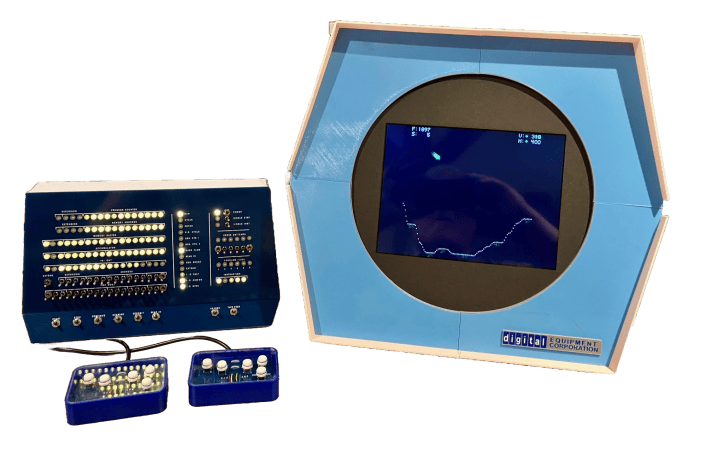
2026 Retrocomputing Challenge: Lunar Lander On The PDP-1

A lot of the retrocomputing world is focused on the 1980s, and for good reason– the home computer revolution was in full swing in that decade, and there is a veritable Cambrian Explosion of capable hardware to play with, emulate or recreate. There’s plenty of retro to look back to before that halcyon decade, though, as [Michael Gardi]’s port of Lunar Lander to the PDP-1 reminds us.

Both Digital Equipment Corporation’s PDP series and the game Lunar Lander are probably iconic enough in their own right to need no introduction, but there’s actually a connection between them. While many people think the game started with Atari’s 1979 arcade cabinet, the first version– then only text based, and called the Lunar Landing Game–actually dates back 10 years before that, and was dreamed up at DEC on a PDP-8. If you’re of a certain vintage, odds are, you probably typed in the BASIC version of the Lunar Landing Game at some point.

This is not that game. Despite the 1959 PDP-1 being more restricted, hardware-wise, than the PDP-8, [Michael Gardi] manages to get Lunar Lander in all of its graphical glory running on the PDP-1. Of course, if you’ve seen SpaceWar you know DEC’s first minicomputer can handle the graphics. You can play the emulated version online, if you’d like, or download it yourself from the link above. There is one PDP-1 that survives in working order, and [Michael] hopes to get the chance to run it there one day on the machine that started hacker culture. We wish him luck!

In the meantime, this may be the most “retro” project in our ongoing retrocomputer contest. There’s no special prize for that superlative, but if you can do older, have at ‘er! There are three weeks left to go back in time and claim both bragging rights and fabulous prizes.


2026 Retrocomputing Challenge: A Homebrew Computer In Only Three ICs

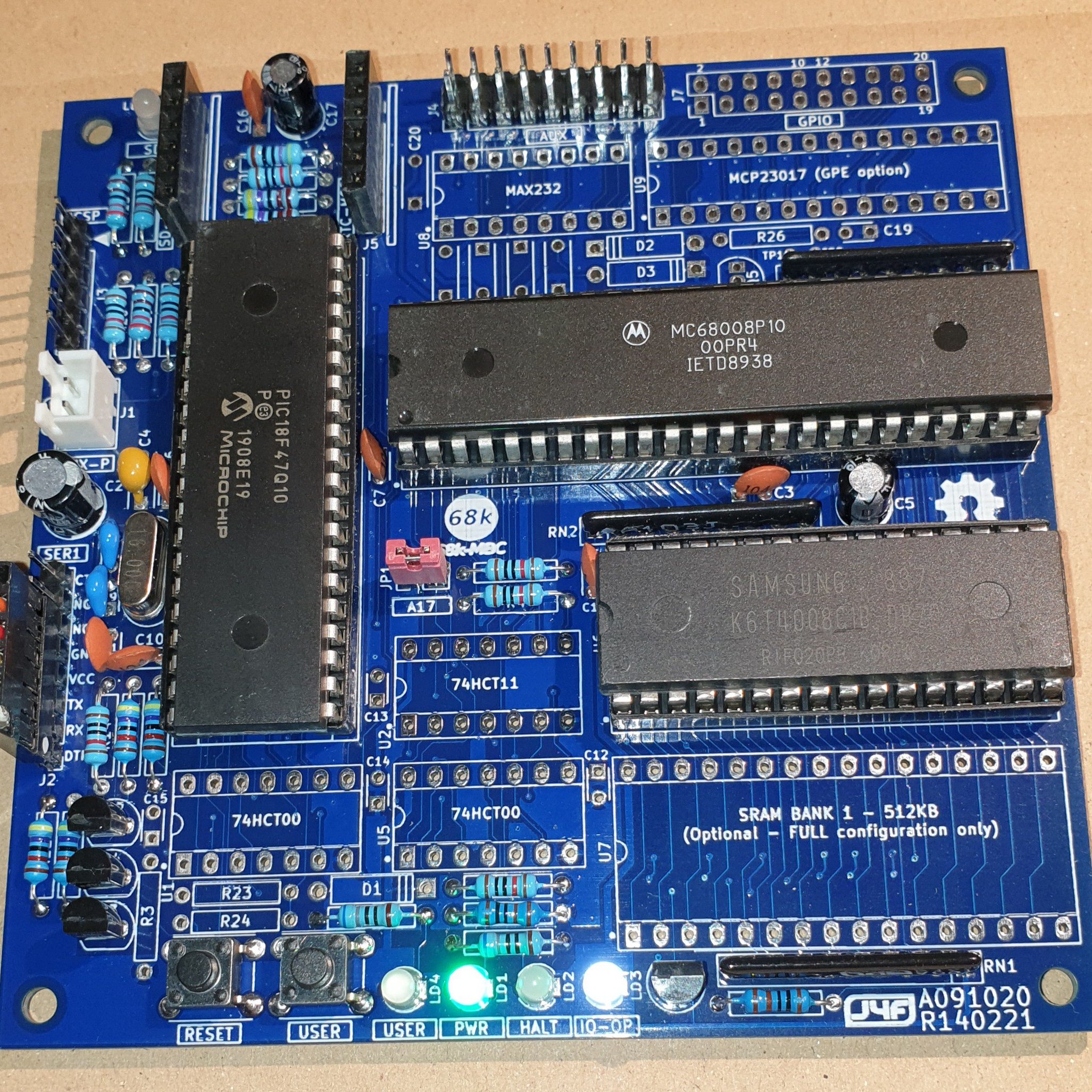
Homebrew computers don’t have to be retrocomputers, but [Just4Fun]’s all-through-hole, 68008-based “68k-MBC” certainly qualifies, so it is a worthy entry in our ongoing contest. While there are both “full” and “lite” hardware configurations, the three-IC “lite” configuration is what first caught our eye. Yes, three: the 68008, an SRAM chip, and a PIC microcontroller that acts as the ROM.

Software is provided by the suitably-retro CP/M68K, or standalone executables, which run on both hardware configurations.

There are four lights, but three chips in the “lite” version of the build.

The “lite” option restricts you to a maximum of 512 KB of RAM and a single serial port, but it looks like you still get I2C and the option to plug in an SD “hard drive” or RTC module however you configure the machine. Through the serial port, you can of course connect a terminal of you choice, or even use a thermal printer. The “full” version has two serial ports, if you want to do both. [Just4Fun] also has a parallel adapter lets you plug in printers with that interface as well. The demo video is below, but be warned that the text-to-speech narration won’t be to everyone’s liking.

We’ve featured other single-board-computers using the 68k before, but this one is a worthy contender in our contest, not least for the impressively low chip count. This contest has gotten oodles of entries, but there’s still time for yours: entries close October 27th.

Continue reading “2026 Retrocomputing Challenge: A Homebrew Computer In Only Three ICs” →

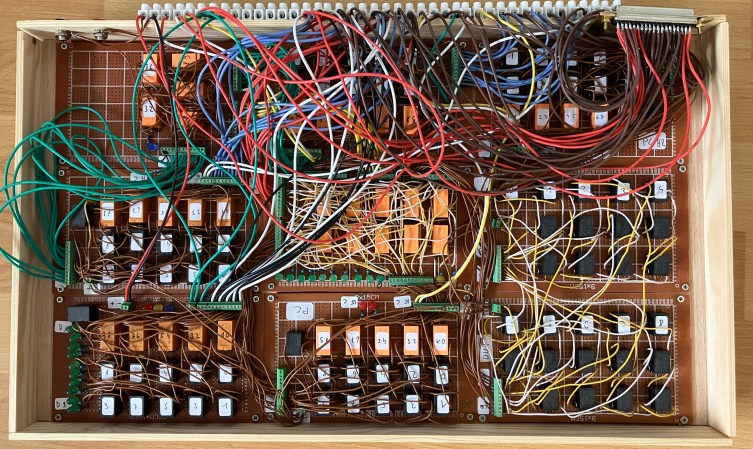
One module of the relay computer

2026 Retrocomputing Challenge: 16-Bit Homebrew Relay Computer

You want Retro? We did, when we started our retrocomputing challenge. [Peter] decided that transistors weren’t retro enough, and sent us this lovely homebrew relay computer, complete with 16- bit CPU, which is rather more bits than one normally associates with clicky clacky contacts.

The architecture is very simple– it just uses an accumulator register, ACCU, and goes from there. All mathematics and save/load operations go through ACCU. There whole instruction set is only 19 commands, and he’s used that set to program such lovely things as calculating 3 digits of Pi– which only took 8 minutes of glorious clicking. There’s a demo video of that embedded below. [Peter] has even implemented a display by hooking his computer to a 32×32 LED matrix, but don’t expect it to relay updates really quickly.

If this computer looks familiar, it’s because its earlier incarnation was one of the more “extra” entries in last year’s one-hertz challenge, where it was used to blink an indicator lamp. Yes, even relay computers apparently get started with the “blinky” sketch.

If you want in on the fun, our retrocomputer challenge runs until October 27th, so there’s lots of time left to turn back the clock.

Continue reading “2026 Retrocomputing Challenge: 16-Bit Homebrew Relay Computer” →

Announcing The 2026 Hackaday Retrocomputing Challenge

What is it about retrocomputing? For some people, it’s nostalgia. For others, it’s the appeal of simplicity. For still others, it’s the chance to save old machines from the graveyard. Whatever your motivation, there’s no denying that we’ve seen a metric ton of retrocomputer projects here at Hackaday. And we’d like to see more!

We’re happy to announce the 2026 Hackaday Retrocomputing Challenge!

Now’s the chance to put your retrocomputer project up for all to see. Open up a Hackaday.io project that features your retrocomputer project, and we’ll pick our three favorites for a $150 gift certificate courtesy of this contest’s sponsor, DigiKey. You have until Tuesday, October 27th. So get hacking!

Continue reading “Announcing The 2026 Hackaday Retrocomputing Challenge” →