Interfacing With An Analog Joystick

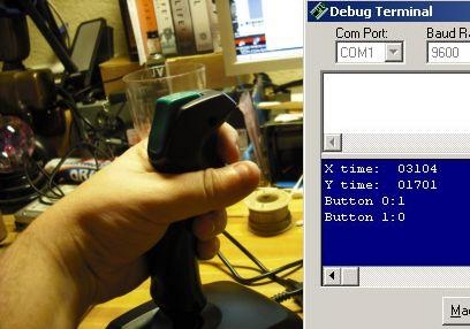
[Firestorm_x1] put together a tutorial about interfacing an analog joystick with a microcontroller. These analog sticks are easy to find; he got his from Goodwill but we’ve got a couple in our junk box right now. The stick uses variable resistors to report its position so it’s just a matter of reading and interpreting that data. After explaining the concepts he demonstrates how to use the joystick to control a Basic Stamp 2 based robot, the Boe-Bot. This could easily be adapted for use with other robot platforms.

Hybrid Analog/binary Clock, The MK2

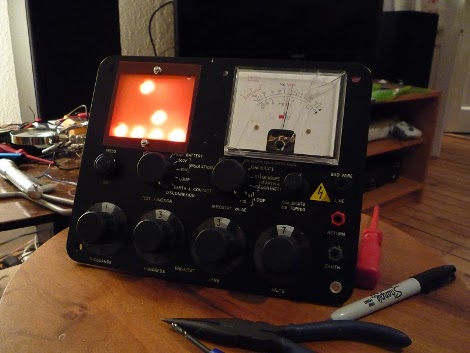
[Kieran] let us know about his hybrid analog/binary clock. The circuitry behind the clock is nothing too new. An Arduino combined with a Chronodot to produce an accurate clock. What we really enjoyed however was the creative implementation of an old British Telecom Linesman’s Multimeter as the case. The analog meter acts as the seconds hand, while a another display made of LEDs diffused with stripboard is the binary clock. The end product is nothing short of ingenuitive.

Homebrew Kodachrome

What do you do if you can’t find the film that your camera uses? The answer seems pretty simple, you just make it yourself. Making film is not a simple task. There are multiple stages involved and it all has to be done in complete darkness. This project is causing a bit of stir in its respective communities. Though not completely finished yet, it is already an impressive piece. Everyone is waiting eagerly for it to be completed. You can find a few of the discussion groups linked from the flickr page.

[via BoingBoing]

Gear Clock

[youtube http://www.youtube.com/watch?v=zkLIKfdYW3I&feature=player_embedded%5D

Analog clocks now a days get no respect. Everyone is digital this, or binary that, and we admit it is nice to look over and see the time promptly displayed. But there’s something about the quiet ticking and ominous feeling you get when around a large intricate clock that you know some serious time has been invested.

Nostalgia feelings aside, [Alan] from Hacked Gadgets introduced us to his Gear Clock. While it’s not a new idea, and in fact we have a few around the office, his concept really inspired us. His clock is driven via stepper motor and a PIC, allowing for the time to be fairly accurate. The only small problem he mentions is the poor paint job, but we think it looks amazing regardless.

Analog Space Invaders With Human Controller

analog_space_invaders

[fidepus] put together a pretty nifty version of the game Space Invaders. This is an analog version that involves an ink and paper based display system.

He printed out one piece of paper for each different enemy, mother ship, laser beam, and player vehicle. The human-based controller is used to move the pieces in all directions. When it comes time for a row to move downward, the pieces are removed from the game grid and relocated to their new position using a scotch-tape-actuator.

We think the most successful part of this hack was [fidepus’] ability to integrate sound effects into the controller system. The human-based controller puts out mono sound with a “pew-pew” for laser blasts and a “dirnk-dirnk… dirnk-dirnk” for the enemy movements.

Although there is no code nor a schematic provided, we think this system shouldn’t be too hard to reverse engineer.

Edison Cylinder Recordings Need More Cowbell

bruderhofer2-1

[Norman] spent three years developing and building his own Edison cylinder phonograph with electric pickup. We’re glad he did, and that he shared it with the world because the product is a thing of beauty. Every part is clean and precise with plenty of room for adjustments to accommodate differences in media. He’s reused the head from a VCR and attached it to a CNC machined polypropylene mandrel. The needle is interfaced with the cylinder via a delicate passively driven carriage. This consists of an aluminum rod with the cartridge at one end, and two wheels at the other. The wheels travel along a precision rod, propelled by the needle tracking the groove in the wax. Wonderful!

We’ve embedded a video of the device playing a recording of Sousa’s El Capitan from the late 19th century. Although familiar with these cylinder recordings, we were surprised by how little recording space there is available on one. Continue reading “Edison Cylinder Recordings Need More Cowbell”