Space Tech Helps Athlete Attain World Record

German athlete [Wojtek Czyz] set a new world record for the long jump at the Paralympics 2008 in Beijing, with the aid of his space tech enhanced prosthetic leg. He jumped a record 6.5 meters, 27 centimeters more than the previous record. Prior to switching to his new prosthetic leg for athletic competitions, he was prone to breaking the prosthesis when he performed to the best of his abilities. [Czyz] and his trainer met with ESA’s Technology Transfer Programme (TTP) technology broker MST Aerospace to assess the most important parts of the prosthesis. According to [Dr. Werner Dupont], MST Aerospace Managing Director, the crucial element was the connection angle, or L-bracket. Working with German company ISATEC, they developed a new L-bracket using a much lighter and stronger material from the Alpha Magnetic Spectrometer (AMS), which is an instrument that will be installed on the ISS to study extraterrestrial matter. We find it interesting and pretty cool that space technology can help enhance a disabled athlete’s performance, and think that this could lead to interesting possibilities, even for those who aren’t athletes.

[via Boing Boing]

Large Hadron Collider Roundup

[youtube=http://www.youtube.com/watch?v=qQNpucos9wc]

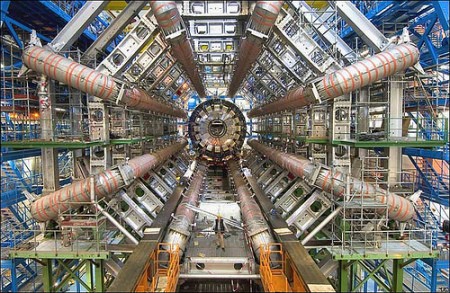
The Large Hadron Collider was a success and it didn’t destroy the world. We have to admit, we were a little bit worried about the possibility of generating black holes but were soothed by scientists’ reassurances that we would still exist, and this self-explanatory website. We’re also kind of hoping to build our own. PHD Comics visits CERN to learn all about the experiment. Xkcd prepares for the end times with a new friend. The curious can explore some amazing imagery of the LHC, and read about the best-and-worst-case scenarios, and what scientists are hoping for, or monitor progress via webcam. The celebratory will listen to appropriate music, consume inspired science fiction, and drink to the Large Hadron Collider and its success.

Welcome To The Petacentre

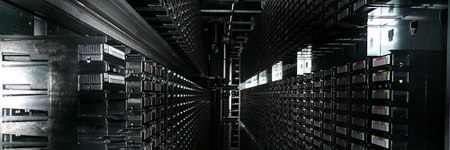
[Cory Doctorow] obtained access to a few data centers that deal in petabyte storage. The demand for data storage and processing doesn’t show any sign of stopping. It’s especially relevant when people need the resources to manage not only things like Google searches, but also email, customer transactions, and in the case of CERN, physics calculations. [Doctorow] drew an interesting conclusion from his experiences with the data centers; any innovation that the petabyte centers work on will eventually drift on down to the ordinary user, in laptop or desktop innovation. The petabyte center is easily duplicated with materials that are available for purchase to the average computer user; the only obstacles are price and space.

[via Boing Boing]

Large Hadron Collider User Manual Online


If you’ve got a few hours (or weeks) of spare time, you could learn how to run the Large Hadron Collider, located at CERN in Switzerland. CERN published the full technical details of the collider and detectors online, and anyone with some curiosity and patience can read all 1,589 pages. Tell us if you got through all of it, and if you’re planning to make your own particle accelerator.

[via MetaFilter]