Long distance FPV (First Person View) flying can be a handful. Keeping a video feed alive generally requires a high gain directional antenna. Going directional creates the chore of keeping the antenna pointed at the aircraft. [Brandon’s] smart antenna tracker is designed to do all that automatically. What witchcraft is this, you ask? The answer is actually quite simple: Telemetry! Many flight control systems have an optional telemetry transmitter. [Brandon] is using the 3DRobotics APM or PixHawk systems, which use 3DR’s 915 MHz radios.
The airborne radio sends telemetry data, including aircraft latitude and longitude down to a ground station. Equipped with a receiver for this data and a GPS of its own, the smart antenna tracker knows the exact position, heading and velocity of the aircraft. Using a pan and tilt mount, the smart antenna tracker can then point the antenna directly at the airborne system. Since the FPV antenna is co-located on the pan tilt mount, it will also point at the aircraft and maintain a good video link.
One of the gotchas with a system like this is dealing with an aircraft that is flying directly overhead. The plane or rotorcraft can fly by faster than the antenna system can move. There are a few commercial systems out there that handle this by switching to a lower gain omnidirectional whip antenna when the aircraft is close in. This would be a great addition to [Brandon’s] design.
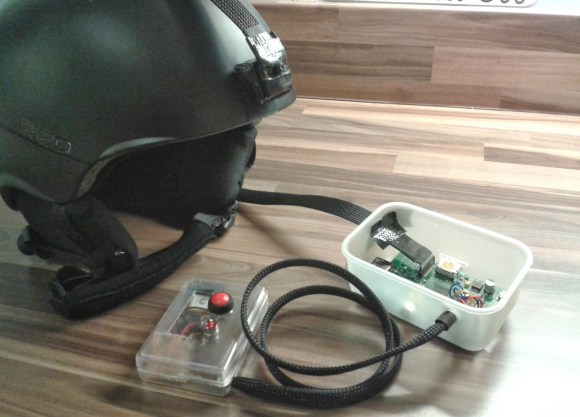 Over the last 20 years, [Martin] has been recording snowboarding runs with a standard helmet cam. It was good but he felt like he could improve upon the design by
  With few exceptions, most of The Hackaday Prize are things we really haven’t seen much of before: base-3 computers that have been relegated to the history books, extremely odd 3D printers, and fancy, new IoT devices are the norm.
  The project featured in this post is an entry in