Using GPS To Stay Aware Of Red Light Cameras

red-light-camera-alerter

Depending on how you view them, red light cameras are a great way to get people to drive carefully, or an utter nuisance. We agree with the latter opinion, as does [Dave], so he built a handy little device that alerts him when he’s about to approach one of these intersections.

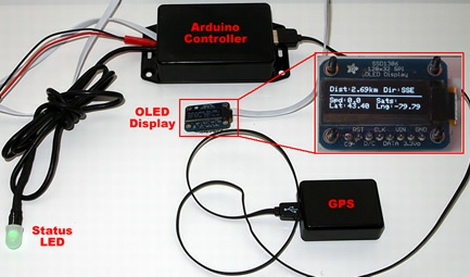
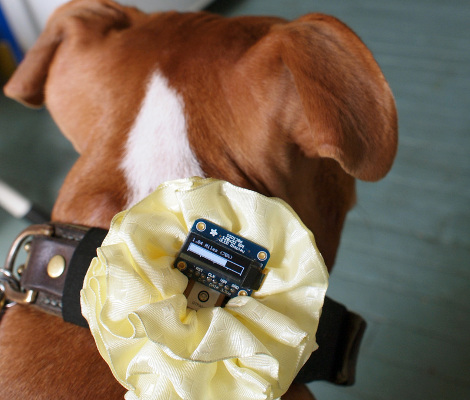
His Red Light Camera Alerter is based around an Atmega 328P sporting the Arduino bootloader. The micro obtains GPS coordinates while [Dave] is driving, comparing his current location with a table of all known red light intersections in the area. As he nears a red light camera, the status LED changes colors from blue to yellow to red as he gets closer, making it easy to keep aware of his situation. He also included an Adafruit OLED display in his device, which relays his speed, GPS coordinates, heading, and actual distance from the red light in real time.

While [Dave] admits that he doesn’t really have a need for the alerter as there are only a couple located in his immediate vicinity, he says it was a fun and easy way to get some experience with using GPS sensors in his projects. He doesn’t have any video of it in action, but you can find the code he uses to drive the alerter on his blog.

Open Source Tracking System Gets A Kickstarter

open-source-tracker

Many of the hacks featured here inspire others to build on the creator’s work, and on occasion the positive feedback brings the hack to market. Last year we told you about [Wayne’s] creation, a system aimed at tracking down would-be game console thieves. He received a bunch of requests to document the tracker in full, so he decided to revise his creation and release it as Open Source Hardware.

As you might remember, his original tracking device was powered by an Arduino, which monitored an accelerometer and GPS sensor, reporting coordinates and movements to his mobile phone on demand. He combined the disparate components together on a single board, and started a Kickstarter for the project.

Aside from his original purpose of tracking stolen goods, he lists off an array of other uses, such as tracking the driving habits of your newly licensed teen, geofencing objects in certain areas and more.

If an SMS controlled all-in-one tracking system is something you might be interested in, check out his Kickstarter, or take a look at the documentation and build one of your own.

Arduino Shield Includes Everything But The Kitchen Sink

arduino-3g-shield

The crew at Cooking Hacks in Zaragoza wrote in to share a new shield they developed for the Arduino platform. There are a hundred different shields out there that do this and that, but we think their 3G/GPRS shield looks pretty slick.

The base shield contains a WCDMA and HSPA compatible 3G modem as well as a GPS receiver. The modem can be used with an Arduino, or plugged directly into a computer via USB, allowing it to be used any way you like it. The more advanced kit offered by the Cooking Hacks crew features a VGA video camera, as well as an audio kit that can both play and record audio.

One neat feature they were quick to point out is that not all network communications need to be handled by the Arduino. Simple transactions (HTTP/FTP/POP3/SMTP) can all be carried out by sending standard AT commands to the modem.

Now, the kits don’t come cheap, but we can’t help but be interested in seeing what applications people dream up with this shield at the helm. Cooking Hacks is a division of Libelium Communcations, but as they are the company’s “Open Hardware Division” there are schematics available should you be interested in rolling your own 3G modem instead.

Hacking The Green Goose For Fun And Profit

[Troy] recently got his hands on a greengoose starter kit and like any HAD reader would do, proceeded to probe it mercilessly.

The greengoose appears to be some sort of location-tracking device which reports back to a server on the position and location of radio transmitters relative to it. [Troy] managed to not only get the base-station’s firmware, but to also hack it and greengoose’s data to his own server. As if that wasn’t good enough he broke down the packet structure for us. Good job [Troy].

Looks like the greengoose could be a fun tool for anyone interested tweeting the whereabouts of their cat, or checking if the toilet seat lid is down. Let’s see what people come up with.

There’s A Lot Packed Into This BeagleBoard Controlled Rover

That black box is hiding all kinds of goodies that make this rover a hacking playground. [Andrey] built the device around a BeagleBoard, which offers the processing power and modules that he needed to make the rest of it work.

The control unit shrinks the pilot down to the rover’s size, using a cockpit that has a steering wheel and other controls, and a monitor playing the stream from the camera on the front of the bot. It has a WiFi adapter which allows control via the Internet. The camera, which can be rotated thanks to its servo mounting, feeds the video to the BeagleBoard where it is compressed using the h264 codec (more about that and the cockpit here) to lighten the streaming load. You’ll also find an ultrasonic rangefinder on the front for obstacle avoidance, and a magnetic compass for orientation information. Finally, a GPS bolsters that data, allowing you to plot your adventures on the map.

It’s great, but it will cost you. Material estimates are North of five hundred Euros!

Taking GPS Where No Man Has Gone Before

[Willem] has a friend that wanted to take a GPS datalogger up an unclimbed mountain the wilds of Kyrgyzstan. The GPS logger built for the expedition made it to the summit of Eggmendueluek, but it didn’t work the whole way up. Since the logger came back to London, [Willem] was able to do a complete teardown and failure analysis.

The data logger was built around a Jeenode with a GPS unit and MicroSD card reader added on. A few breakout boards were made and two of these bad boys were ensconced in water and dust proof enclosures. Powered by four AA batteries, the data loggers were able to handle the rigorous testing of being thrown down a staircase and also the harsh temperatures of London. Things changed in the wilds of Kyrgyzstan, though.

The data retrieved from the mountaineering expedition wasn’t the greatest – a few wires came loose after being thrown into the back of a Russian truck and jostled around. The AA batteries only powered the data loggers for three days, compared to the 12 day battery life in London. There are a few improvements needed for the next trip – some thermal insulation and not using solid core wire – but not that [Willem] has figured out the bugs he’s ready for his friend’s next expedition.

Hacked Parking Disc Can Be Controlled Remotely

reverse_engineering_parking_disc

If you have ever traveled around Europe, you are likely familiar with parking discs. Required in many countries that would rather not deal with parking meters, these devices are placed in the front of a car’s window, and indicate when the vehicle was parked. When parking enforcement officers come through the area, it makes quick work of identifying which cars need to be ticketed.

[Michael] received a fancy electronic parking disc as a gift, but the device was incredibly buggy, causing him all sorts of grief. After contacting the manufacturer and receiving no helpful response, he took it upon himself to get things working properly.

He dismantled the disc and found that like many products today, the microprocessors were locked down behind a layer of hard resin. Undeterred, he decided to rebuild it from the ground up using an ATmega microcontroller to provide basic parking disc functionality. He also armed his disc with a GSM modem and a GPS receiver – the former gives him the ability to communicate with the device, while the latter provides accurate time data while allowing him to keep tabs on the car’s location, should the need arise.

The hacked disc’s guts reside in his glove box, and can be controlled using his iPhone, making it easy to tweak his parking time at will.

Check out the video below to see his parking clock in action, and if you have questions on any part of the build, [Michael] says he’s more than happy to fill in any missing details.

Continue reading “Hacked Parking Disc Can Be Controlled Remotely”