Real Time GPS Decoding With Software Defined Radio

In case the Realtek RTL2832u-based USB TV tuner dongle isn’t useful enough, the folks behind a project to get a software defined GPS receiver off the ground successfully plotted GPS data in real-time with this very inexpensive radio.

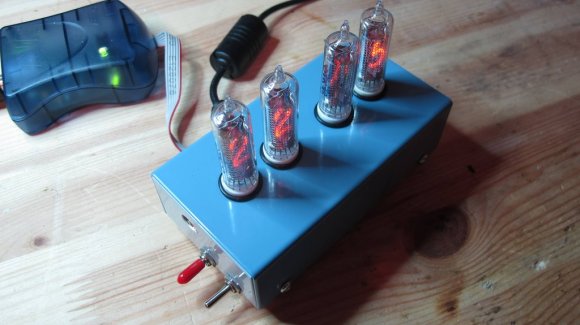
Previously, we’ve seen these dongles grab data from GPS satellites – useful if you’re building a GPS-based clock – but this build required hours of data collection to plot your location on a map.

The folks working on the GNSS-SDR project used an RTL2832 USB TV tuner and a Garmin active GPS antenna to track up to four GPS satellites in real-time and plot a location accurate to about 200 meters.

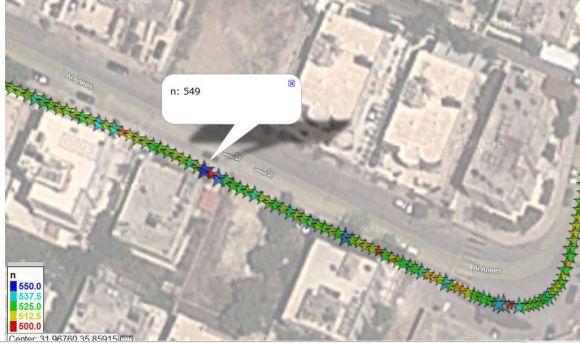
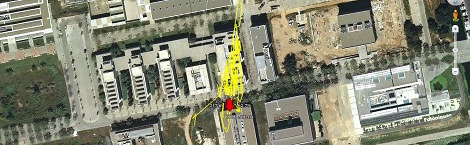
The Google Earth plot for this post shows the data collected by the GNSS-SDR team; the antenna was fixed at the red arrow for the entirety of the test, and the  yellow lines represent a change in the calculated location every 10 seconds. Amazing work, and only goes to show what this remarkable piece of hardware is capable of.

GPS Dog Collar Keeps Track Of Your Walks

[Becky Stern] came up with a way to make sure you and your dog are getting enough exercise. It’s a dog collar mounted GPS that measures how far you have walked. Just set your target distance and the progress bar in the middle of this flower will let you know when you reached it.

The most obvious piece of hardware is the OLED board which is sticking out like a sore thumb. But if you’d like to be a little more discreet you could forego the full-featured display for some carefully places LEDs to make up a circular progress bar. The GPS module itself fits well in the center of the flower, which [Becky] shows us how to make out of wire-edged ribbon. Hidden on the other side is an ATmega23u4 breakout board running the Arduino bootloader.

If you’re interested in sewables and textiles [Becky] uses a lot of basic techniques that are good to learn. Check it out in the clip after the break. She’s always shown a remarkable ability to develop projects which won’t scare away the villagers in the way our wire-sprouting breadboard hacks sometimes do.

Continue reading “GPS Dog Collar Keeps Track Of Your Walks”

Spoofing GPS And Getting Your Own UAV

A couple folks over at the Radionavigation Lab at UT Austin successfully spoofed GPS to take control of a small helicopter drone this weekend. Of course, this attracted the attention of the Department of Homeland security, so you’d better stock up on GPS spoofing equipment while there’s still time.

The DHS, CIA, and US Military have a huge interest in spoofing GPS; Iran stole a drone late last year using the same method. The UT Austin team used only about $1000 worth of equipment to take control of an autonomous drone and pilot it away under unauthorized control. Of course with matters of homeland security, the open-source hacker scene has yet to publish how this spoofing attack was actually done, but here’s a paper covering what is needed to remotely control up to four GPS-guided drones.

While waiting on the details of this build to be made public, feel free add your own insight in the comments as to how this attack was actually performed.

Building A DIY GPS Cube

Originally, [Karman] wanted to build a speedometer for his bike. Feature creep makes fools of us all, so after a month of work [Karman] had a  GPS-enabled cube that tells him his current latitude and longitude, current time, course, direction and speed.

[Karman]’s GPS cube uses a cheap GPS module, Arduino Mini Pro, a magnificent OLED display, and a LiPo battery salvaged from a first gen iPod nano. Surprisingly, the build is very clean – there are no wires, headers, or random epoxy globs sticking out everywhere. The entire build is just a bit larger than one cubic inch, allowing [Karman] to carry around the power of a GPS device in his pocket.

The code for [Karman]’s GPS cube uses the TinyGPS library for Arduino, that has a few great functions that track the number of satellites visible and report the current time. Now all that’s left to do is fabricate a case for this awesome little project. As always, video demo after the break.

Continue reading “Building A DIY GPS Cube”

Electronic Bracer Wraps A Lot Of Features Around Your Arm

[Stephanie] just finished up her wearable project which puts a lot of information where a wristwatch would normally be found. She calls it the Integrated Sensors Electronic Bracer. We had to look up what a bracer is; the name originates with archers and it was a leather wrap used to protect the wrist. This does that, but we don’t think you’ll want the bowstring frequently hitting the electronic components hidden within.

There is a nice finished leather cover which wraps around the unit, leaving just a few holes for key components. Above you can see the parts undressed, with an Arduino compatible board in the middle. It provides a user interface with the OLED display and three input buttons. The array of sensors found on the device include a GPS module to display position data, humidity sensor, magnetometer, luminance sensor, and galvanic skin response.

The opposite side of the bracer has an opening secured by a couple of elastic cords. [Stephanie] mentions that this works, but she’s not happy with the look of it and hopes to make some leather-based improvements.

[via Adafruit]

Heliowatcher Positions Solar Panels For Highest Efficiency

[Jason Wright] and [Jeremy Blum] are showing off the project they developed for their Designing with Microcontrollers course at Cornell University. They call it the Heliowatcher, and if you know your Greek mythology we’d be you figured out this watches the movement of the sun and adjust a solar panel to follow it.

Their design is simple and effective. The base is mounted like a Lazy Susan, able to pivot on the horizontal plane. The bottom edge of the solar panel is mounted with two door hinges, with a motorized screw jack used to raise and lower it. The system uses a GPS to provide geographical position, day, and time feedback. This is used in conjunction with an array of four LEDs to determine the best position of the panel. Those LEDs are acting as light sensors; when the top and the bottom detect similar levels, the panel is at its most efficient orientation. The left and right LED sensors work the same way.

Now if we can just work out a self-cleaning system to keep the panels free of the dirty film that builds up over time we’d be set!

Continue reading “Heliowatcher Positions Solar Panels For Highest Efficiency”

Those USB TV Tuners Used For SDR Can Also Grab GPS Data

Talk about versatile hardware. These inexpensive TV tuner dongles can also grab GPS data. You may remember seeing this same hardware used as a $20 option for software defined radio. But [Michele Bavaro] decided to see what other tricks they could pull off.

Would it surprise you that he can get location data accurate to about 20 centimeters? That figure doesn’t tell the whole story, as readings were taken while the dongle was stationary for three hours, then averaged to achieve that type of accuracy. But depending on what you need the data for this might not be a problem. And [Michele] does plan to implement real-time GPS data in his next iteration of the project. He plans to use an SDR acquisition algorithm to measure doppler shift in accounting for the slow clock speed of the dongles compared to standard GPS receivers. We can understand how that would work, but we’re glad he has the skills to actually make it happen because we’re at a loss on how the concept could be implemented.

[via Reddit]