In the late 1800s, no one knew what light was. Everyone knew it behaved like a wave some of the time, but all waves need to travel through some propagation medium. This propagation medium was called the luminiferous aether and an attempt to detect and quantify this aether led to one of the coolest experimental setups of all time: the Michelson-Morely experiment. It was a huge interferometer mounted on a gigantic slab of marble floating in a pool of mercury. By rotating the interferometer, Michelson and Morely expected to see a small phase shift in the interferometer, both confirming the existence of a luminiferous aether and giving them how fast the Earth moved through this medium.
Of course, there was no phase shift, throwing physics into chaos for a few years. When [Beaglebreath] first learned about the Michelson-Morely interferometer he was amazed by the experimental setup. He’s built a few interferometers over the years, but for The Hackaday Prize, he’s making something useful out of one of these luminiferous aether detectors: a functional laser rangefinder capable of measuring distances of up to 60 inches with an error of 0.000005 inches.
The core of the system is an HP 5528A laser interferometer system. [Beaglebreath] has been collecting the individual components of this system off of eBay for several years now, and amazingly, he has all the parts. That’s dedication, right there. This laser interferometer system will be mounted to a simple camera slider, and with the interferometer measurements, humidity and temperature measurements, and some interesting code (running on one of these for hacker cred), [Beaglebreath] stands a good shot at measuring things very, very accurately.
The devil is in the details, and when you’re measuring things this precisely there are a lot of details. The original Michelson-Morely interferometer was affected by passing horse-drawn carriages and even distant lightning storms. While [Beaglebreath] isn’t using as long of a beam path as the OG interferometer, he’ll still have a lot of bugs to squash to bring this project to its full potential.
 The project featured in this post is an entry in The Hackaday Prize. Build something awesome and win a trip to space or hundreds of other prizes.
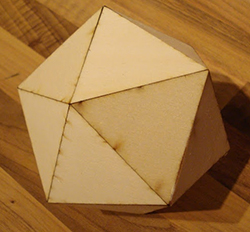 Every project deserves its own laser cut enclosure, of course, but the most common method of joinery – an overabundance of mortises and tenons, and if you’re lucky, a bit of kerf bending – is a little unsightly. Until tastes in industrial design change to accommodate this simple but primitive method of joining two laser cut panels together at an angle takes hold, the search will continue for a better way to cut acrylic and plywood on a laser cutter. The folks at Just Add Sharks might have a solution to this problem, though: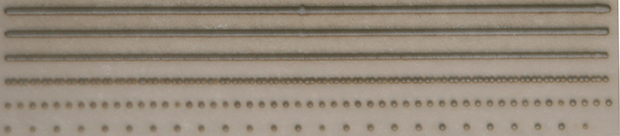
 If you already have a 3D printer, you already have a machine that will trace out gears, cogs, and enclosures over an XY plane. How about strapping a laser to your extruder and turning your printer into a laser cutter?